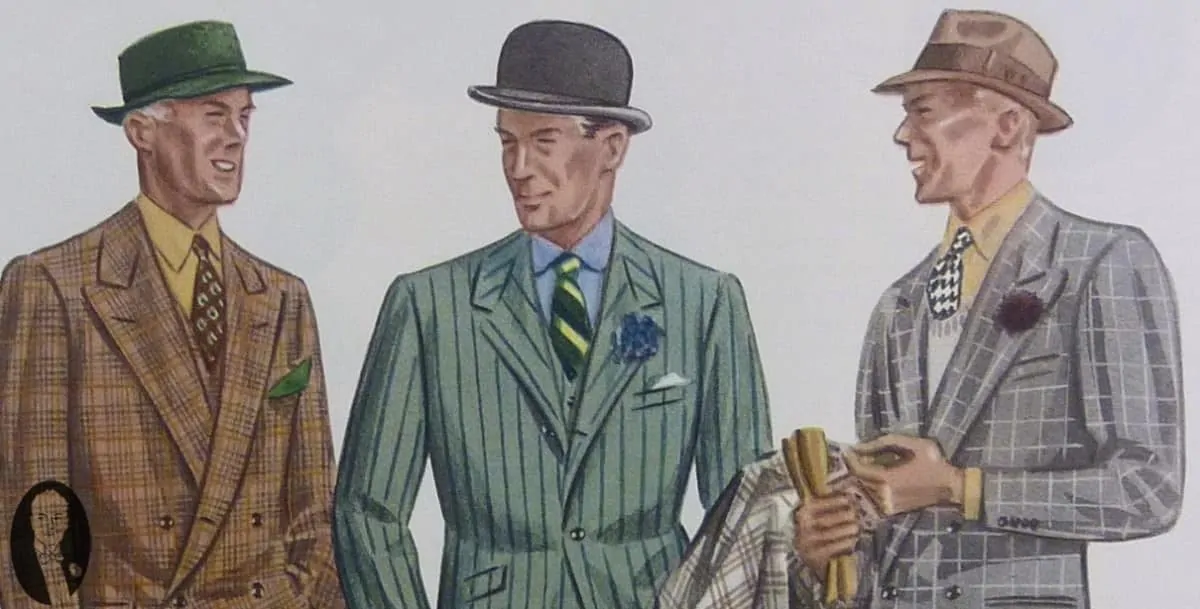
After we recently covered the tennis sweater and a number of other spring outfits, we want to continue today with an Apparel Arts illustration from 1936, featuring three gentlemen in rather unusual and noteworthy spring suits.
The Double Breasted Glenplaid Suit in Brown
Let’s start with the gentleman on the left. He wears a double breasted Saxony Suit in brown with a bronze and dark yellow overplaid. As you can see, the lapels are rather wide and almost reach the shoulders. Although he wears the coat as a 4×1 with the lapel rolled to the lower button, you can clearly see the buttonhole above it indicating that it was probably designed as 4×2. The flap pockets line up with the lower buttons and the coat itself is cut very full in the London Lounge Drape. Surprisingly, for a double breasted spring suit, he wears a matching vest underneath, which wears rather warm and, hence, this was truly a suit for rather cool spring days.
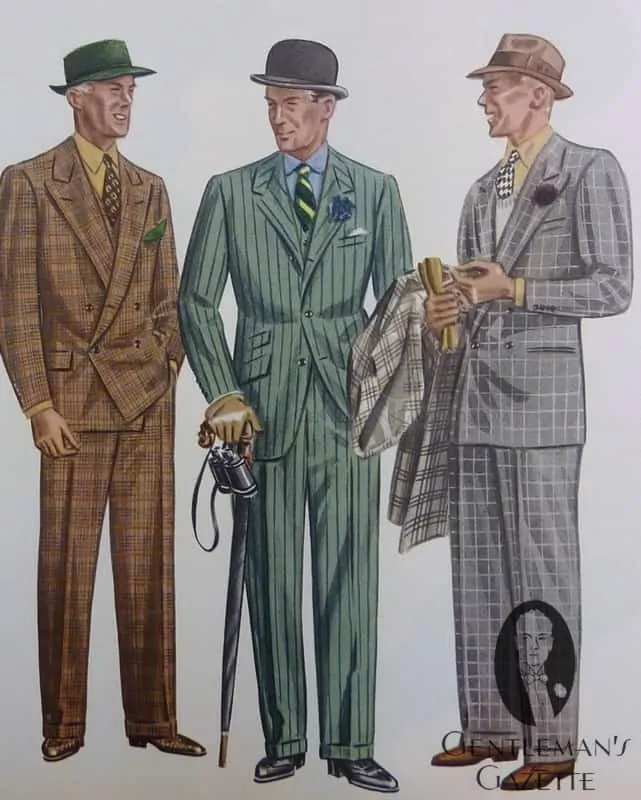
The trousers are cut very full, show a small to medium cuff, and have a light break above the shoes, which harmonizes quite well with the similarly full cut drape coat. Surprisingly, the shoes are made of chocolate brown crocodile leather, although, at second glance, the textured croc skin works well with an informal brown plaid suit.
The Lovat Green Chalk Stripe Spring Suit
The gentleman in the center pulls off an entirely different outfit. First of all, his single breasted coat has three buttons, a notched lapel with a notable collar as well as side vents. Just like the man before him, his coat is rolled to a 3 roll 2 and buttoned right on the waistline. The quarters are cut fairly open and the slanting flap pockets (sometimes also referred to as hacking pockets) create a dynamic look. Note that the ticket pocket is aligned with the closing button for a balanced appearance. The suit was tailored from a Lovat Green Cheviot fabric. Typically, Cheviot is a crisp woollen cloth in a coarse twill weave (often with a broken herringbone structure) that was originally made from the wool of Cheviot sheep. Instead of a herringbone pattern, we can only see a wide spaced, thick blue chalk stripe. This cloth is certainly different, but I have to admit I like it.
The trousers are also anything but slim and feature the same cuff as the first pair of pants. Notably, this gentleman also wears a single breasted vest in a matching fabric – obviously gentlemen did not skip the waistcoat even when the temperatures rose.
This ensemble is completed by a blue oxford shirt, a yellow, green and blue striped silk repp tie, white pocket square, black derby / bowler hat, black wing tip shoes, light brown pigskin gloves, a dark umbrella and a blue cornflower boutonniere. Together with his binoculars, he is well equipped to spend his day at the derby.
The Grey Windowpane Spring Suit
Last, but not least, the gentleman on the right wears a mid grey flannel suit with a beautiful faint windowpane overplaid. Just like the chap on the left, his lapel is rolled to the lower button (4×1). Instead of flap pockets, his coat has jetted pockets which looks neat in my opinion. The suit is accompanied by a tan colored shirt and a black and white checked wool tie. Instead of a tailored vest, he wears a knit pullover (also known as sweater vest). He wears a brown snap brim hat, and reverse calf leather shoes. Instead of the pocket square, he went with a boutonniere that appears to be a carnation.
On top of that, he carries a wonderful plaid overcoat. I am particularly jealous of this gentleman, because it is simply impossible to find something like that off the rack and even when you go bespoke, some searching would be required to find a grey fabric with that kind of overplaid.
Altogether, I found it interesting to see that all of these suits featured 4 cuff buttons on the sleeves, which is traditionally reserved for formal garments. Obviously, even in the mid-thirties, this tradition had vanished for the most part.
That aside, these three suits are anything but standard and you will most likely not find these in a store, but in case you come across a length of vintage fabric in a similar pattern in a spring weight, you should seriously consider buying it. Not only will it most likely drape well, but you will also own a one-of-a-kind spring suit.
See more Vintage Fashion Illustrations!
“you will most likely not find these in a store”
Unfortunately very true and to find really great variation when it comes to the weight of the cloth without going bespoke is a another tough one. I often wonder, doesn’t people get terrible cold in the winter and equally hot in the summer when they run around in their “all weather-suits”?
Well, I guess most people are not even aware that there are still very heavy fabrics available. Years ago, Chester Barrie used to tailor wonderful fabrics even in RTW garments but these days are long gone.