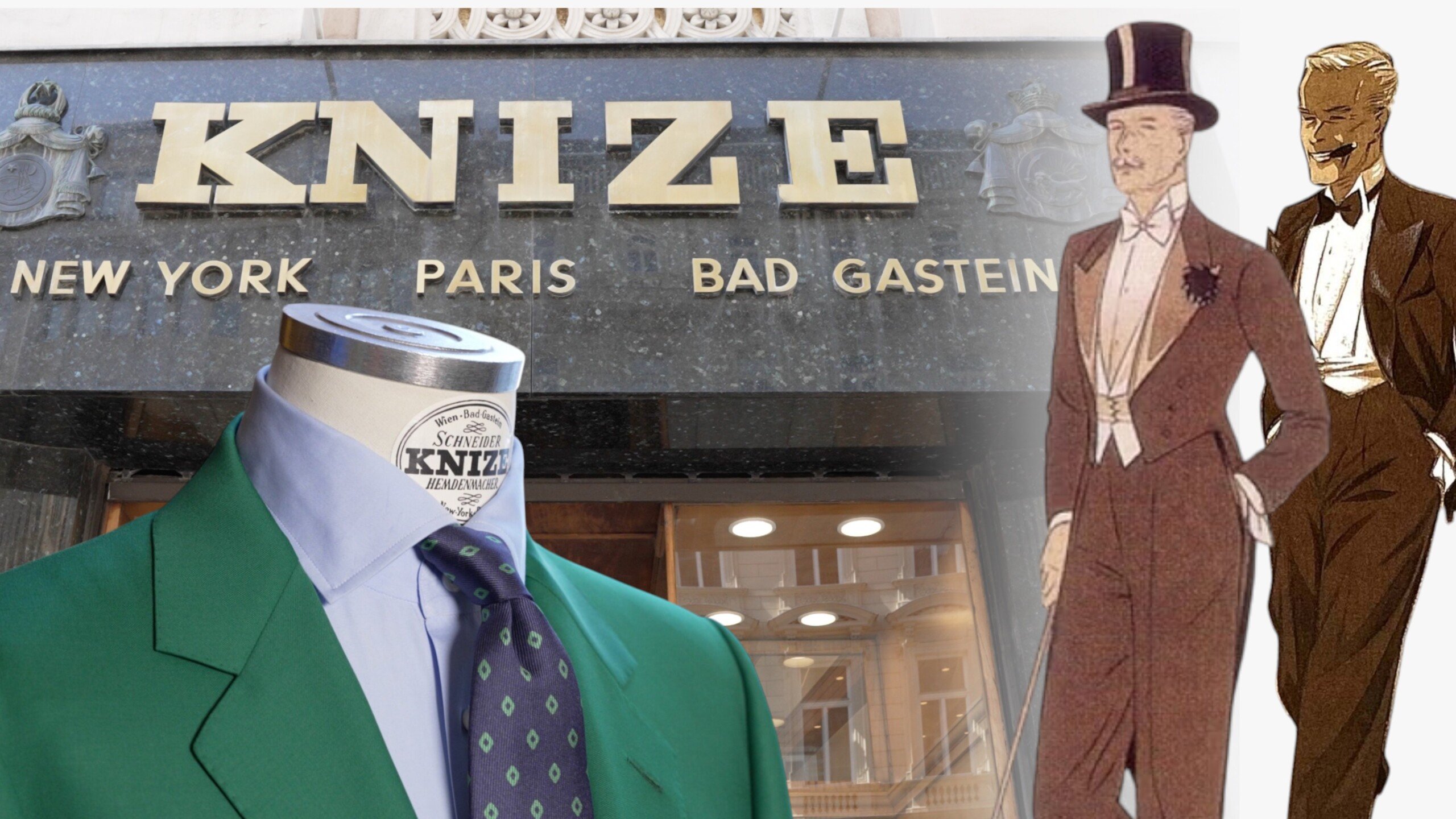
I have long admired Kniže & Co., the only sartorial house that once persuaded Edward VIII to cross the Channel for fittings. And so I made a point of visiting during our recent trip to Vienna.
With Dr. Claudia Niedersüß and master cutter Rudolf Niedersüß as my guides, I explored every room of the Adolf Loos-designed atelier and saw how its craftsmen still draft full-canvas tailcoats, silk-lined ties, and gorgeous white-tie shirts that meet UNESCO-listed standards.
What follows is a close look at why this century-old institution continues to set the benchmark for formal menswear.

Why Kniže Remains the Gold Standard for Bespoke & White-Tie Dressing
What Happens in the Video
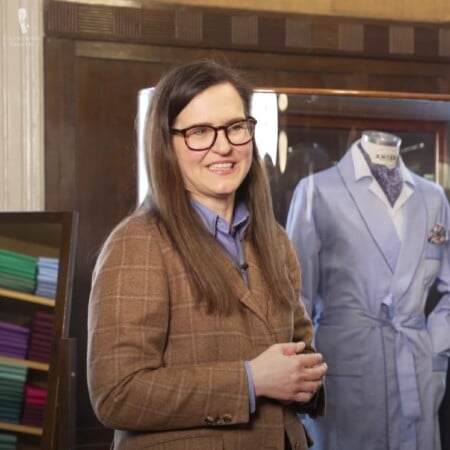
I spend the morning exploring every floor of Kniže with Dr. Claudia and Rudolf. We open century-old mahogany drawers still stocked with tailoring tools, examine Kniže-designed cloth in unapologetically bold hues, and slip a full-canvas Viennese frack over my shoulders to illustrate how it differs from its British cousin, all while Adolf Loos’ original interiors provide the most elegant living backdrop imaginable.
“We have a lot of customers—politicians, hotels, government, and private persons; there’s no difference between them.”
Dr. Claudia Niedersüß, MBA, Head of Communications
Why It’s Helpful
If you’ve ever struggled to decode high-level formalwear—or wondered why Vienna remains the place to buy a tailcoat—this walkthrough provides living examples. You’ll learn how cloth choice affects heat management during ballroom season, why Kniže lines its ties with 100% silk, and how to spot authentic Loos design cues in surviving retail spaces. Consider it a primer for commissioning your own white-tie rig or simply appreciating heritage menswear done right.
Highlights from this Video

"Yes, we sew by hand and make a stitch… Our customer still wear these ties."

“It’s also the architectural effect that Adolf wanted to produce: that you come from this narrow entrance—low—and then, wow, the room opens, so you will be impressed.”

“You’re hereby appointed tailor in Vienna to His Majesty the King.” —Royal Warrant, 1911

"It's really our honor to have this kind of certificate. It's really special for Vienna and for Austria to be part of this 'club' of the UNESCO."

"But for the aristocrats, it's important to have this crown with their initials."
“If customers see it like this, they feel they could look like that.”
Rudolf Niedersüß, Owner & Head Cutter

Ask the Expert
What makes the shop’s ready-to-wear frackhemd, or formal evening shirt, different from the old, heavily starched versions?
Instead of detachable stiff fronts, they weave linen into the bib and cuffs, allowing it to wick moisture while feeling dry: no special laundry required.
Why is the lapel “gorge” on their jackets slightly curved?
It’s a Viennese signature carried down from C.M. Frank and Adolf Loos; the gentle bend softens the silhouette while keeping the collar high for ease of movement.
Can visitors commission bespoke and buy ready-made in one appointment?
Absolutely. Clients often select RTW knitwear, shirts, or accessories on the spot while their bespoke measurements are taken upstairs.
Is the famous “polo-player” logo still used on today’s garments?
Yes. The stylized polo figure that Adolf Loos helped introduce in the 1920s remains an optional house emblem. However, it is now reserved for knitwear, scarves, and the shop’s polo team commissions.
Do you still starch detachable collars and shirt fronts on site?
For traditionalists, the workshop offers rice-starching exactly as it was done a century ago. But frequent travelers prefer the new linen-cotton bib that keeps its shape without special laundry treatments.
What’s the typical lead time for a full white-tie rig (tailcoat, waistcoat, trousers, and shirt)?
For bespoke: eight to twelve weeks including two fittings. The RTW frack, waistcoat, and shirt can be altered within 48 hours, which is a lifesaver during Vienna’s crowded ball season.
What to Watch Next
Visit Vienna’s biggest bespoke tailor with us!

Arterton London Store Tour
A must-watch for anyone who appreciates timeless style and expert menswear advice.

Jeremy Hackett Store Tour
Join us for an intimate look inside the legendary Jeremy Hackett store.

Rudolf Beaufays Tour
This interview and tour reveal the heart and soul of a store that embodies sartorial elegance and timeless style.