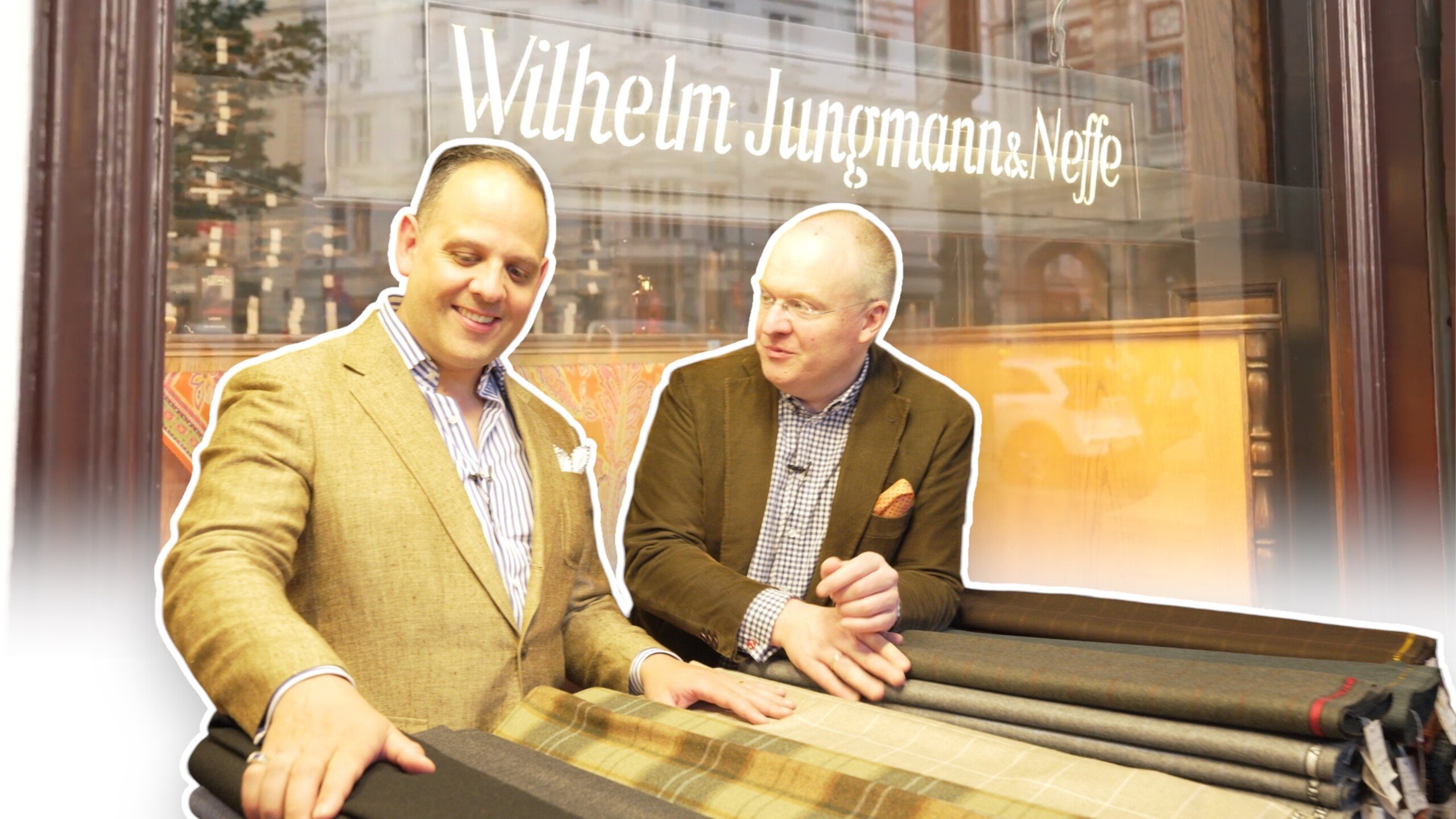
In this guided walk-through, Sven Raphael Schneider joins owner Georg Gaugusch to explore oak-paneled shelves, 6,000 silk patterns, and imperial warrants that survived two world wars. Press play below to see how a 19th-century merchant house continues to serve modern tailors and style connoisseurs alike.

Why Wilhelm Jungmann & Neffe Still Matters to Modern Tailoring
What Happens in the Video
I explore every corner of Wilhelm Jungmann & Neffe with owner Georg: sliding oak shelves to unroll fresco and cashmere bolts, pairing self-tie bows with umbrella handles, and paging through 1907 swatch books in the cellar—all beneath the shop’s original imperial warrant.
“I think if you have an independent company, you only focus on the best. If you just do the average, you can’t compete on price with the big guys. So you have to compete on quality and uniqueness.”
Georg Gaugusch, Owner of Wilhelm Jungmann & Neffe
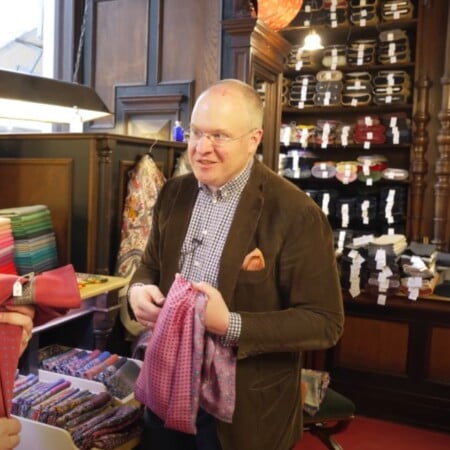
How sharp was 1930s Vienna?
Why It’s Worth Your Time
Learn how full-bolt displays simplify fabric choice, why Vienna’s “Esterhazy” check differs from a standard Prince of Wales, and how niche quality, rather than price, keeps this independent house thriving after 140 years.
Highlights from this Video
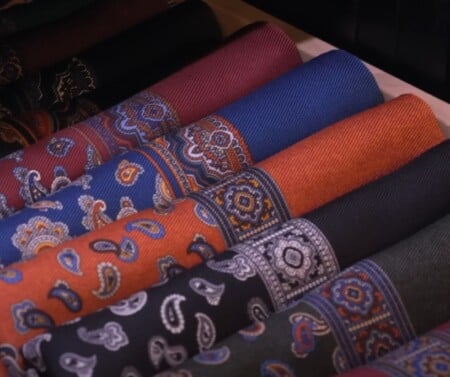
“We’ve counted about 6,000 different ties in store—ties, bow ties, and cravats.”
Ever wondered what 6,000 neck-wear options look like in one place? Jump to this timestamp to see shelves overflowing with ties, bow ties, and cravats.
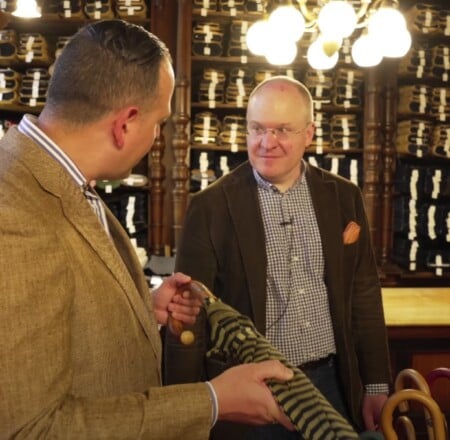
“In fact, they’re so nice that they’re often the target of theft.”
Skip here for a light-hearted look at Viennese umbrella envy.
![Video highlight 3: “Everything what you see here is 15 kilometers [of fabric]...that’s almost like ten miles if you unrolled it.”](https://www.gentlemansgazette.com/wp-content/uploads/2025/07/wilhelm-jungmann-neffe-tour-video-highlight-3-450x439.jpg "Wilhelm Jungmann Neffe Tour Video Highlight 3")
“What you see here is 15 kilometers [of fabric]…that’s almost like ten miles if you unrolled it.”
The owner does the math out loud—15 kilometers of cloth on hand—and explains how that sheer volume shapes the shopping experience.

“Esterházy is the Prince of Wales check pattern in Austria. A Hungarian nobleman brought it from England to Vienna, and because he wore it first they called it Esterházy—only in Vienna.”
Tune in here for a bite-sized history lesson on how one dandy aristocrat re-branded an English classic for the Viennese wardrobe.

“High Performance—that’s what they invented; it was completely new in those days. Until the 1980s it was very difficult to make really lightweight wool fabrics, so High Performance was one of the first fabrics light enough for trousers.”
Queue up this moment to learn how Zegna’s 1980s innovation still shapes modern suiting—and why “everything comes back” in menswear.
What We Were Wearing

Raphael strikes a relaxed yet refined note in a mid-brown linen-silk sport coat, paired with a blue-and-white stripe shirt left open at the collar and framed by crisp French cuffs. Cobalt cotton chinos introduce a confident pop of color, while the jacket’s breast pocket carries our Cream Linen Pocket Square with its beige-and-dark-brown hand-rolled X-stitch. A simple silver signet ring adds understated gravitas, and a discreet mist of Roberto Ugolini’s Giardino di Boboli furnishes an herb-tinged freshness that harmonizes with shelves of fine cloth all around.


Follow Wilhelm Jungmann & Neffe on Instagram!
“Typically we always put in the label of the weaver, but what’s maybe even more important is the label of the finisher.”
Sven Raphael Schneider, CEO & Founder, Gentleman's Gazette

Ask the Expert
Why does Jungmann & Neffe still show full-length bolts instead of tiny swatches?
A whole bolt lets you judge scale, drape, and color depth; small snippets hide how large checks or textured weaves will really look on a body.
What fabrics do Viennese gentlemen rely on for hot, humid summers?
Highly-twisted “fresco” wool that breathes yet keeps its shape, plus the city’s traditional khaki-cotton suits; linen blends work when you want fewer wrinkles.
Are all the ties and bow ties made in-house?
The silks are Jungmann & Neffe’s own prints, finished by small European makers. Unusual widths or extra-long lengths are produced to order.
Why are Maglia umbrellas such a signature item here?
The family’s long friendship with Francesco Maglia allows custom leather-wrapped handles and rare woods matched to the shop’s tie silks—exclusivity few retailers can offer.
What’s the story behind Vienna’s “Esterházy” Prince-of-Wales check?
A Hungarian prince wore the pattern in Vienna; locals named it after him, so tailors still order “Esterházy” cloth instead of saying “Glen plaid.”
Do you stock women’s accessories?
Yes—double-printed silk squares (45 cm and 70 cm) are popular handbag scarves, and the hefty silk foulards work beautifully for ladies’ neckwear.
Can visitors browse the 1890-1930 swatch archives?
The ledgers stay in the cellar for preservation, but staff will bring up selected volumes for design inspiration if you book ahead.
“The Viennese are, even with fragrances, very special because they are old-fashioned.”
Georg Gaugusch, Owner of Wilhelm Jungmann & Neffe
What to Watch Next
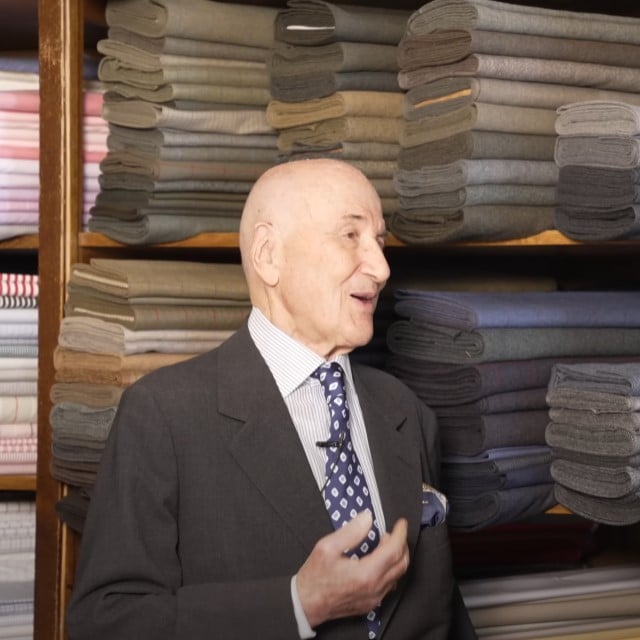
Knize Store Tour, Vienna
Walk through the Loos-designed showroom of Knize—Vienna’s storied tailor to royalty and style icons—and see how master craftsmen keep bespoke traditions alive today.

How Huntsman Savile Row Suits Are Made
Follow the cutters and coat-makers at Huntsman as they draft patterns, hand-sew seams, and bring a Savile Row legend to life.

Designing a Closet Worthy of a Gentleman
Discover practical, budget-friendly strategies to build a custom wardrobe space that protects your garments and streamlines daily dressing.
Well, this was unexpected: I met Georg Gaugusch at the Conference of Jewish Genealogical Societies in Philadelphia last summer, where he led a session on how to read records of the Israelitische Kultusgemeinde Wien. I had no idea that he was a haberdasher. So now I have *two* reasons to look him up when I visit Vienna!
This is the Hermine Ehrenfest whose orders appear at 20:58. They must date from before 1896, when she married Georg Dukes. Dukes (rhymes with “Lucas”) was Wilhelm Jungmann’s brother-in-law. He died in 1911. During the Nazi period, Hermine escaped first to Portugal, and then, in 1942, to New York City, where her daughter Lily had preceded her.
https://www.geni.com/people/Hermine-Dukes/6000000015017829083
An interview with Bruce Boyer would be much appreciated.