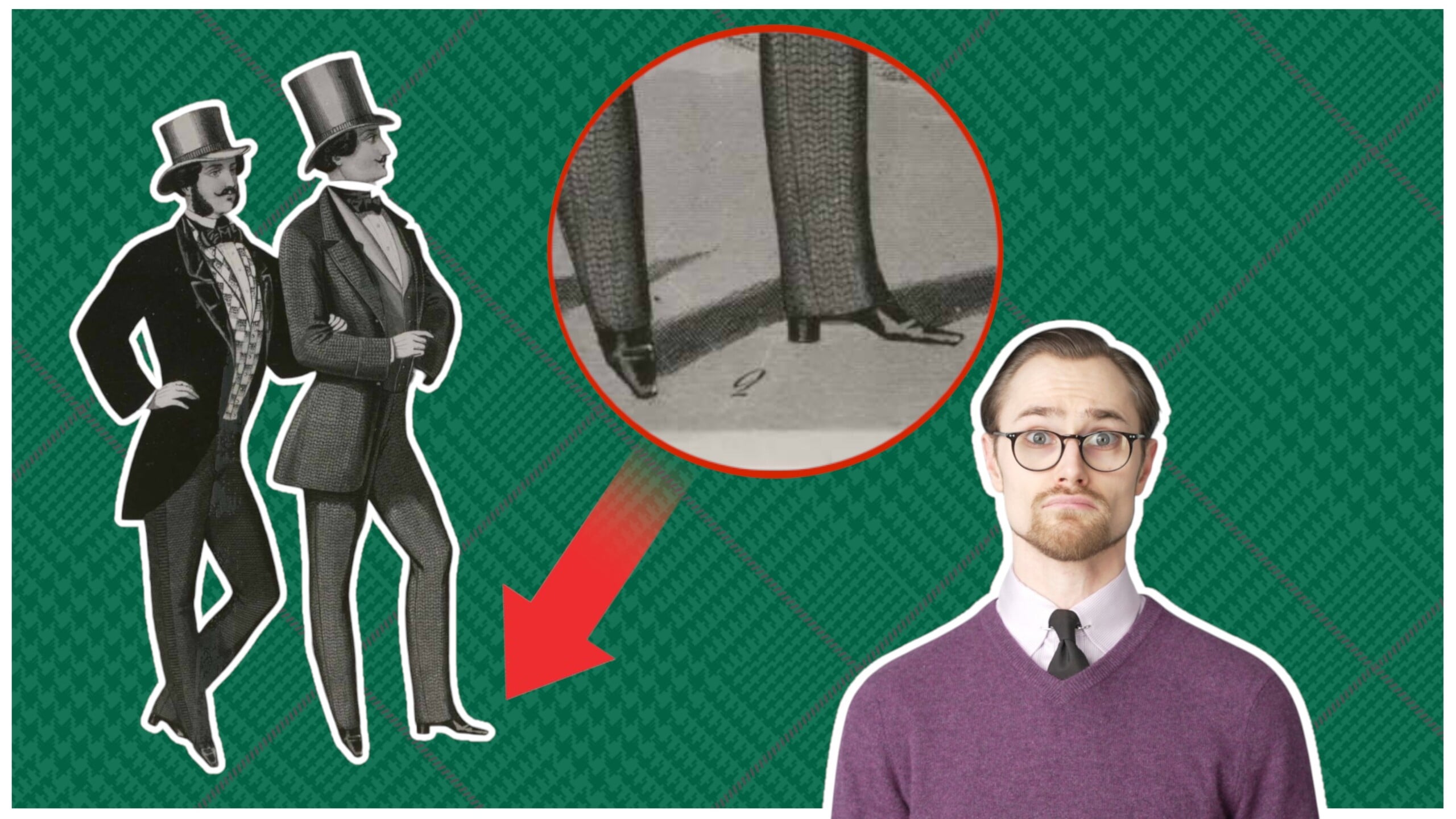
Despite the fact that they’ve long been associated with women, high-heeled shoes were originally worn by men! Read on to see why men first adopted higher heels and why things changed.
- What We Mean By High-Heeled Shoes
- The Origins of High-Heeled Shoes
- Reasons Why Men Stop Wearing High Heels
- Where Men’s Heels Survived
- “High Heels” During the Golden Age of Menswear
- Men’s High Heels Today
- To Be Well Heeled!
- Conclusion
- Frequently Asked Questions (FAQs)
- More Videos in Our “Why Did Men Stop…” Series

What We Mean By High-Heeled Shoes
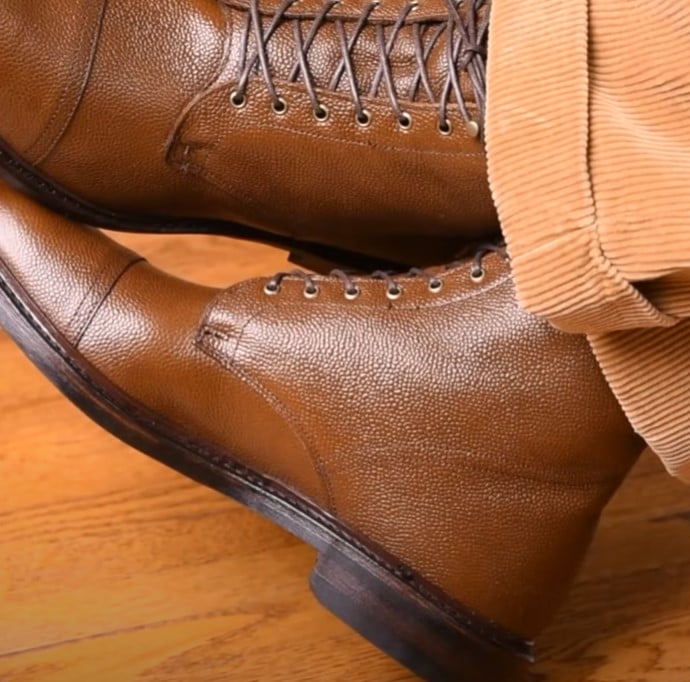
In this article, “high heel” refers to any heel tall enough to tilt the foot at a clear angle—think of a riding boot or a Cuban-heeled Chelsea boot, not the low heel on most Oxfords or Derbies.
Are your shoes built to last?
The Origins of High-Heeled Shoes
Persian Horsemen and the Galesh (10th Century)
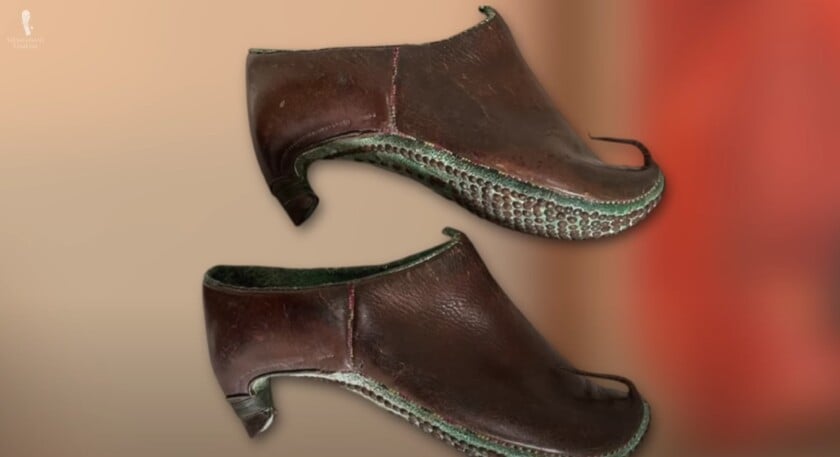
High heels debuted not on Parisian boulevards but in the dust of medieval Persia. Riding boots known as galesh (or kalash) featured tall, tapered heels that locked firmly into stirrups, letting mounted archers stand up and loose arrows with deadly accuracy.
Shah Abbas I and a Continental Craze (Early 1600s)
When Shah Abbas I opened new trade routes, Persian messengers reached Europe wearing those high-heeled riding boots. European nobles took notice of the unusual style and began copying it. The extra height hinted at skill on horseback and a link to the powerful Persian army.
Louis XIV’s Red-Heeled Power Play (mid-1600s)
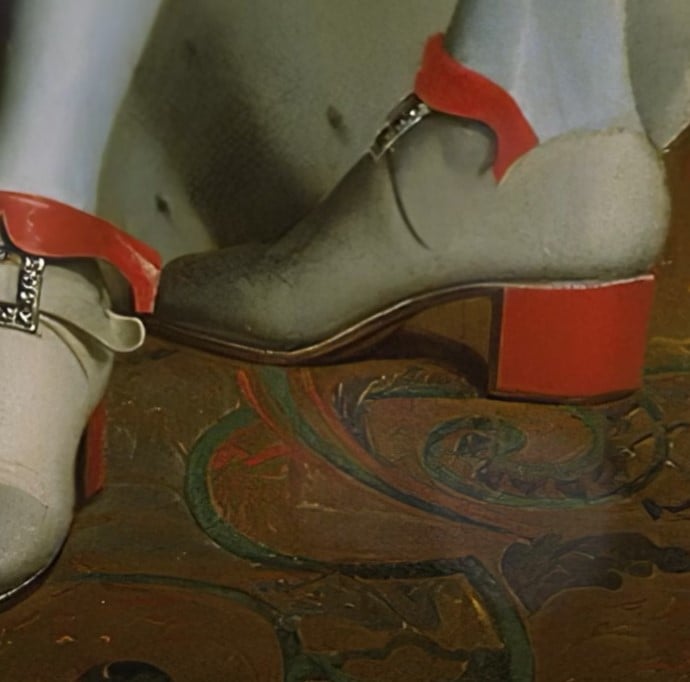
King Louis XIV made high heels a valid symbol of status. He wore heels covered in bright red leather and ruled that only his closest supporters could copy the look. In his court, the taller and redder your heels were, the higher your social rank.
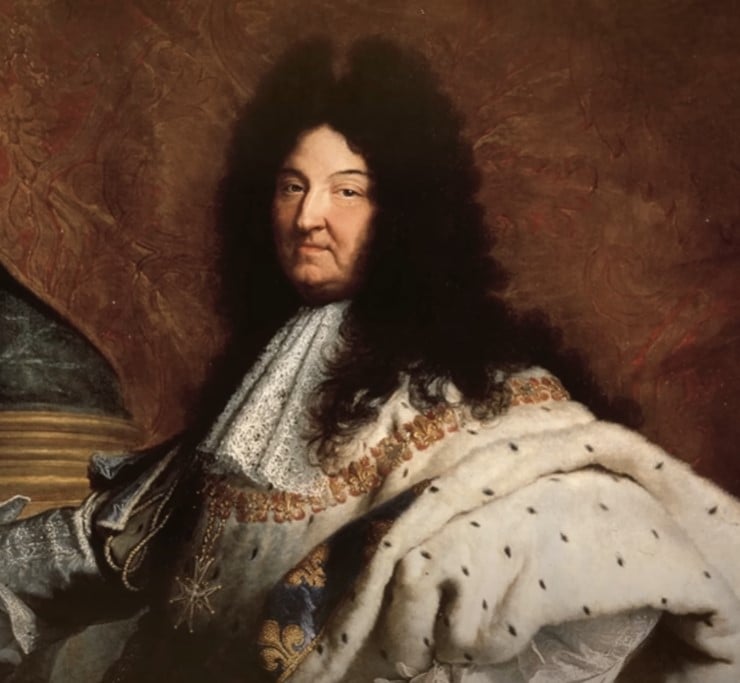
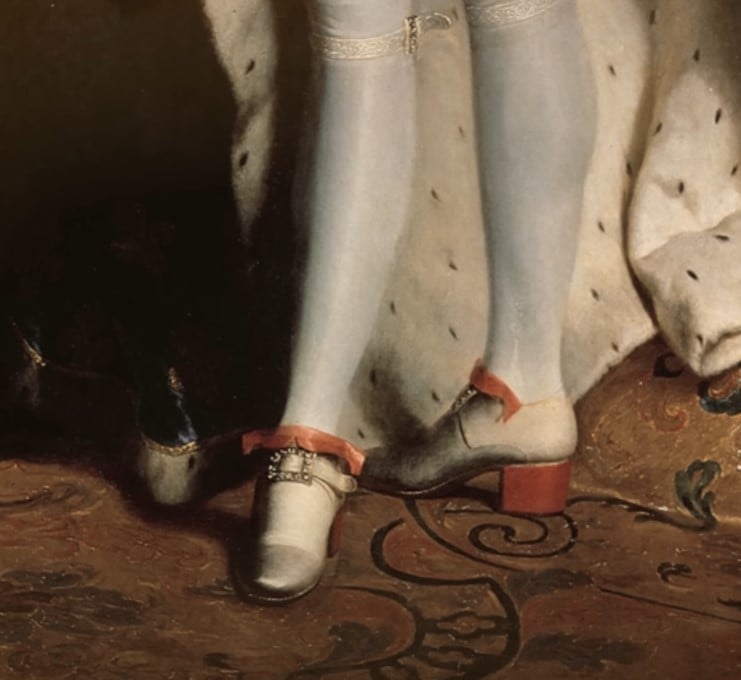
Why red? Louis was tapping into an older color code. Long before him, Byzantine emperors wore red shoes to show their power, and after the East-West Schism in the 11th century, the Pope adopted the same crimson footwear as a symbol of authority.

Research from Toronto’s Bata Shoe Museum traces Louis’s choice back to this centuries-old tradition.
Ever wonder why men wore wigs?
Status, Sanitation, and the 18th-Century Boom
By 1700, men and women alike favored shoes that were taller. Men’s height came mainly from the heel; some women added full platforms, such as the chopine.
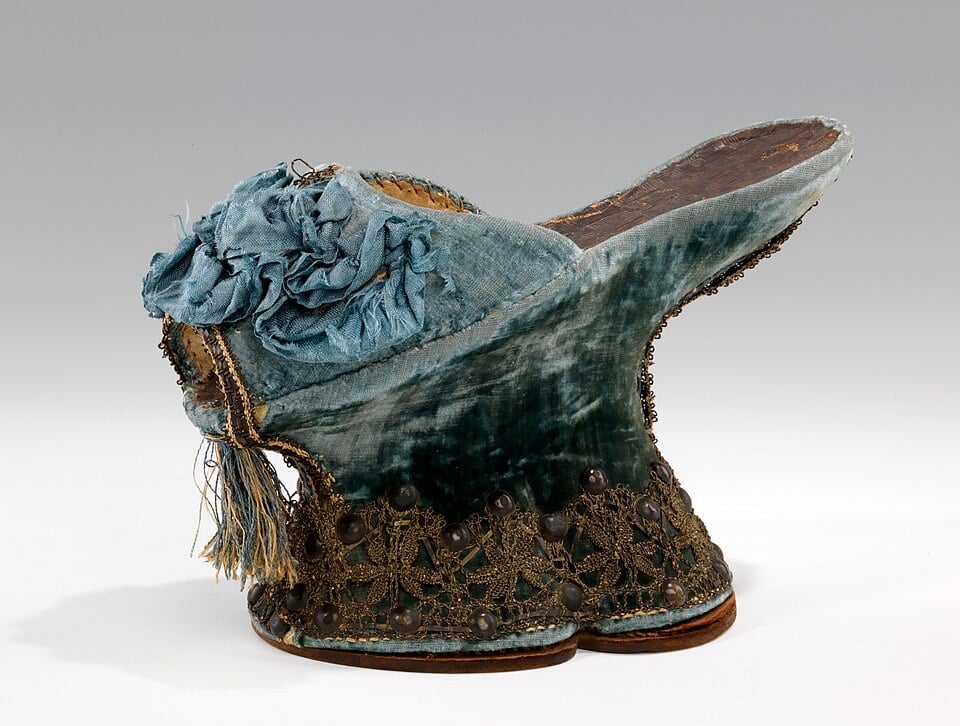
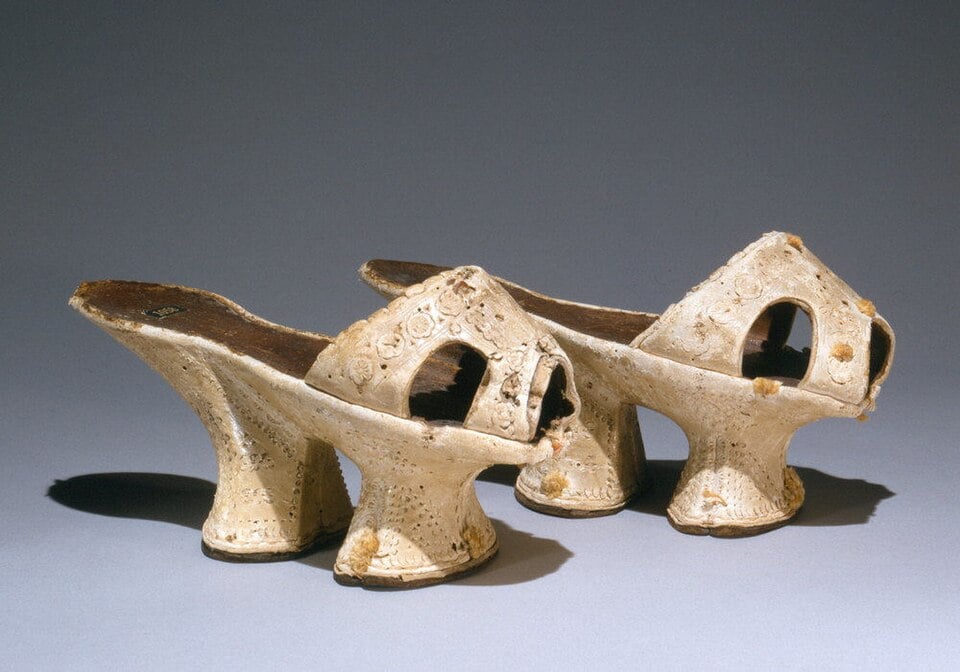
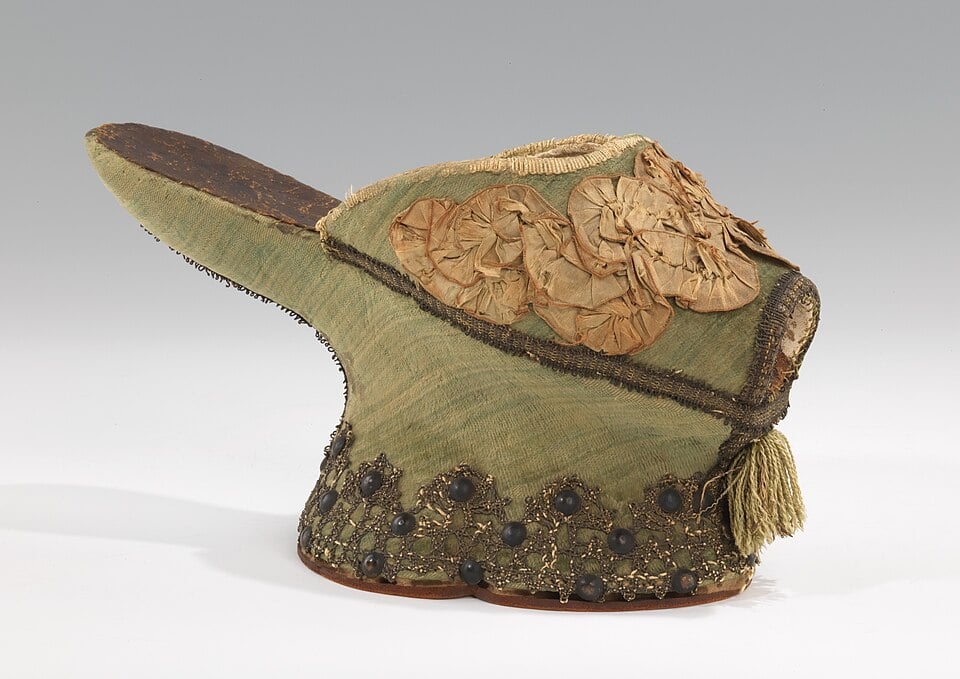
Heels had two main benefits:
- They raised the wearer above muddy, messy streets.
- They signaled that the wearer did not perform hard labor.
Wealthy people wore heels carved from wood and wrapped in leather, while cavalrymen used strong, stacked-leather heels that held up in the saddle. Either way, extra height marked privilege.
Reasons Why Men Stop Wearing High Heels
Changes in Gender Norms (and the Fashions That Followed)
During the Enlightenment, many thinkers said flashy clothes looked childish and unmanly. Taste-makers like Beau Brummell pushed men toward plain, practical dress in what historians now call the Great Male Renunciation.
A Move Toward Simplified Style
As men embraced sober suits and low, sensible shoes, plain black boots became the mark of modern masculinity. Bright silks, makeup, and tall heels vanished from everyday menswear. After about 1800, a man in high heels was either on horseback or on stage.
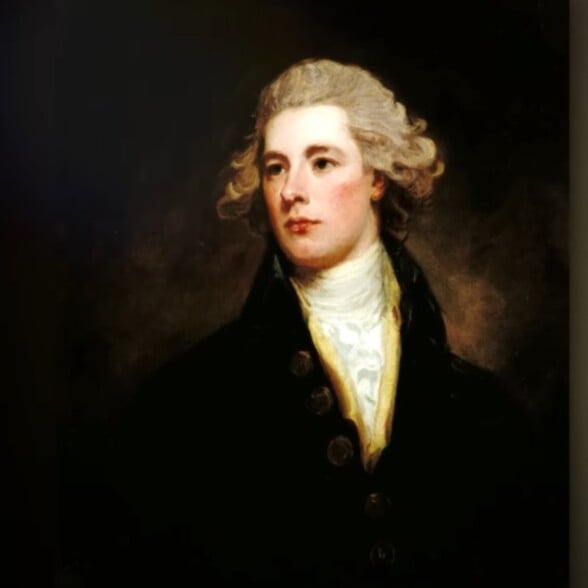
Plain on Purpose
Beau Brummell ditched bright silks for dark wool and perfect tailoring. His quiet style kicked off the Great Male Renunciation, where men traded showy flash for simple elegance.
Should men wear makeup?
Wartime Media Sealed the “Heels = Women” Link
By World War II, pin-up posters boosted troop morale by showing glamorous women, often in high heels. These images hammered home the idea that tall, slim heels belonged to women, not fighting men, locking the gender split even tighter in the public mind.

Where Men’s Heels Survived
High heels never vanished completely. They survived in places where they still did a job:
- Cowboy boots used a tall, slanted heel that stopped a rider’s foot from sliding through the stirrup, lifted him above mud, and added a touch of frontier swagger.
- Work boots for city laborers carried thick, stacked heels and heavy soles to grip rough streets and protect tired feet.
- Polished riding boots for wealthy horse owners held a neat heel that helped in the saddle and signaled high status.
In most of these cases, the heel was there for grip, protection, or a little extra height, not for fashion alone.
“High Heels” During the Golden Age of Menswear
During menswear’s “golden age,” roughly the 1920s to the mid-1960s, most shoes sat on short, sensible heels that matched the era’s clean suits and neat lines.
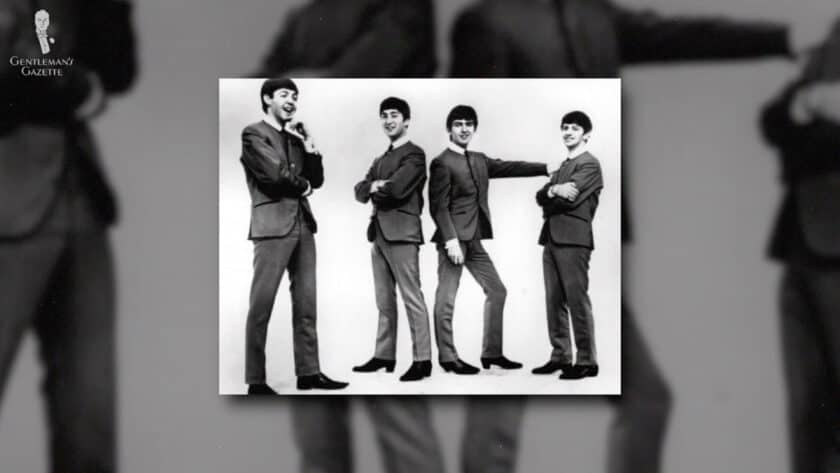
Oxfords, Balmorals, and low-heeled boots dominated city streets. While shorter entertainers such as Fred Astaire or Bing Crosby sometimes asked their cobblers for a discreet height boost, the extra lift stayed hidden inside the shoe rather than being flaunted on the outside.
Toward the end of this period, rock-and-roll icons helped revive the taller Cuban heel on Chelsea boots and “Beatles” boots. Yet, many traditional dressers still viewed noticeable height boosts as flashy rather than proper.
Styling brown boots correctly?
Men’s High Heels Today
Noticeable heels for men now appear mainly on cowboy boots and on Chelsea or Cuban-heeled fashion boots. Some designers experiment with still-taller styles, and a small group of men wear traditionally feminine heels as personal expression.
Classic menswear, however, sticks to lower, balanced heels that keep the overall look neat and understated.
To Be Well Heeled!

In today’s outfit, the shoes I’m wearing probably wouldn’t be considered high heels by the average person. These shoes were made custom for me by the outfitter Wayman Bespoke. Because I have a centimeter-and-a-half length discrepancy between my left and right legs, these bespoke shoes were made so that the heel on the right shoe is even taller than the one on the left.
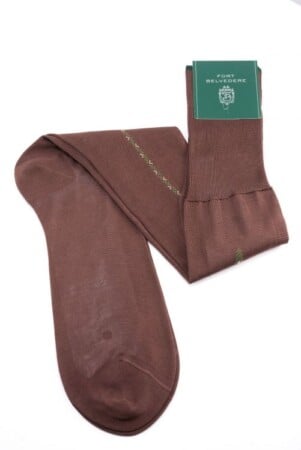
That said, both shoes do have a somewhat higher heel than average, though not quite as high as something like a Cuban heel. These Oxfords feature multiple shades of brown in museum-calf leather and a wingtip without medallions or broguing. I’ve also carried the brown from the shoes into other elements of my outfit, including my plain brown trousers with a reddish undertone and my socks from Fort Belvedere in a similar brown tone featuring clock patterns in white and green.
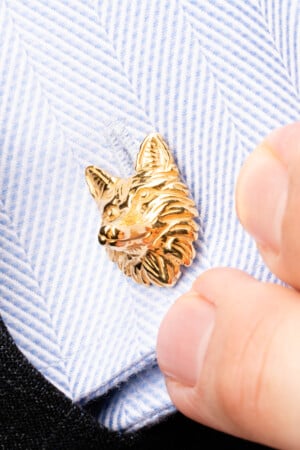
Meanwhile, the upper portion of my outfit features more tones of blue, green, and gold: my navy-blue double-breasted blazer has gold buttons, and I’m wearing it over a plain light-blue Charles Tyrwhitt shirt with French cuffs; in these cuffs I’ve got gold cufflinks from Fort Belvedere’s new Predator and Prey series, featuring a fox on one side and a goose on the other.
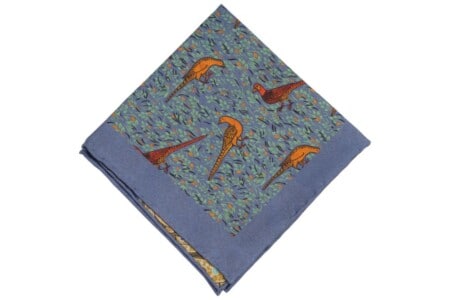
Also from Fort Belvedere are my blue-and-white Delphinium boutonnière and my double-sided pocket square—one side with floral motifs, the other with pheasants in tones of blue, green, and orange. My vintage Brooks Brothers bow tie features a green ground with small blue paisley designs.
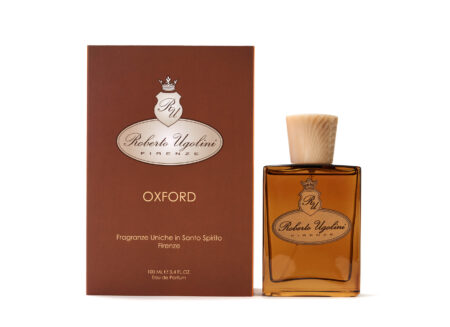
Rounding things out today is my fragrance: Oxford from the Roberto Ugolini collection—an appropriate standby since I’m wearing Oxfords and it’s one of my favorites.
For the socks, cufflinks, pocket square, bow tie, and fragrance I’m wearing, along with a wide array of other classic men’s accessories, corduroy trousers, and other Ugolini fragrances, be sure to take a look at the Fort Belvedere shop here.

Conclusion
High heels for men have journeyed from battlefield necessity to royal indulgence, then dwindled to niche icon. Their history proves that masculine and feminine codes are anything but fixed—style, like the wearer, is always in motion.
Where do you stand on an elevated heel? Share below, and, as always, stride with confidence!
Frequently Asked Questions (FAQs)
Did men wear high heels historically?
Yes, men of high status from the 10th century up until around the early 19th century wore heels to some degree. It’s only been in the past 200 or so years that this has changed.
Why did men originally start wearing high heels?
Heels were first worn for practical purposes. Cavalrymen in ancient societies used heeled boots to stabilize themselves while riding. Similarly, certain professions require raised footwear to navigate messy environments. Over time, heels evolved into symbols of status and power.
When did high heels become a fashion statement for men?
By the 17th century, European aristocrats adopted heels as a sign of wealth and masculinity. Prominent monarchs enforced sumptuary laws to restrict heel height and colors to the upper classes, using them to emphasize social rank. Impractical designs became markers of privilege.
Were there laws about non-nobles wearing high heels?
Yes; in France, King Louis XIV reserved the highest heels for himself and made a law proclaiming it illegal for non-nobility to wear them.
Why did men stop wearing high heels?
Cultural shifts in the late 18th and early 19th centuries prioritized practicality over opulence, and heels became associated with excess. As women’s fashion increasingly embraced heels to signify femininity, the style became gendered.




Back in the 1970s I wear platform shoes which had a 1 to 1 1/2 soles and 3/4 inch heals. But I was in Iceland in the US Navy and they came from Europe.