Few garments bridge the gap between casual comfort and classic elegance as effortlessly as the polo shirt. Yet, because it is a warm-weather staple in every man’s wardrobe, the market has become utterly saturated. From legacy luxury houses to fast-fashion giants, everyone makes a polo, but very few make a truly good one.
To save you from collar roll, synthetic blends, and shrinking hems, we put sixteen of the world’s most prominent polo brands to the ultimate test. Here is how they actually measure up.

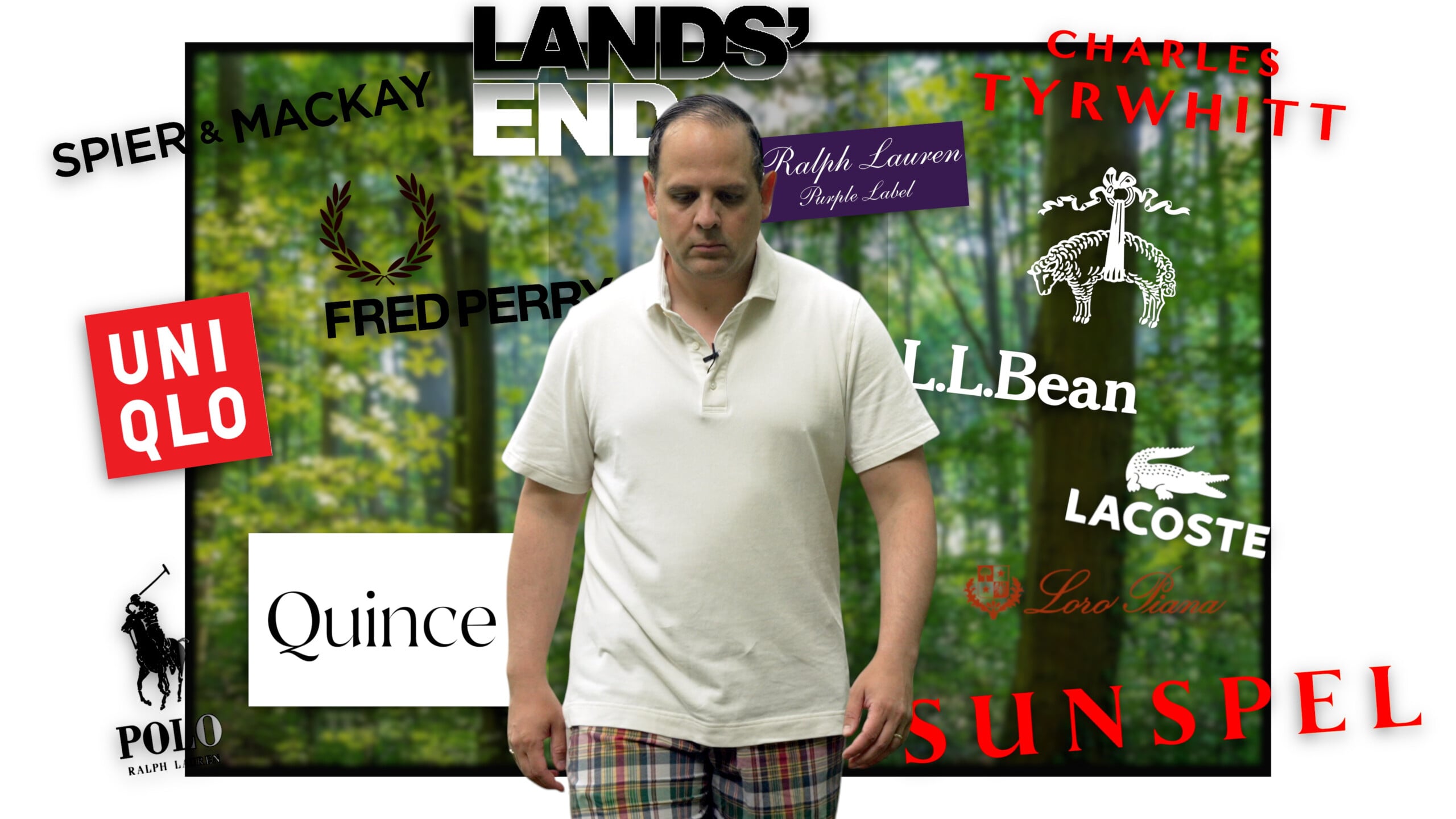
The Brands We Evaluated
- Brooks Brothers
- Charles Tyrwhitt
- Fred Perry
- Kent Wang
- Lacoste
- Land’s End
- L.L. Bean
- Loro Piana
- Merz b. Schwanen
- Polo Ralph Lauren
- Purple Label, Ralph Lauren
- Quince
- Spier & Mackay
- Sunspel
- Uniqlo
- Wills – (Huckberry’s In-House Brand)
5 Core Criteria for Evaluating the Perfect Polo Shirt
When evaluating a classic cotton piqué polo shirt, we rely on five core pillars to separate a truly exceptional garment from a completely forgettable one.
1. Fabric Quality & Performance
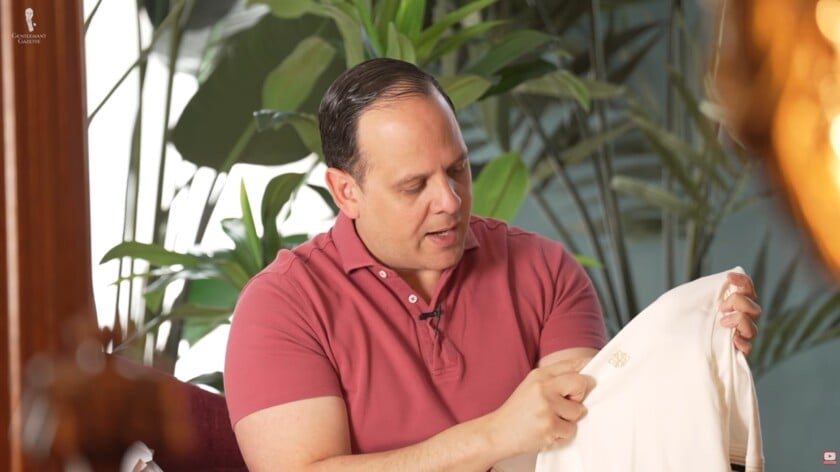
The fabric is the foundation of any good polo. Because these shirts are meant for hot summer months, the material has to perform under pressure.
- Material Composition: 100% long-staple cotton (such as Supima or two-ply yarns) is heavily preferred. Synthetic blends (polyester, nylon, or elastane/spandex) often feel artificial or plasticky.
- Breathability & Knit Openness: The mesh knit must be open enough to allow distinct airflow. Tighter knits trap heat and cause excessive sweating.
- Skin Feel & Weight: We want a balanced weight that is heavy enough to drape beautifully, but soft and crisp against the skin.
- The Opacity Test: A major pain point is thin, see-through fabric that reveals too much underlying detail; it’s a polo shirt, not a mesh shirt.
- Longevity & Washability: How does the fabric age? High-quality fabrics retain their color and structure, while lesser fabrics quickly develop a fuzzy surface, pilling, or a faded “white sheen” after a few washes.
2. Fit & Silhouette

A polo can feature the finest fabric in the world, but it fails if the proportions are off.
- Overall Proportions: The shirt should contour the body nicely without looking like a baggy “potato sack” or being skin-tight.
- Hem Length & Style: Raphael always considers total length, favoring a dropped back hem (longer in the back than the front) because it helps the shirt stay securely tucked in.
- Sleeve Fit: The length should be proportional, and the sleeve hems should comfortably hug the biceps rather than flaring out too widely.
- Shrinkage Management: Shirts should be evaluated after multiple wash-and-dry cycles to see if they suffer from aggressive vertical shrinkage.
3. Construction & Tailoring Workmanship
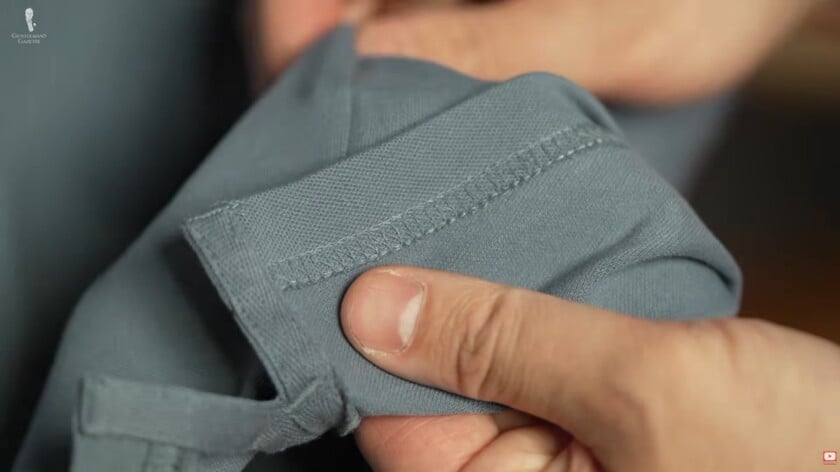
True luxury is found in the details of how the shirt is physically put together.
- Collar Construction (The Ultimate Test): Ribbed collars tend to lose shape and curl up at the edges over time. Raphael heavily favors a structured shirt-style collar made from self-fabric and reinforced with interlining.
- Placket Reinforcement: The button placket should be backed with a stable fabric lining to prevent it from sagging or warping.
- Stitching & Seams: Look for clean overlock stitching and look out for loose threads, especially around stress points like the side slits or hem gussets.
- Range of Motion: Features like small triangular fabric inserts (gussets) provide better physical flexibility.
4. Hardware, Hardware Attachments, & Aesthetics
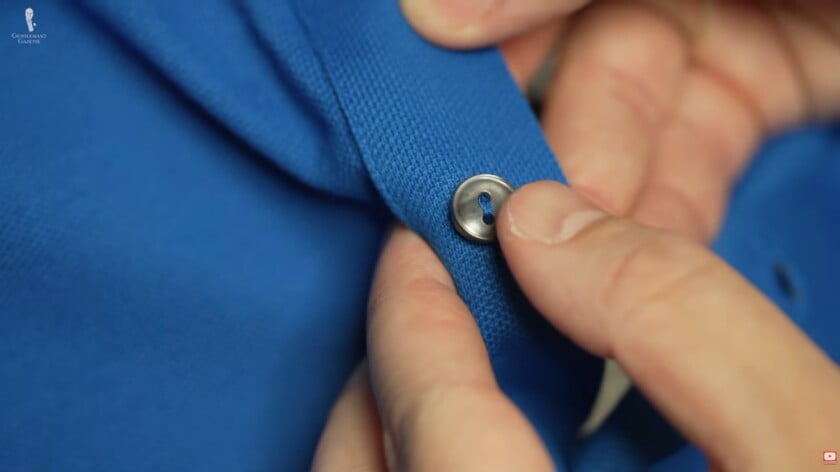
The small accents on a polo dictate whether it looks like a cheap commodity or a piece of refined menswear.
- Button Materials: Premium, natural materials like Mother-of-Pearl or Corozo (tagua nut) are always a good sign. Cheap, generic plastic buttons immediately lower a shirt’s score.
- Button Engineering: Buttons should ideally feature a thread “shank” (a small stem of thread elevating the button) to allow seamless buttoning without pulling the fabric. Horizontal buttonholes on the placket are also a sign of high-end tailoring.
- Branding & Logos: Clean, minimalist styling with no visible chest logos or pockets is preferred by Raphael. Large or contrasting logos are generally viewed as a negative, though iconic, tastefully executed designs (like a classic laurel wreath or subtle tipping on the collar) can earn a pass.
- Color Selection: A brand’s depth of options, offering a wide array of classic and unique hues, adds to its appeal.
5. Transparency & Country of Origin
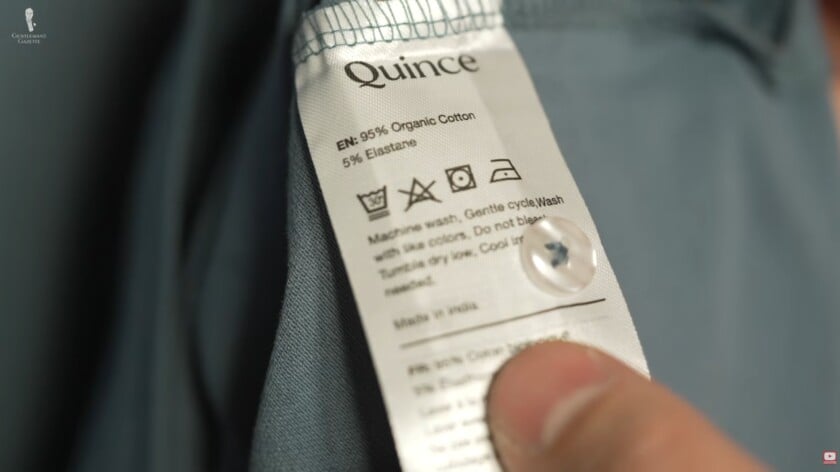
- Manufacturing Ethics & Labeling: We always value transparency. Note where the garment is produced (e.g., Italy, Germany, and Portugal vs. mass-production hubs) and consider docking points if a brand fails to legally label the country of origin on the garment.
How the Final Scores Are Calculated
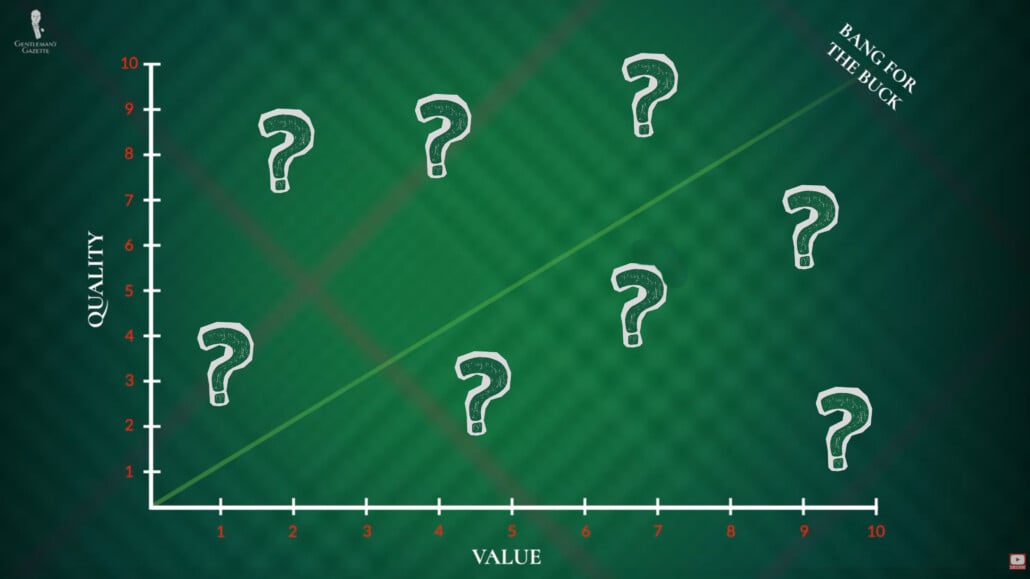
- Value Rating: A calculation of whether the shirt is worth its retail price tag. Because luxury price tags can skew this metric, a secondary “On Sale” value rating will also be considered provided to show if the shirt becomes a smart buy at a discount.
- Quality Rating: A pure evaluation of the shirt’s physical construction, fabric, and fit.
Want to see our final scores? You’ll have to watch the video, but let us know in the comments below what your favorite brands of polo shirt are and see how they compare to ours.
FAQ
Why does Raphael prefer a “shirt collar” over a standard “ribbed collar”?
Standard ribbed collars are made of a stretchy, knit elastic material. Over time, exposure to sweat, washing machine cycles, and heat causes them to lose their elasticity, resulting in the dreaded “collar curl” where the edges roll upward. Raphael favors a shirt collar because it is constructed from the same fabric as the rest of the shirt (or a matching woven fabric) and is reinforced with an inner lining, allowing it to stay flat, crisp, and structured like a dress shirt.
What are Mother-of-Pearl and Corozo buttons, and why do they matter to Raphael?
These are premium, natural materials that signify high-end clothing construction:
- Mother-of-Pearl: Sourced from the inner lining of pearl oysters, these buttons are incredibly durable, cool to the touch, and have a beautiful, iridescent sheen.
- Corozo: Often called “vegetable ivory,” corozo is made from the hard nuts of the tagua palm tree. It holds dye exceptionally well, allowing the buttons to perfectly match the fabric of the shirt. Raphael favors these because cheap plastic buttons easily crack, fade, and ruin the aesthetic of an otherwise nice shirt.
What does it mean when Raphael says a button has a “shank”?
A thread shank is a small stem of tightly wrapped thread created underneath the button during the sewing process. This raises the button slightly off the fabric, giving room for the overlapping layer of the shirt placket to sit flat underneath it. Without a shank, the button is sewn flush to the fabric, which Raphael notes can cause the material to bunch up, pull tightly, or make the shirt difficult to button up.
Why does Raphael prefer 100% cotton over synthetic performance blends?
While brands market synthetic blends (like polyester, nylon, and spandex) as “moisture-wicking” or “performance” fabrics, Raphael notes that they often feel like wearing a plastic bag in the summer heat. They trap heat against the skin, stick to your body when you sweat, and can retain chemical odors. High-quality 100% long-staple cotton allows for a completely natural, open mesh structure that breathes infinitely better.
How much do online size guides factor into Raphael’s value rating?
Significantly. Raphael highlights that sizing varies wildly across brands; for instance, one brand’s “Large” might fit exactly like another brand’s “Extra-Extra-Large.” A high-quality shirt loses immense value to Raphael if a customer follows the brand’s proprietary online sizing calculator and still receives a garment that fits poorly or like a baggy potato sack. Accurate sizing charts are crucial for consumer trust.
What To Watch Next

The Ultimate Polo Shirt Guide

Long-Sleeve Polos vs. OCBD
Understand Summer Fabrics
No Criquet?
At this point, Criquet is virtually the only polo shirt on which I’ll spend money…
Those are jersey polos, not pique polos
The best polos are made by John Smedley in England. Three buttons, sea island cotton, no logo.
John Smedley just offers knit polos, not pique polos. It’s a different kind of material. Knit polos are more likely to pull a thread because of the size of the knit and just need a bit more maintenance. PK polos are harder wearing.
Great analysis, though I think you missed one construction detail: a taped shoulder and neckline is crucial to preventing undue stretching in those areas.
And I might quibble just a bit about “self” or ribbed collars. A ribbed collar CAN work all right, if it’s around 3″ wide and not pre-pressed along the roll line, but you’re otherwise absolutely correct.
Tell me more what you mean with taped shoulder.
Sven, the neckline should have a narrow (3/8″) twill tape attached to cover the raw edges and also prevent undue stretching. The shoulders should also have tape attached, or, at a minimum, have the seam overlocked well and sewn at 3/8″, then stitched down.
That said, I have some relatively expensive knit polos from Paul James (English) which only have the shoulders finished with a very narrow overlock… they’re OK, and you don’t feel the shoulder seam, and so far no problems, probably because they’re a narrow very tight stitch on a fine knit. I hate their narrow (2″) knit collars, but am otherwise happy with the fit and ribbed bottom and sleeve hems. I’m also very partial to Jonny collars, which these have and are why I found them.
You asked about favorite brands. First of all, they have to be 100% cotton pique. The shirts made from technical fabrics of any fiber content/combination are really terrible. My favorite polo by far is a 30-year old Gap medium heavy knit Jonny collar, with taped neckline and shoulder seams, and a perfectly made knit collar, though it’s now dying. My more recent acquisitions I quite like are actually Port Authority pique polos, which also have taped necks and stitched down shoulder seams, medium-weight fabric, and the fit is good. I don’t love the somewhat stiffer front plackets, but they’re OK. I’d prefer the plackets to simply be double-folded self fabric then stitched down. A couple of the newer Amazon polos I’ve tried are made that way, though the construction otherwise is quite average.
I entirely agree with you about Lands’ End fit — way too long, and boxy, and the fabric wants to “bag”. My wife wouldn’t let me out of the house in them! But that was many years ago.
Where are the rankings? I can’t find them, what did I miss? When I click the links all I get are how to buy this shirt.
They are in the video.
Very well thought out and articulated reviews of these Polos offered by these brands. The Riviera is also what I was looking for, I do wear a polo for a side job I have, brand is Edward’s made in Egypt, very well made and fitting and breathable extra button and again so well fitting. Only those darn ribbed collars, they curl. Again great review and made me rethink what I look for in my polos more in depth. Thanks.
Interesting walkthrough. Most of my polos are John Smedley that I prefer above Sunspel. It would have been nice, if John Smedley was also included in the program.
I always appreciate the deep dives into classic craftsmanship here. It actually got me thinking about the lost tailoring of vintage sporting uniforms, specifically baseball.
If you look at the evolution of the jersey, the transition in the early 1970s from heavy wool flannel to double-knit polyester completely changed the structural aesthetic of the garments. The pre-70s uniforms featured incredible chain-stitched embroidery and heavy felt lettering that required genuine tailoring skill to assemble.
I’ve been trying to find accurate modern reproductions that actually replicate that heavy flannel drape and authentic stitching. I’ve been comparing the construction on pieces from Ebbets Field Flannels, some of the retro cuts mentioned on pro kit archive, and hunting through vintage curators on eBay. It’s fascinating how difficult it is to find that genuine mid-century tailoring in modern sportswear reproductions.
Has the Gazette ever considered doing a historical piece on the tailoring and fabrics of early 20th-century athletic wear?
I have the Sunspel in navy. Nice shirt yet faded immediately.
I liked the Lacoste shirts back in the 80’s with the longer tail and made in France.