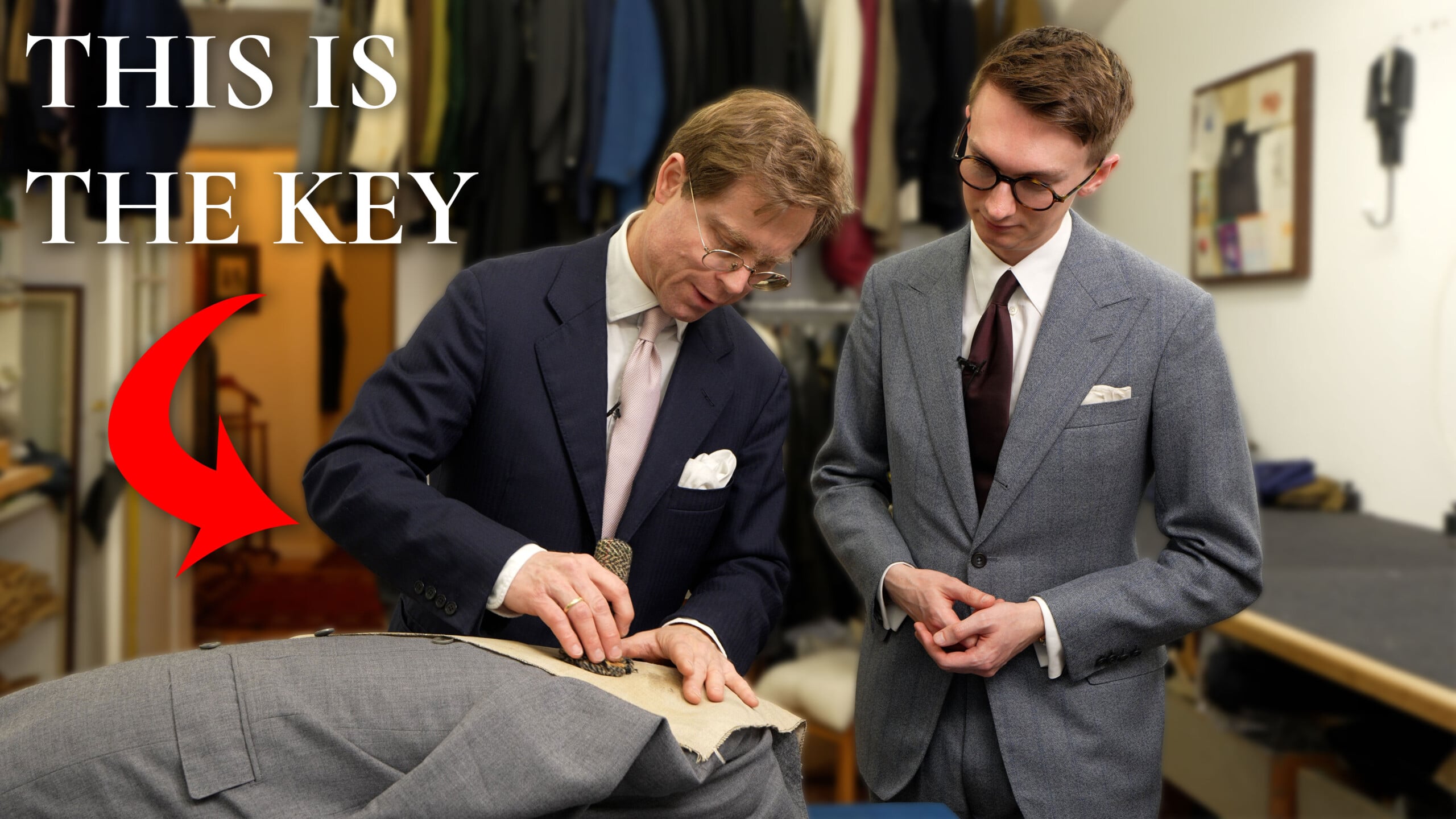
Most dry cleaners ruin a suit’s silhouette by blowing steam from the inside out, but for Michael Possanner, pressing is a vital act of nourishment that respects the “curves and molds” of the jacket. Learn why he treats wool like “the earth of a flower” and how his specific techniques restore the three-dimensional shape that industrial machines destroy.

The Art of the Press
“Feeding” the Cloth
Jack travels to Vienna to visit the atelier of Master Tailor Michael Possanner to discuss a vital but often misunderstood aspect of garment care. Michael shares his unique philosophy on why wool acts like a living thing that needs to be “fed” to survive. He explains why the standard approach to ironing—and even the methods used by many professionals—can actually “starve” the fabric over time.
Defining Viennese Comfort with Michael Possanner
Tailor vs. Dry Cleaner
You will learn the crucial difference between simply removing wrinkles and truly restoring a garment’s shape. Michael demonstrates how he uses a specific set of heritage tools to navigate the complex curves of a bespoke jacket. It is a masterclass in preserving the three-dimensional architecture of your wardrobe against the flattening effects of daily wear.
“I always like to compare… like watering your plants. If you never press a garment, the cloth has no food.”
Michael Possanner, Master Tailor
Highlights from this Video
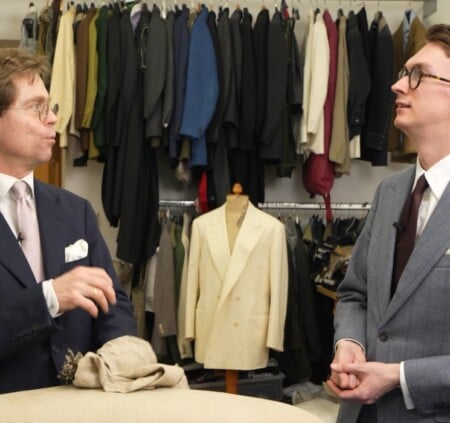
“It takes out the humidity much, much quicker.”
Why use a 12oz iron? Michael has an answer here.

“Like a spark before having it fully on the garment.”
Watch how Michael hovers the heavy iron just above the fabric, never letting it “fall completely,” ensuring the heat penetrates without crushing the wool.
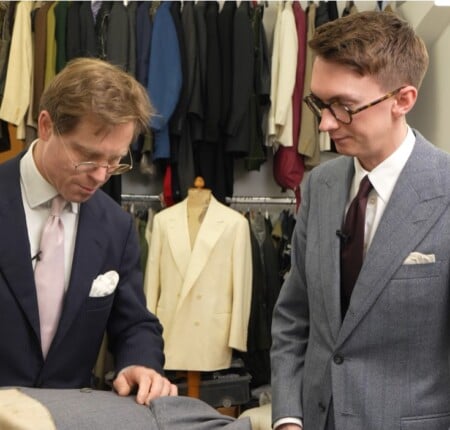
“We sometimes take off the buttons… press it and then put the buttons back on.”
Find out in this timestamp why!

“It helps flatten the wool that has come to stand up.”
Did you know pressing can prevent holes? Michael explains how friction causes fibers to “stand up” and felt.
Ask the Expert
Why does a tailor use a “Pressing Pillow”?
Unlike a flat ironing board, a pressing pillow (or ham) is round and dense. Michael Possanner explains that this shape allows the tailor to press the garment while respecting the “roundness that is across the chest”. Pressing a jacket flat destroys the three-dimensional shape created during the tailoring process.
Does pressing help with wear and tear?
Yes. Michael notes that pressing is a “preventative measure”. Natural friction (like under the arms) causes fibers to stand up and felt; pressing reunites these fibers with the base, preventing them from being rubbed off completely, which eventually causes holes.
How often should you press a jacket?
It depends on how heavily you sweat, but Michael suggests a jacket can be worn “10 or 15 times easily” before needing a press. However, if you sweat heavily, the humidity from your body will cause wrinkles faster, requiring more frequent care.
What happens if you press artificial fibers?
Michael warns that artificial fibers will “start to smell disgustingly sweet” when heated. While they are harder to crease, they lack the natural responsiveness of wool and must be treated with care to avoid melting or damaging the fabric structure.
“You can imagine wool is like the earth of a flower… So if you press it, you practically feed it with water and it… endures the life of the jacket.”
Michael Possanner, Master Tailor
What to Watch Next
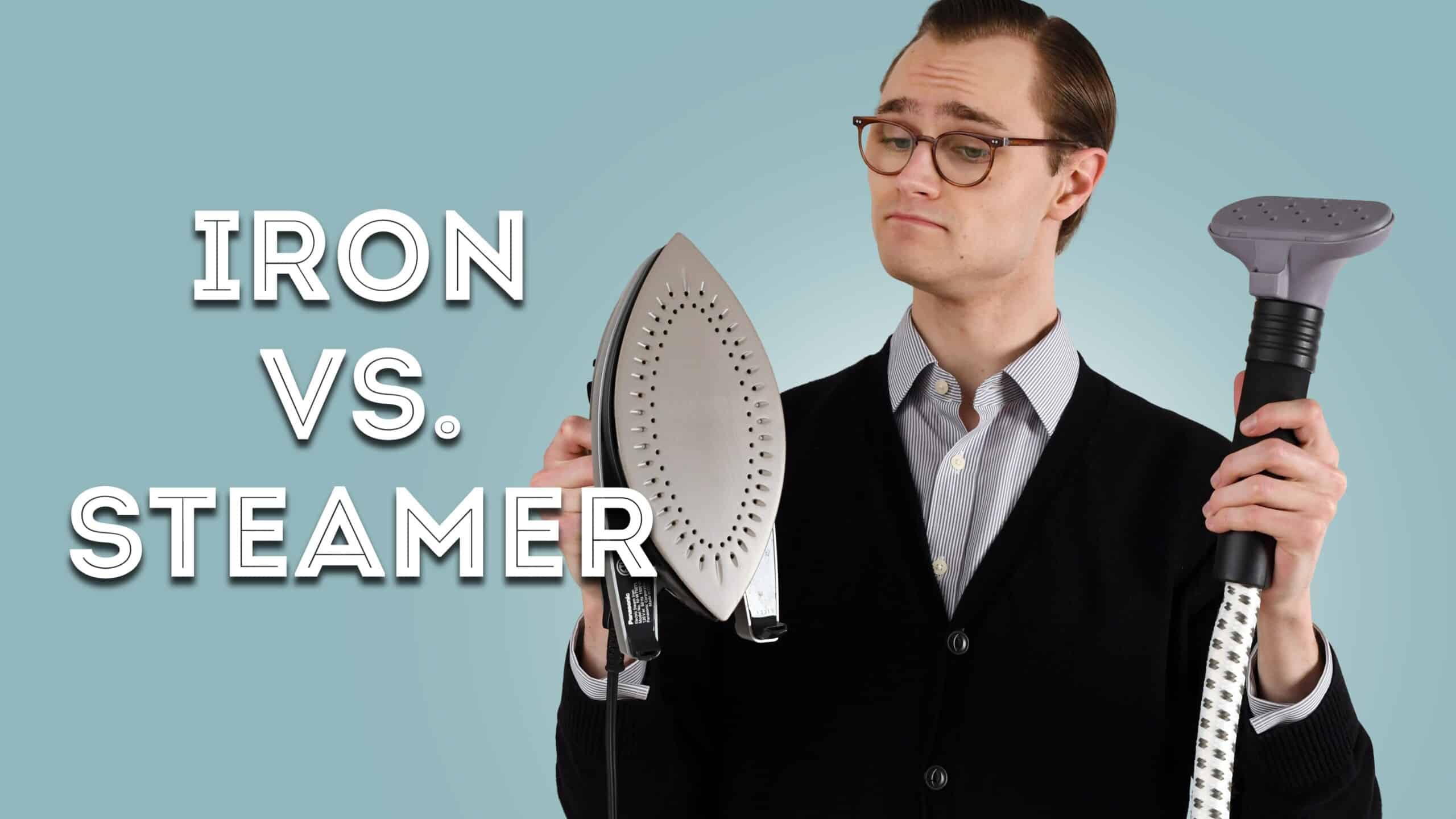
Iron vs. Steamer
Which is Best for Your Menswear Wardrobe?
We dive deeper into the debate between steaming and ironing to help you decide which method is actually safe for your suits.
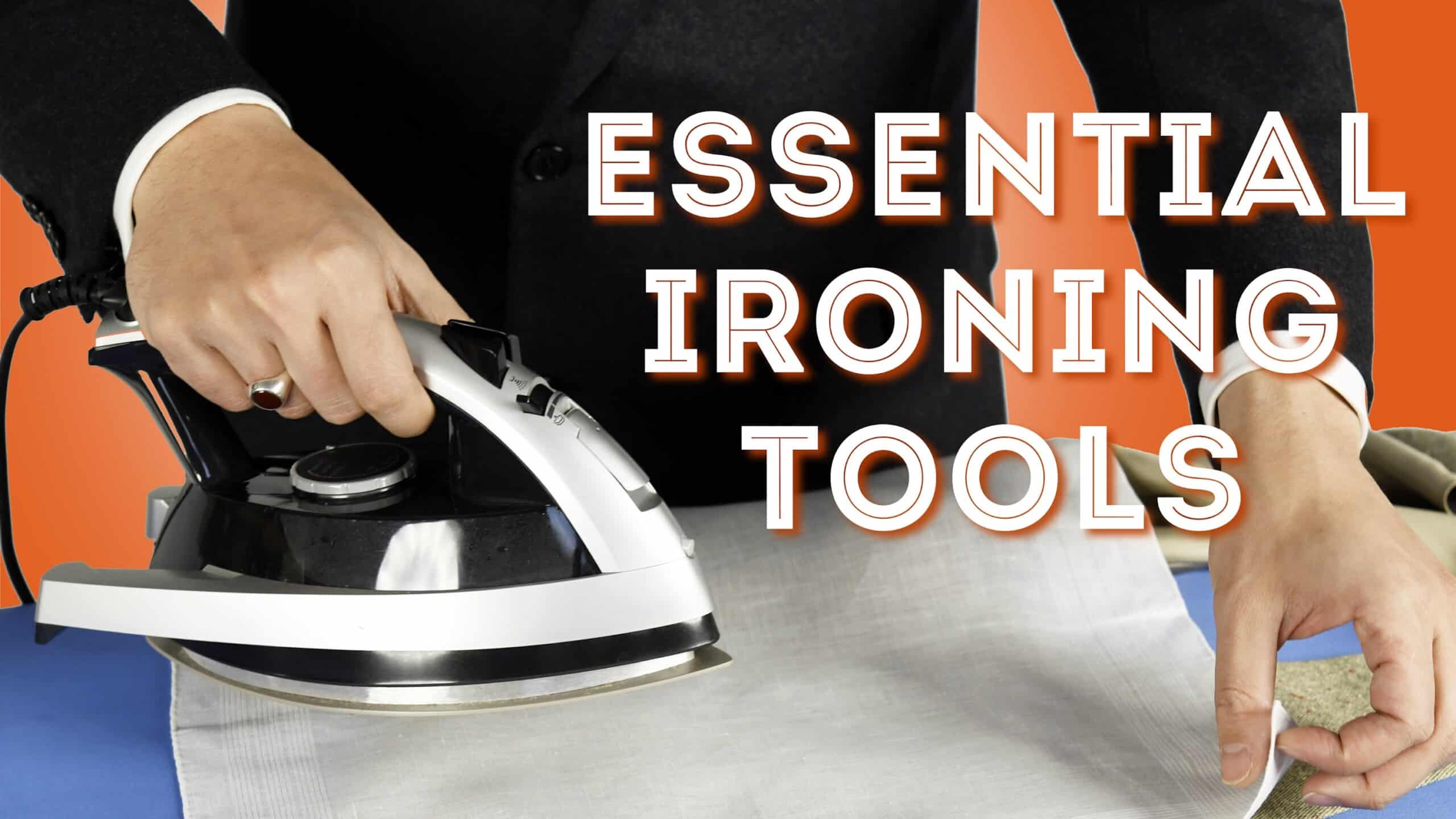
Essential Ironing Tools
Part I The Complete Guide to Ironing
This guide covers the essential tools you do need to achieve a professional finish at home.
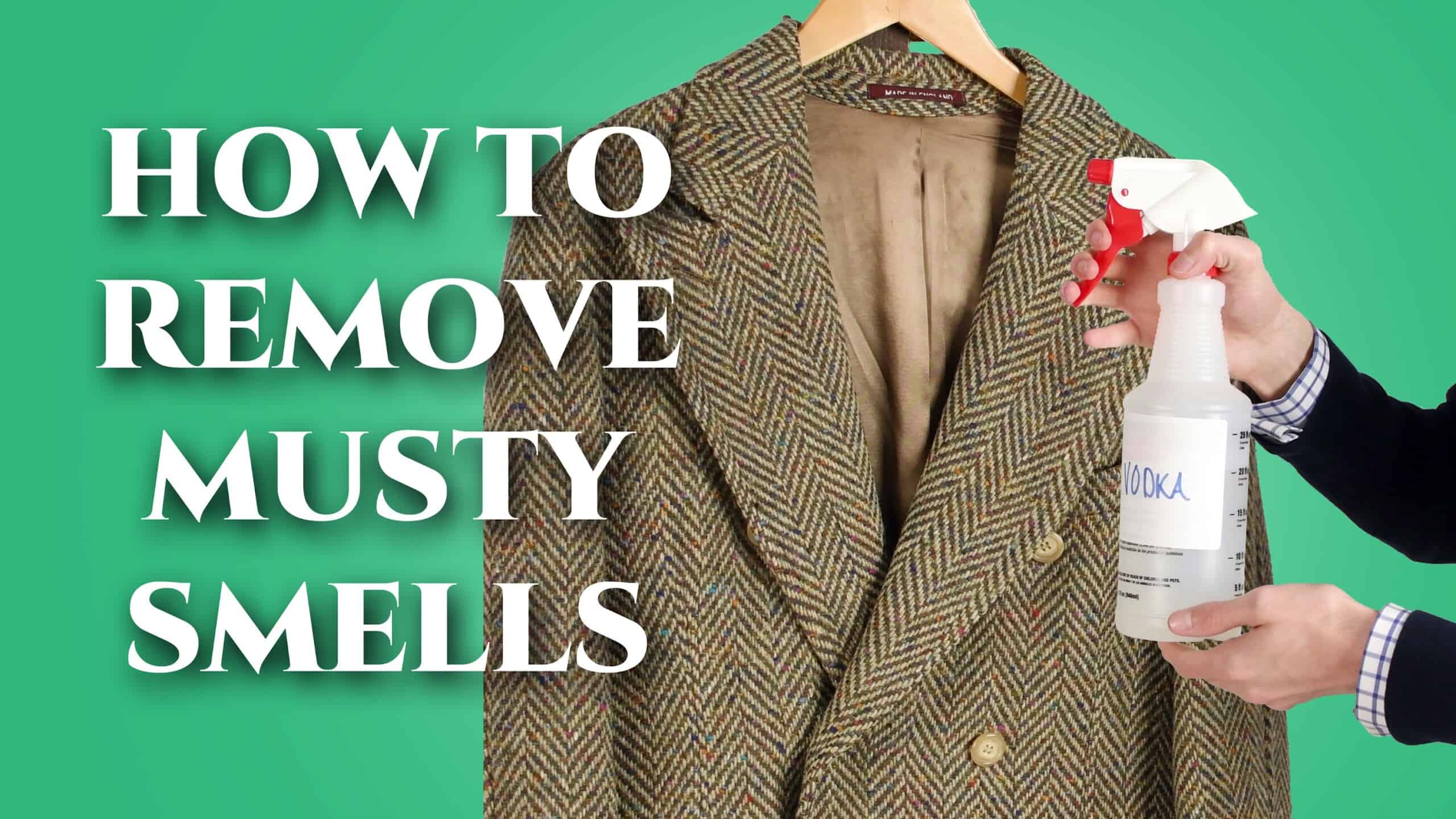
How to Get the Musty Smell Out of Clothes
Learn the professional secrets to removing stubborn vintage odors without damaging delicate fabrics.
I would start with sleeves and finish with the body sections. Pressing sleeves requires many manipulations of the garment that will induce crimps on just pressed body areas. Same applies to ironing shirts – sleeves, back, front, then collar.