
Most men assume that if they buy their “size,” the pants should fit perfectly off the rack. The truth? Real menswear is a canvas, not a finished painting.
In this practical fitting session, Sven Raphael Schneider and designer Elin Estelle take Jack Collins through a live alteration of our Stancliffe Corduroy Trousers. From solving the “Sock Stick” issue to explaining the mechanics of the “Morning Cut,” here is your technical roadmap to a proper, comfortable fit.

The “Vanity Sizing” Myth
Before we stick a single pin, you need to know what you are buying.
- The Reality: Most mass-market brands lie to you. A “Size 34” label is often actually a 36-inch waist to make the customer feel thinner.
- The Standard: We use True Sizing. The Stancliffe corduroys Jack is wearing are a Size 32, which measures exactly 16 inches across the half.
- The Lesson: Always ignore the tag and measure the garment itself.
Don’t Fall for Menswear Gimmicks
The 4-Step Alterations Checklist

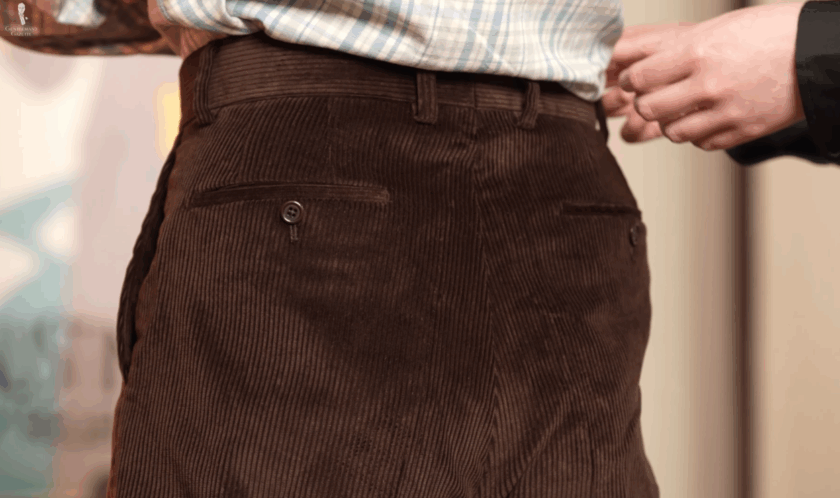
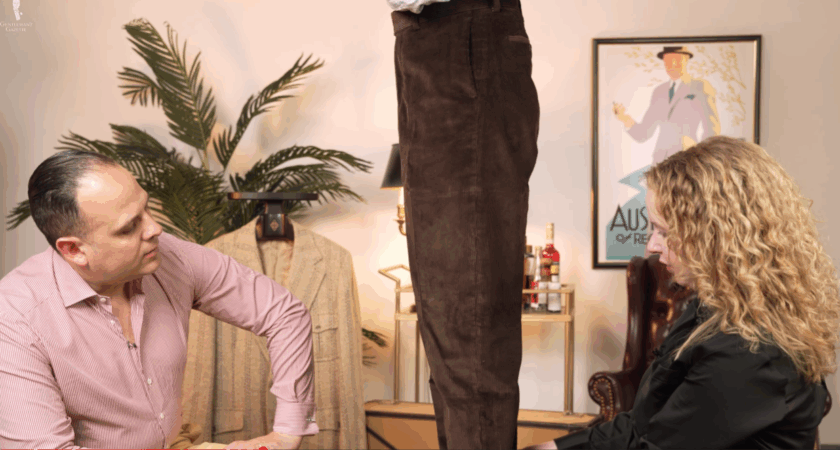
1. The Waist & Rise (The Foundation)
We built these trousers with a High Rise to sit above the natural waist (above the belly button), which flatters the torso.
- The Check: Can you fit two fingers in the waistband? If yes, it’s comfortable. If it gaps, it needs to be taken in.
- The Fix: Always alter from the center back seam first. It is cleaner, cheaper, and avoids ruining the geometry of the side pockets.
2. The Thigh Taper (The Silhouette)
Jack prefers a classic look, but “classic” shouldn’t mean “baggy.”
- The Pin: Elin demonstrates how to pin excess fabric from the side seam to create a cleaner line without restricting movement.
- The Warning: If you are altering patterned pants (like checks or plaids), you must alter from the inside leg (inseam) to avoid breaking the pattern match on the visible outer leg.
“Classic doesn’t have to mean Grandpa.” You can have a comfortable, high-rise fit that still looks sharp and modern—it just requires the right taper.
3. The “Sock Stick” & Hem Width
Why does Jack prefer an 8-inch hem opening?
- The Issue: Corduroy is a “grippy” fabric. If your pant leg is too narrow (e.g., 7 inches), it will catch on your over-the-calf socks when you stand up, requiring you to constantly pull them down.
- The Solution: An 8-inch width allows the fabric to drape cleanly over the shoe without getting stuck.
4. The Case for Cuffs (Turnups)
- The Aesthetic: Cuffs add visual weight to the bottom of the trouser, helping the heavy corduroy fabric hang straight. Jack opts for a cuff for that classic drape.
- The “Morning Cut”: Raphael discusses the rare angled hem (longer in the back, shorter in the front). It creates a perfect break without a cuff, but it requires a very skilled tailor to execute correctly.
To Cuff or Not to Cuff?
Conclusion
The difference between looking “okay” and looking dashing isn’t usually the brand—it’s the tailor. By understanding the geometry of your trousers, from the rise to the hem width, you take control of your style.

Remember, even the most expensive pants will look cheap if they don’t fit, while a properly altered pair of sturdy corduroys can look bespoke. Don’t be afraid to instruct your tailor; after all, it is your fit.
Shop the Trousers Featured in This Video
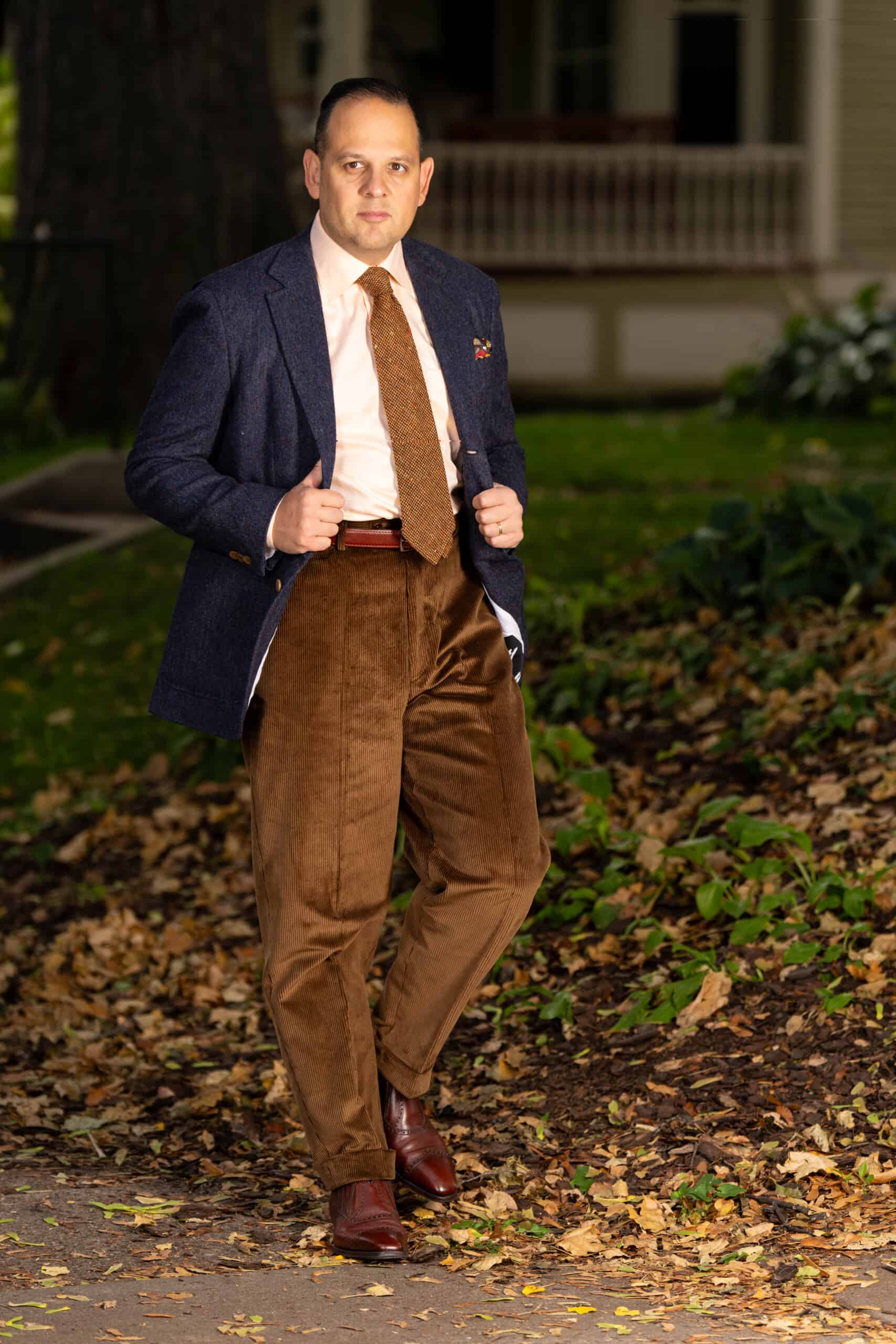
Elegant Earthtones
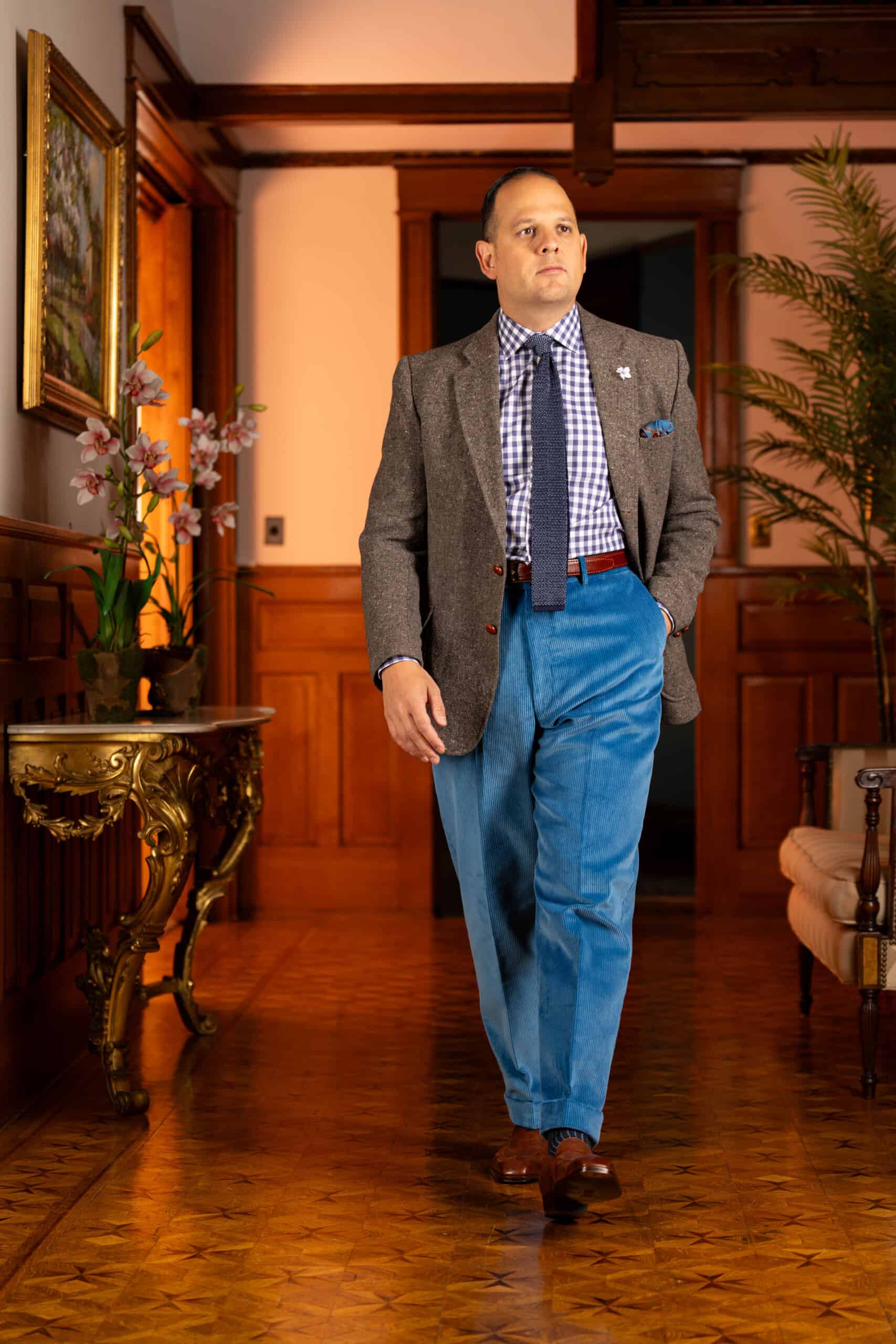
Vibrant Bright Colors
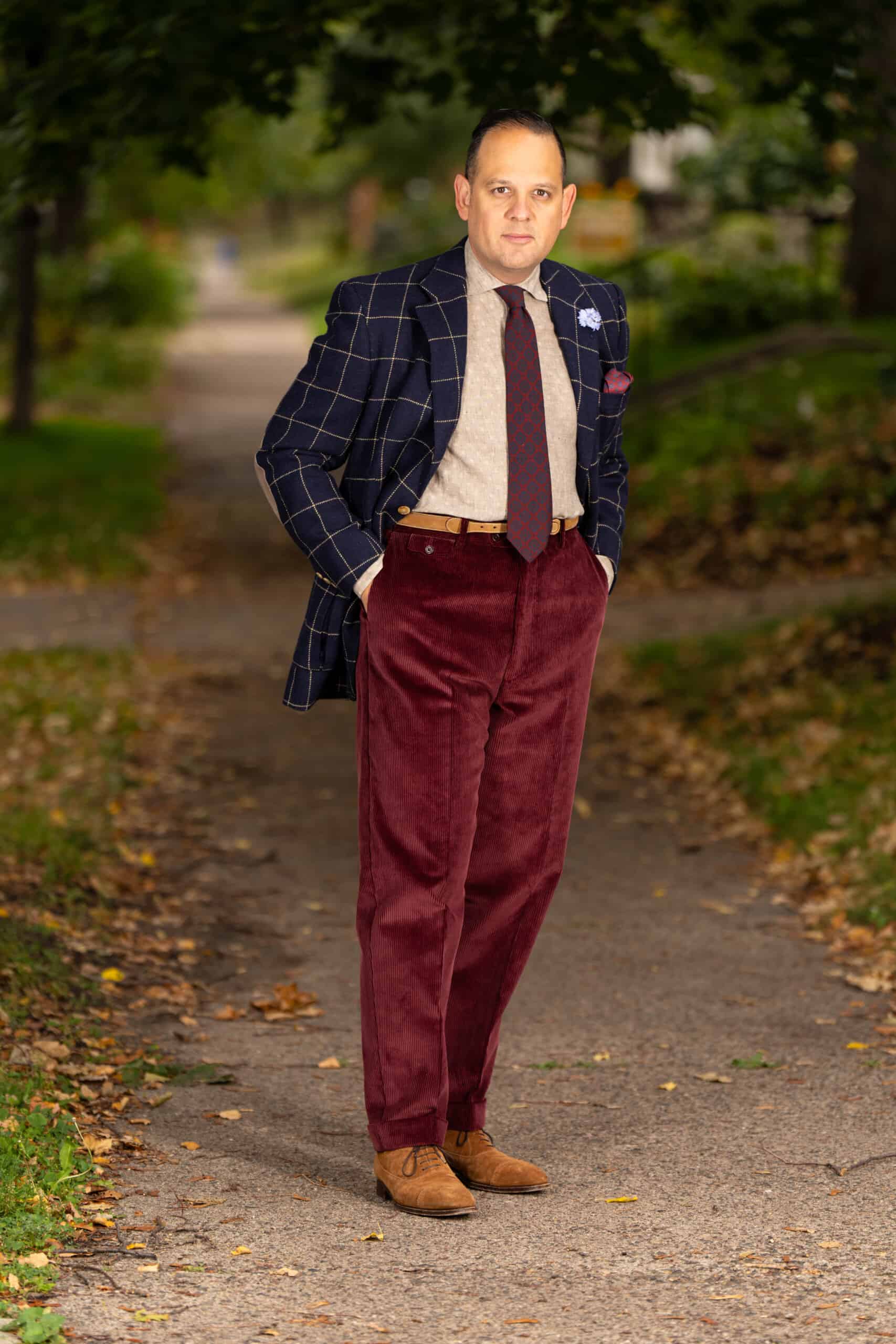
Plush Jewel Tones
Frequently Asked Questions
Can I make the waist of my pants bigger?
Yes, but it depends on the “seam allowance.” Quality trousers (like our Stancliffe Corduroys) are built with extra fabric in the rear center seam specifically to allow for this alteration. Always check the inside of the waistband before you buy.
Why do my pants stick to my socks when I walk?
This is known as the “Sock Stick” issue. It happens when the leg opening (hem) is too narrow for the fabric weight, causing friction against your socks. For materials like corduroy, we recommend a minimum hem width of 8 inches to ensure a clean drape.
Is “High Rise” only for older men?
Not at all. A high rise simply means the waistband sits at your natural waist (above the hips). This elongates the leg line and prevents your shirt from untucking, creating a more flattering, timeless silhouette for men of all ages.
Should I get cuffs (turnups) on my trousers?
For winter fabrics like corduroy or flannel, yes. A cuff adds necessary weight to the bottom of the pant leg, helping the fabric pull downward and hang straight. Jack recommends a 2-inch cuff for the best balance.
What to Watch Next

How to Buy Pants That Fit You Well
Now that you know how to alter them, learn how to spot the “dealbreakers” that no tailor can fix. We break down the rise, seat, and pleats to look for off the rack.
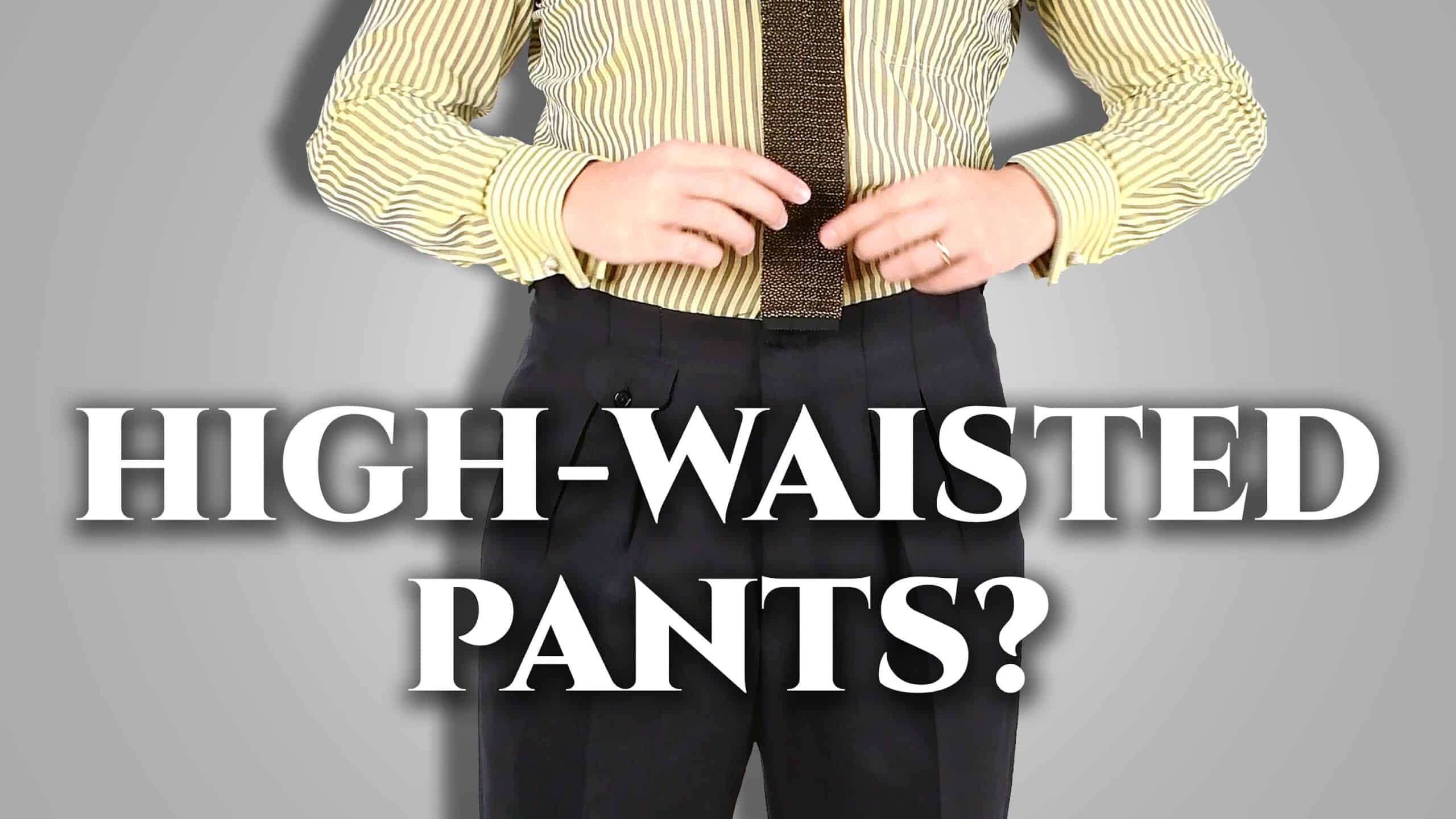
Should You Wear High-Waisted Pants?
We mentioned the “High Rise” fit in this video, but why does it matter? Discover why the lower-rise trends of the last decade might be ruining your proportions.
8 Essential Trousers for Your Closet
Once you have your corduroys sorted, what comes next? From grey flannels to the perfect chinos, here is the foundational wardrobe every gentleman needs.
Great informative article, as usual. Thanks Sven and Jack! One quick thing, in the article pictures, in the picture where you show the burgundy cord trousers, you are wearing a navy windowpane jacket… could I trouble you to ask where it comes from? I really like it…