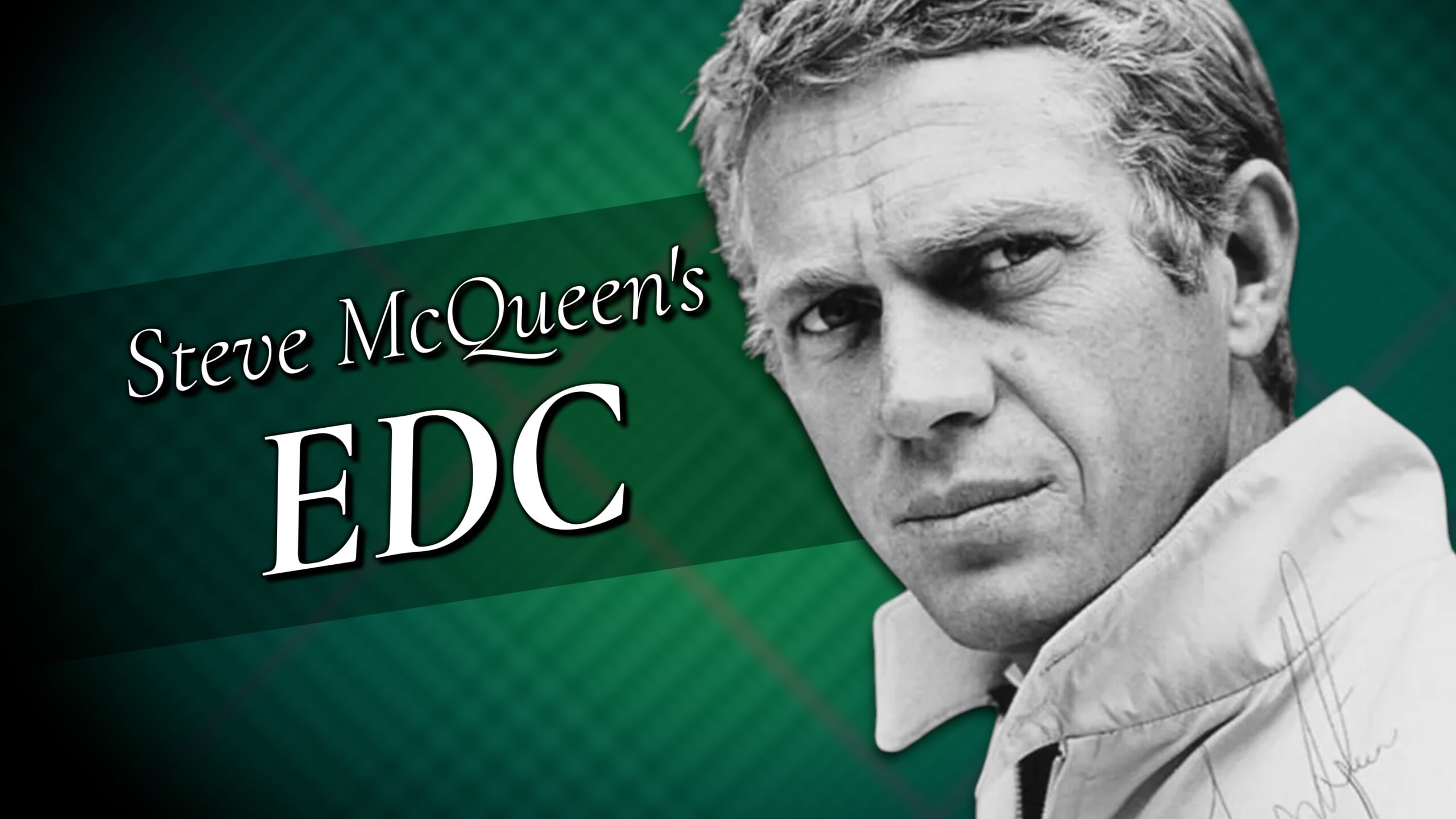
Steve McQueen — the King of Cool. Effortless, as if he simply rolled out of bed looking that way. But if you look at what the man actually carried in his pockets, you get a different story altogether. It’s a story of resilience, not just style.
- The Rolex Submariner Ref. 5512 He Wore Off Camera
- The Persol 714 Folding Sunglasses From The Thomas Crown Affair
- The TAG Heuer Monaco Ref. 1133 From Le Mans
- The Silver Signet Ring — His Only Jewelry
- The Gold Pocket Watch From His Uncle Claude
- The Money Clip That Reflected a Hard Start
- The BSA Hornet Key From His Racing Life
- The Zippo Lighter He Kept Within Reach
- What Steve McQueen’s Everyday Carry Really Reveals
- Steve McQueen EDC FAQ
- What to Watch Next
So today we’re going through eight items, the real items he carried with him. These aren’t just costume pieces some studio handed him. They’re the tools he used as he lived his life — his real everyday carry. After all, it’s the little things that show who we really are.

The Rolex Submariner Ref. 5512 He Wore Off Camera
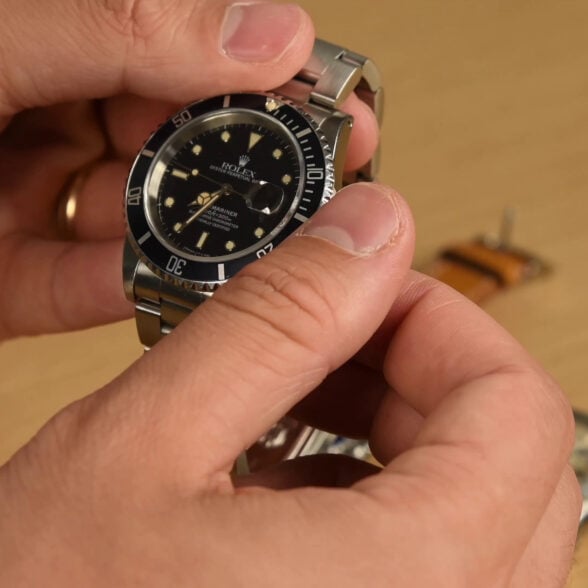
This was the watch on his wrist when the cameras weren’t rolling. McQueen’s own Rolex Submariner was the reference 5512, and he wore it because he liked it, not because a stylist put it there.
What Makes the Ref. 5512 Stand Apart
NOT JUST ANY SUBMARINER
Now, here is what you need to know about the Submariner. Rolex built it in 1953 as a dive watch: waterproof, tough, made for guys who actually needed a watch that worked underwater. The 5512 came along in 1959, and it is a specific version collectors care about because it added crown guards, the little shoulders of metal that protect the winding crown from getting knocked around.
Those crown guards may seem like a small detail, but they make all the difference in protecting the watch. This version also became the first Submariner with a chronometer-certified movement, meaning Rolex had the accuracy independently tested and verified. So this is not just a Submariner. It is a more refined, protected version of one.
Why does this matter? Because McQueen wore this watch off-camera, in his regular, everyday life. In fact, he loved it so much he wore it in 1974’s The Towering Inferno. Now, most actors wear whatever wardrobe hands them — a costume department picks the watch, or a brand deal is struck, the actor wears it, and nobody thinks twice. McQueen did not work that way.

He insisted on wearing his own gear, his own watch, in the film. That is not vanity. That is a guy who trusted his own choices more than he trusted anyone else’s. That kind of conviction is rare, especially in Hollywood. And that instinct is part of the reason why he was the king of cool. But wearing a great watch helps with that nickname, too.
The Persol 714 Folding Sunglasses From The Thomas Crown Affair
Picture Steve McQueen. Chances are you’re seeing those crystal blue lenses and the frame that folds flat. That image sticks harder than the Mustang or the leather jacket. It’s the one most people actually keep in their mind.
So what are we looking at? The Persol 714 has a distinct blue tint to the lens that is instantly recognizable once people start paying attention. But perhaps the most unique feature is the fact that these are folding sunglasses, designed to collapse small enough to fit in a shirt pocket. And that practicality is exactly why McQueen liked them. Personally, I prefer something like a rich leather case to protect a pair of sunglasses, and I’m sure the King of Cool would have used something like this for his non-folding pairs.
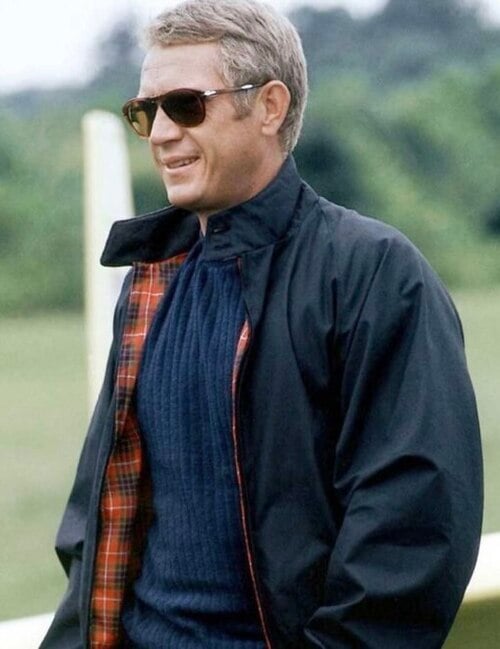
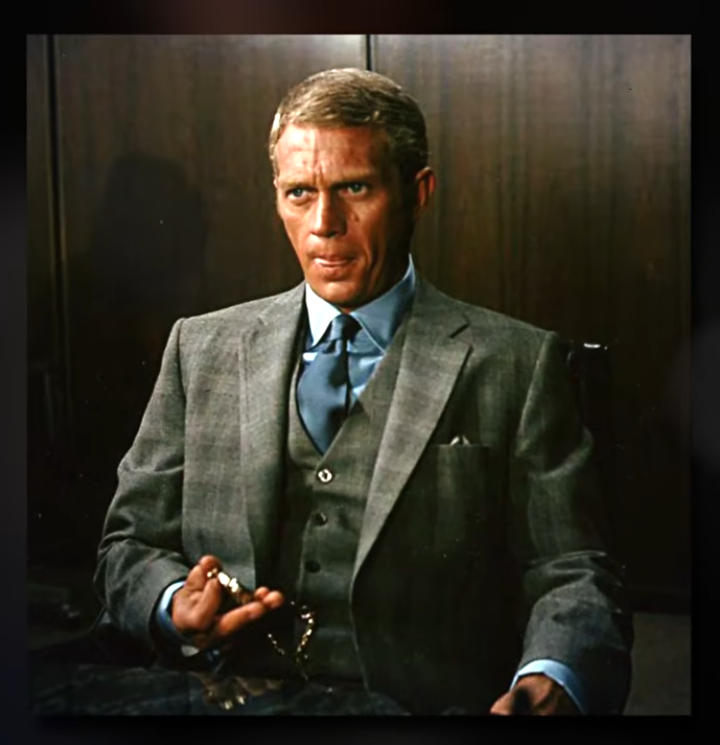
Here’s the part that matters. He owned these and wore them on his own time, before 1968’s The Thomas Crown Affair ever went into production. Nobody dressed him in them. The writers noticed he already wore them off-set and wrote the glasses into the script because the image was already working. That’s the opposite of how most movie style icons get built.
And there’s a number that proves how much that image endured. A blue-tinted pair from his collection — believed to be the ones he wore in the film — sold at auction in 2006 for $70,200, for a pair of folding sunglasses. That’s not a price tag for fashion. That’s a price tag for myth.
So no stylist handed him his signature look. He already had it, sitting in his own shirt pocket, and the movie just caught up to what he was already doing.
Persol Sunglasses: Is It Worth It?
The TAG Heuer Monaco Ref. 1133 From Le Mans
One of these watches sold at auction for $2.2 million. Let me tell you why.
The TAG Heuer Monaco reference 1133 has a square case and a blue dial. That sounds normal now, but for 1969 it was genuinely unusual. At this point in history, square watch cases were small, slim, and elegant. This watch was rugged, masculine, and designed as an automatic chronograph — a self-winding movement with stopwatch functions — at a time when that kind of engineering inside a square case was close to unheard of.
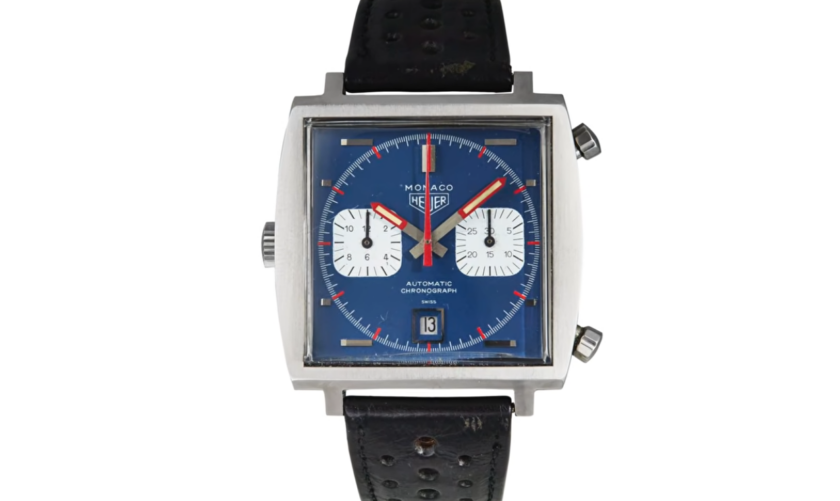
Here’s why this deal actually holds up where most actor endorsements fall apart. McQueen wore the Monaco for Le Mans in 1971, and TAG Heuer paid him to be their ambassador. Normally that’s the end of the story — a paycheck for a photo-op. But McQueen actually raced. He drove competitively in real life, understood cars and speed on a level most actors playing racers never touch, so this ambassador deal made sense in a way most celebrity endorsements simply don’t. He wasn’t borrowing credibility; he already had it.
He bought six of these watches just for the Le Mans shoot, and decades later one of them hit that $2.2 million auction price I mentioned. The Rolex Submariner represents a more private version of McQueen — this is the watch he wore because he liked it. The Monaco is McQueen in the public eye — the watch he wore because someone paid him to sell an image, even if he happened to believe in that image too.
TAG Heuer: Luxury Icon or Overrated?
The Silver Signet Ring — His Only Jewelry
Steve McQueen wore just one ring, with no pinky rings, no stacked bands, no chains, nothing hanging off him to catch the light, and it was the only piece of jewelry he ever bothered with outside of his watches.
So what exactly is a signet ring? It’s an old piece of menswear going back centuries, and its original job had nothing to do with looking good. A signet ring carried a raised design, usually a family crest or a set of initials, and men pressed it into hot wax to seal letters and documents, leaving a mark nobody could fake.
So the ring worked as a signature before most people could even read or write. Over time it turned into something else too — a personal mark a man wore on his own hand, tied to his name and his family, whether or not he ever sealed a single envelope with it.

For McQueen specifically, he took the heritage of the signet ring and made it his own, with a distinctively individual spin on his initials. This silver piece of statement jewelry personifies a very different instinct from what you see in modern celebrity culture, where more is usually the whole point.
Look at how a lot of famous men accessorize today, with rings on nearly every finger, chains stacked three deep, and watches the size of a dinner plate, all of it built to get noticed in a photo. But McQueen’s approach runs the opposite direction: one ring, chosen and worn because he liked it, not because it needed to compete with anything else on his body.
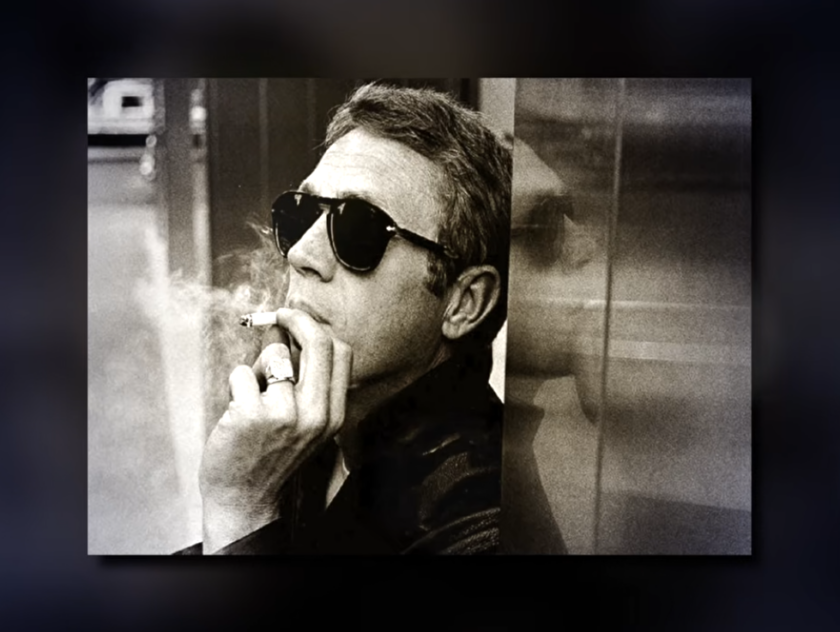
This is how a signet ring still works today. If you’re ever considering wearing one yourself, understand that a signet ring is not a status symbol and was never built to shout wealth the way a diamond-crusted piece might. Instead, it works as a personal mark that belongs to you specifically — whether that’s initials, a family crest, or a design you chose because it means something to you.
The Gold Pocket Watch From His Uncle Claude
This is the most personal thing McQueen ever carried, so if you remember only one item from this piece, make it this one. It’s a gold pocket watch from his uncle Claude, who gave it to him when McQueen was eight years old, and engraved right on it is the line McQueen would recall for the rest of his life:
Read that again, because it’s doing a lot of work. Uncle Claude wasn’t McQueen’s father, but he was the one person in McQueen’s entire childhood who actually treated him like a son, and he said so in the writing on a watch he handed to an eight-year-old boy.
Now, to understand why that engraving lands so hard, you need the rest of the story. McQueen’s mother left him not once but repeatedly, and the years that followed were rough in a way that’s hard to overstate. Two stepfathers came through his life, both of whom mistreated him.
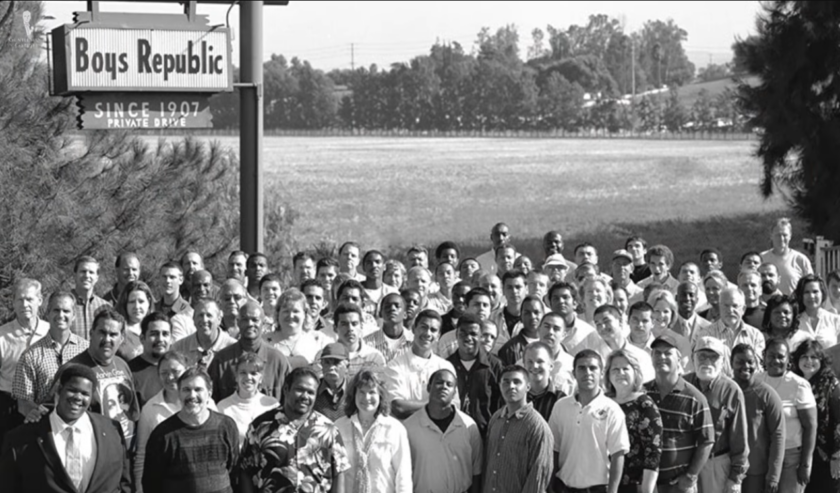
McQueen spent years bouncing between his mother’s house, wherever that happened to be at the time, and his uncle’s farm out in rural Missouri, before eventually landing in a boys’ home, the California Junior Boys Republic, as a teenager who’d basically run out of other places to go. Against that backdrop, one uncle on a farm giving an eight-year-old a gold watch and telling him he’d been like a son is not a small gesture, and it might be the only steady thing in his entire childhood.
Here’s the proof of how much it mattered to him. McQueen kept that watch his whole life — through fame, through the money, through three marriages, through motorcycle crashes that could’ve ended everything more than once; that watch stayed with him. Think about what everybody actually saw of Steve McQueen. They saw the Persols, they saw him behind the wheel of a Mustang, they saw the King of Cool: effortless, unbothered, exactly the image we opened with.
Almost nobody knew about the watch sitting quietly in his pocket the entire time, carrying the only unconditional love he got as a kid. That’s the same instinct he’s shown throughout all of his everyday carry items — something private, something chosen for what it means rather than what it shows — except this time it’s not sitting on his hand for the world to see but tucked away out of sight, which tells you exactly how much it mattered to him.
Should a Modern Gentleman Wear a Pocket Watch?
The Money Clip That Reflected a Hard Start
Now, open McQueen’s pocket and you won’t find a fat wallet stuffed with cards. Instead, you’ll find a money clip: simple and flat, with cash held tight against a slim piece of metal so nothing bulges out of his trousers. The whole purpose of a money clip is to keep your cash flat and your pocket from turning into a lump — no fold-over wallet packed with receipts and cards you don’t need, just bills held tight and minimal.
So why does this detail matter for a man like McQueen? He grew up with nothing, and that kind of nothing doesn’t wash out just because the money starts rolling in. Something slim and refined like a money clip is what a man carries when he’s thinking about what’s actually in his pocket. And for a man who grew up with nothing, that instinct runs deep.
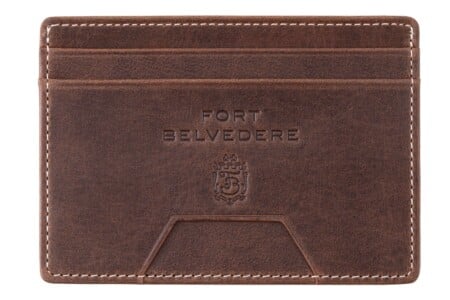
For me, a money clip is nice, but it’s less useful in an increasingly cashless society. A slim cardholder does the job just a little better, allowing for the everyday essentials and a few bills for those moments where cash is required.
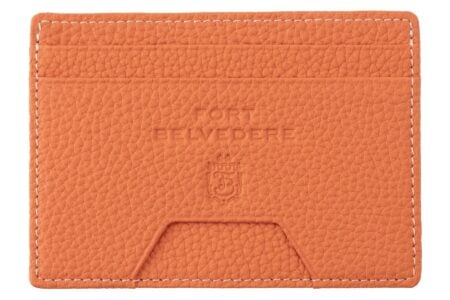
Now, McQueen’s relationship with money wasn’t simple frugality. He would go to a studio and bargain hard — and I mean hard — for gear he wanted for free: watches, equipment, anything he could talk them into handing over. Then he would quietly turn around and donate it to the California Junior Boys Republic, the same reform school that took him in as a teenager when he had nowhere else to go. Not to a charity with his name on the building, but to the exact kind of kid he used to be.
The BSA Hornet Key From His Racing Life
Steve McQueen owned more than 140 motorcycles in his life — a hundred and forty. The key we’re talking about here belonged to a BSA Hornet, not some polished showpiece sitting in a garage collecting dust but a genuine off-road racing bike built to take a beating in the dirt. Racing competitively, he entered events like the Baja 1000, the Mint 400, and the Elsinore Grand Prix.
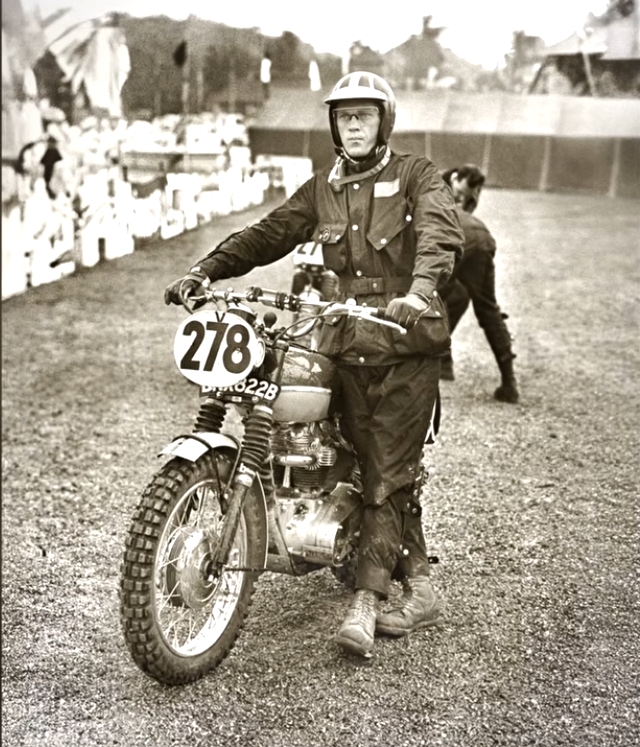
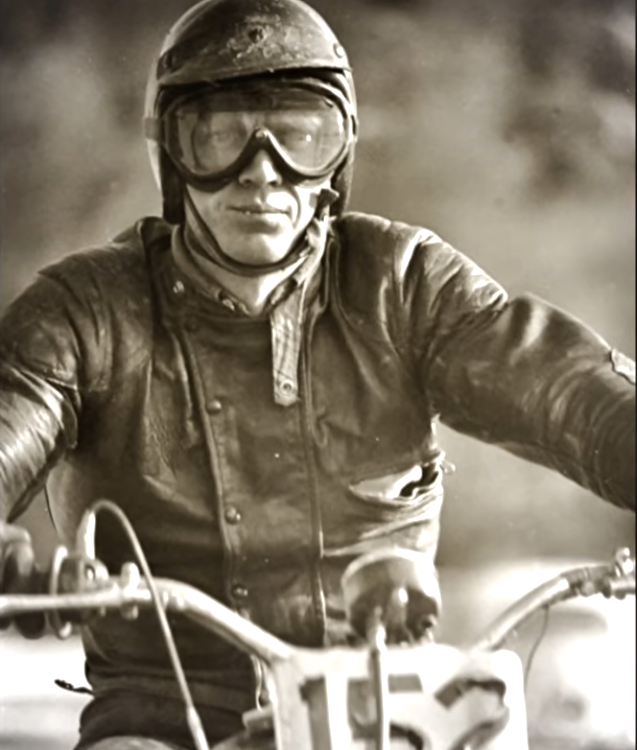
This wasn’t a celebrity playing at a hobby for a magazine spread; he entered some of these races under a fake name — “Harvey Mushman” — so judges and other riders wouldn’t recognize him and treat him differently. Win or lose, he wanted to do it on his own terms, not get waved through because he was Steve McQueen. It’s a level of authenticity you don’t often see from famous men.
Racing off-road on a bike like the Hornet meant crashes, and McQueen took plenty over the years, breaking bones and picking himself back up to race again. That’s not a man playing dress-up in leather; that’s a man who happened to also be famous. The racing was real, the crashes were real, and the key to that bike meant something.
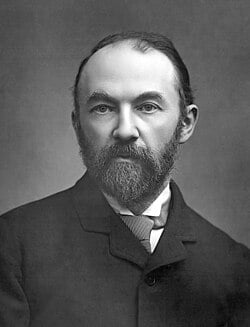
“So each had a private little sun for her soul to bask in; some dream, some affection, some hobby, or at least some remote and distant hope….”
Thomas Hardy, Tess of the D’Urbervilles
The Zippo Lighter He Kept Within Reach
Which brings us to the smallest item on this whole list: a simple Zippo lighter — an inexpensive, functional item that reliably did its job without any fuss. McQueen smoked heavily — unfiltered cigarettes — and he kept that lighter within reach constantly. It was as much a part of his daily uniform as his Harrington jacket and suede chukka boots.
While McQueen certainly carried several things worth a pretty penny, the Zippo has none of that cachet — it’s the cheapest thing he carried, no story, no auction record, just a simple lighter. Sitting right next to a watch that would later sell for $2.2 million. Proof of the real reason he was the King of Cool: he treated high- and low-priced items with the same respect, because of the value they had to him.
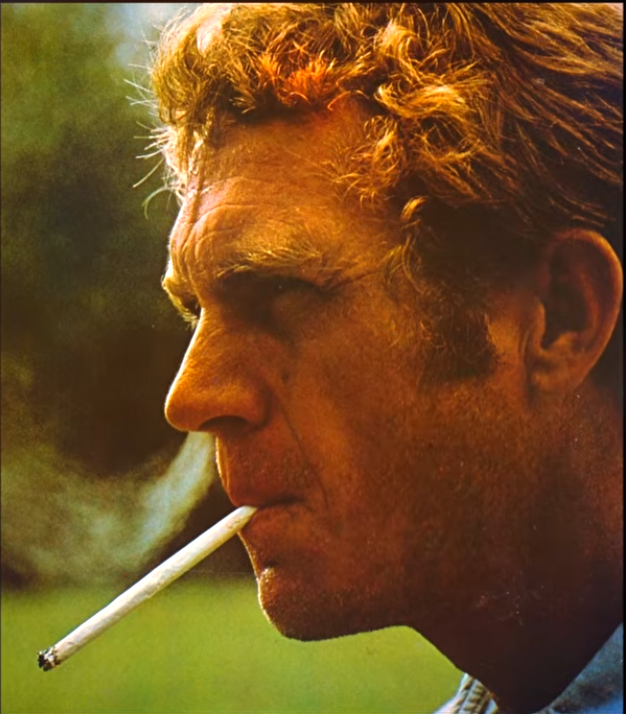
What Steve McQueen’s Everyday Carry Really Reveals
Now, here’s what McQueen’s everyday carry actually reveals. It was never about intentionally looking cool; it was about being genuine. His effortless style wasn’t actually effortless; it just looked like it because he cherished the things he owned and used. The Persols and the Monaco stole all the attention, but the pocket watch and the Zippo told you who he really was.
Which item surprised you most? Let us know in the comments below.
Steve McQueen EDC FAQ
What watch did Steve McQueen wear?
Off camera, he wore his own Rolex Submariner Ref. 5512 — a watch he chose because he liked it. On screen, for the 1971 film Le Mans, he wore the TAG Heuer Monaco Ref. 1133, the square-cased blue-dial chronograph he became an ambassador for.
What sunglasses did Steve McQueen wear?
His signature frames were the Persol 714, blue-tinted folding sunglasses that collapse small enough for a shirt pocket. He wore them off set before they were written into The Thomas Crown Affair (1968).
How much did Steve McQueen’s watch and sunglasses sell for?
One of the six Monacos he bought for Le Mans later sold at auction for roughly $2.2 million — the most expensive Heuer ever. A pair of his Persol 714s sold in 2006 for $70,200.
What was the gold pocket watch Steve McQueen carried?
It was a gift from his uncle Claude, engraved “To Steve, who has been a son to me.” McQueen kept the pocket watch his entire life, and it’s widely considered the most personal object in his everyday carry.
Did Steve McQueen really race motorcycles?
Yes. He raced off-road competitively — including the Baja 1000, the Mint 400, and the Elsinore Grand Prix — and sometimes entered under the pseudonym “Harvey Mushman” so he’d be judged on merit rather than his fame.
What to Watch Next
Winston Churchill's EDC
1960s Gentleman’s EDC
10 Style Icons Who Defined the Modern Gentleman’s Wardrobe