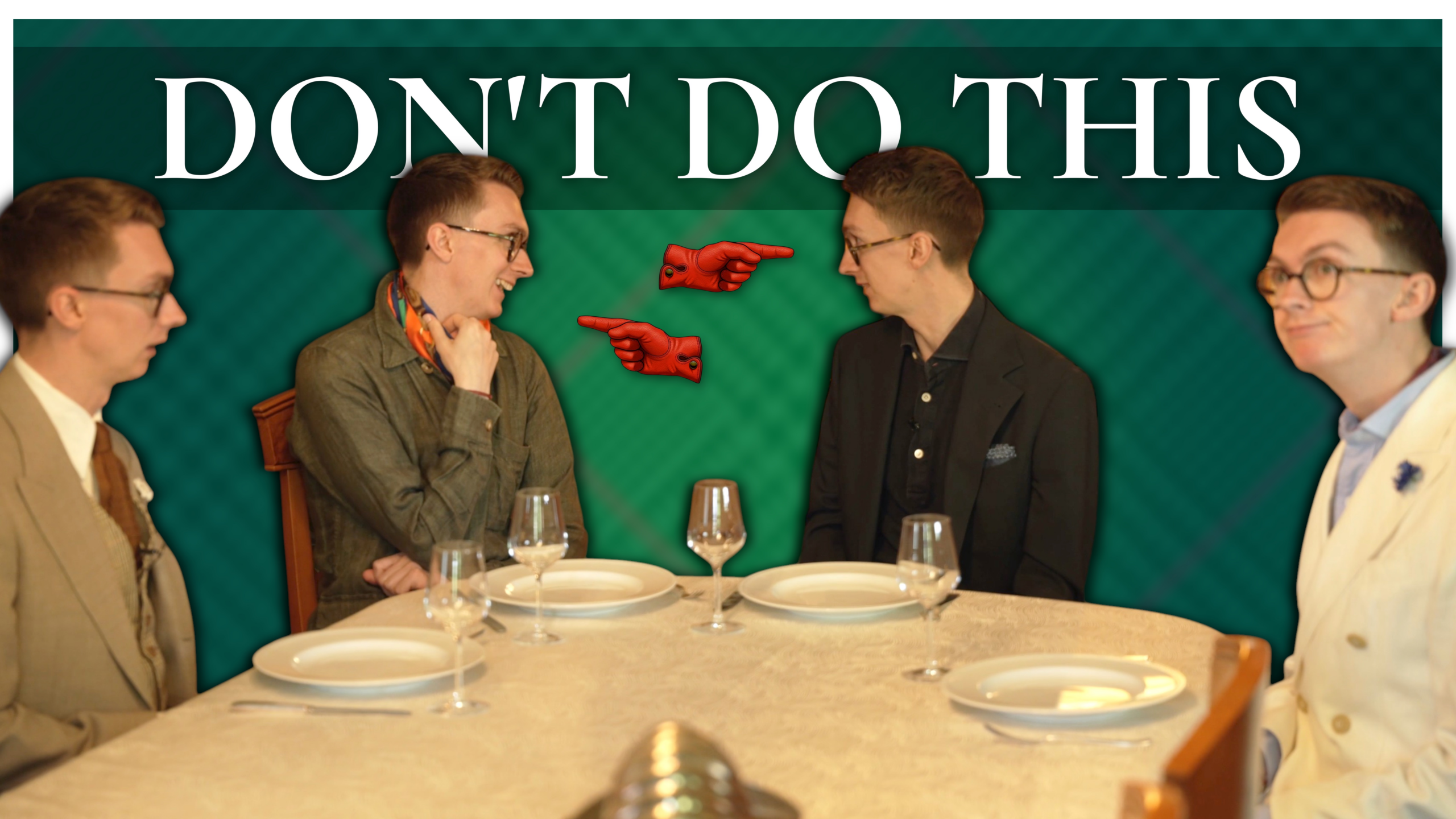
Ask someone what good manners look like, and they will probably tell you something about using the correct fork, how to properly hold a wine glass, or whether you should pour a beverage from the left or the right. And yes, those things do matter.
But the mistakes that actually damage a man’s reputation in social settings rarely happen at the dinner table. Instead, they are entirely about behaviors, the things you do or don’t do that make other people feel uncomfortable, judged, or ignored.
- 1. Dropping a Door: Situationally Ignoring Others
- 2. Cologne Overload: Wearing Too Much Fragrance
- 3. The Unclear Greeting: Awkward Introductions
- 4. The Inevitable Question: Avoid Boring Ice-Breakers
- 5. The Know-It-All Comeback: Unhelpful Advice
- 6. Conversation-Killing Responses: One-Word Answers
- 7. Ignoring Others: Excluding Members of Your Group
- 8. Matching Aggression: Failing To Be The Bigger Man
- 9. Being the Style Police: Unsolicited Sartorial Advice
- 10. Deflecting Compliments: Cultivating False Humility
- 11. Invitation Ignorance: Not Replying To Your Host
- 12. The Unvarnished Truth: Boorishly Brutally Honest
- Our Challenge To You: Simple Self Improvement
- FAQ
- What To Read Next
None of the rules of etiquette exist arbitrarily. Each one traces back to a simple, fundamental question: How does this make the other person feel?
Today, we are covering 12 common social blind spots. Some you will recognize immediately, and some will likely make you wince. But by mastering them, you can ensure you always leave a positive, lasting impression.
1. Dropping a Door: Situationally Ignoring Others

This is where first impressions are made or lost before a single word is spoken: how a gentleman occupies physical space.
We see it dozens of times a day in offices, restaurants, and hotel lobbies. A man walks through a door, releases the handle without looking behind him, and the person two steps back gets a door to the face. He didn’t slam it; he just let it go.
Doing this tells the person behind you one very clear thing: “I didn’t even notice you were there.”
What To Do Instead
A gentleman holds the door long enough for the next person to take it. You are not the building’s new doorman, so there is no need for a grand, lengthy ceremony. Simply connect with the person behind you, confidently hold the door, and pass it off to them. It requires nothing more than a basic awareness that other people exist and are moving through the same world you are.
Should gents still hold doors for ladies?

2. Cologne Overload: Wearing Too Much Fragrance
A gentleman’s fragrance should be discovered, not announced. If someone can smell you before they see you, you have applied far too much. Remember, fragrance adapts and develops throughout the day. Just because you can no longer smell it doesn’t mean it isn’t working. The goal is for someone to notice a pleasant scent when they lean in to shake your hand, not when you enter the building.
Apply the right amount of fragrance every time
3. The Unclear Greeting: Awkward Introductions

You have likely lived this awkward scenario: you approach a friend, colleague, or acquaintance, and neither of you is sure whether to go for a handshake or a hug. What follows is a bewildered, sloppy collision—the half-embrace, the missed hand, and the tense, awkward laugh.
While harmless, it looks unpolished and creates unnecessary tension right at the start of an interaction.
The fix is simple: decide before you arrive, and commit.
- In most professional or semi-formal settings, a firm handshake is the correct call.
- Among close friends, something warmer is appropriate if desired.
Move and gesture clearly. Be the one to initiate the handshake or approach with open arms for an embrace. Make eye contact to confirm your intent, and never hover in no-man’s-land waiting to see what the other person does first.
Learn how to shake hands like a gentleman
4. The Inevitable Question: Avoid Boring Ice-Breakers

Perhaps the single most predictable question at any social gathering is, “So, what do you do?”
It usually comes out within the first 30 seconds of meeting someone, almost reflexively. The problem is that it immediately boxes the other person into a job title before you have learned anything real about them. A man who has spent the last decade as a solicitor doesn’t necessarily want to talk about contract law for his entire evening. Frankly, neither of you actually wants to participate in this scripted back-and-forth; we usually just ask it to avoid a pause in conversation.
What To Do Instead
Instead, try this alternative: “What do you like to do when you’re not working?”
This question opens a door. You might discover that the solicitor restores vintage motorcycles or competes in karate tournaments. Now, you have a real conversation. Ditch the questions that merely go through the motions, and ask things that invite an answer you both actually want to talk about.
Learn the art of conversation
5. The Know-It-All Comeback: Unhelpful Advice
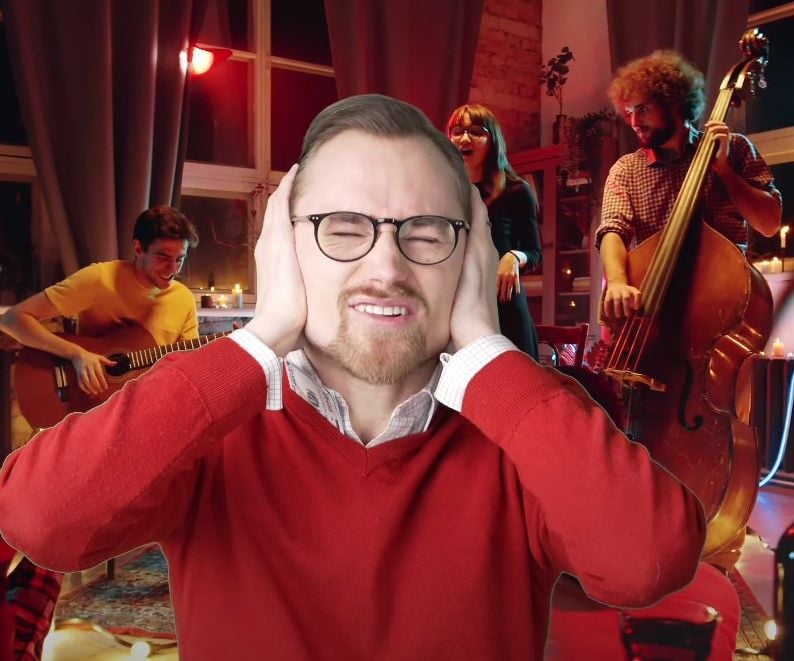
There is a phrase that sounds helpful to the person saying it, but lands as a quiet insult to the person listening: “Why don’t you just…?”
The issue with this phrasing is that it implies the solution is completely obvious. It suggests that by not enacting it already, the speaker is either too stupid or too lazy to have thought of it.
If someone wants your advice, the gentlemanly response is to first listen. If you have a solution, don’t dictate what they should do. Instead, offer gentle guidance that allows them to reach the answer themselves. A gentleman doesn’t help others for personal glory; he does so because he genuinely wants to see them succeed.
Learn how to be a gentleman in the modern world
6. Conversation-Killing Responses: One-Word Answers

When someone asks you a polite question, giving a one-word answer stops the conversation dead in its tracks.
- How are you? “Fine.”
- How have things been? “Good.”
Technically, you answered the question. In practice, however, you have handed the entire weight of the interaction right back to them and forced them to do all the heavy lifting. Furthermore, it subtly communicates that you aren’t interested in hearing from them.
Good conversation is a shared construction. You should answer, and then immediately contribute something in return, such as a follow-up question, an observation, or a brief thought. One-word answers create a wall; great conversation creates a window.
Explore our 50+ best ice-breaker questions
7. Ignoring Others: Excluding Members of Your Group

This mistake often goes completely unnoticed by the person making it. Imagine you are at dinner with four people, and two of you fall into a highly specific conversation about an industry reference or an inside joke.
Because it is a topic that only the two of you can follow, the other two people are left sitting there, smiling politely, waiting for it to end.
A gentleman reads the room continuously. If a topic can only be followed by half the table, it belongs in a separate conversation at a separate time. The true measure of being good company isn’t how much you enjoy talking; it’s whether everyone at the table feels included.
8. Matching Aggression: Failing To Be The Bigger Man
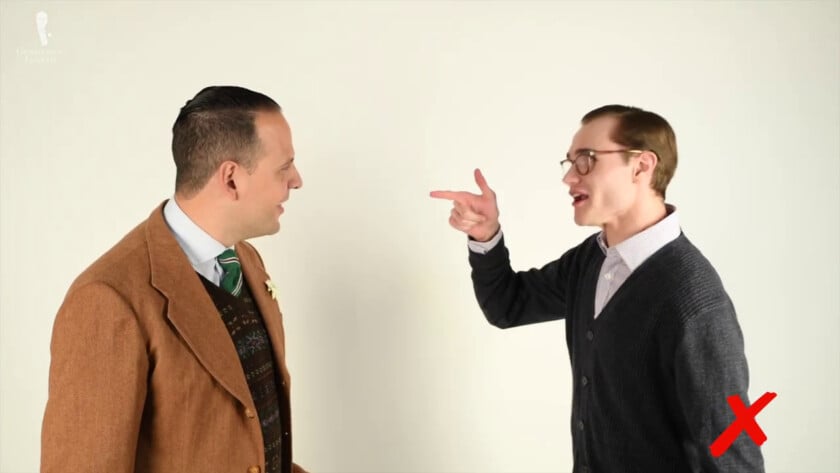
When someone raises their voice, turns sharp, or tries to bait you into an argument, the primal instinct is to meet fire with fire and hold your ground.
But a gentleman doesn’t take the bait. Escalating an interaction only adds volume, never clarity. The man who stays measured while the other person loses their temper is always the one who comes out with his dignity intact.
Refusing to match anger is not a sign of weakness; it is a quieter, higher kind of authority. The relational cost of losing your temper, even briefly, is almost always higher than whatever point you were trying to make. Do not let someone else’s worst moment become your own.
Feel like swearing?
9. Being the Style Police: Unsolicited Sartorial Advice

We all know to avoid obvious insults regarding appearance, but the softer version of this mistake is just as damaging because it is often dressed up as helpfulness. Saying things like, “That color really doesn’t work on you,” or “Have you considered something more fitted?” is entirely unnecessary.
Unless someone walks up to you, points at their clothing, and explicitly asks for your critique, keep your thoughts to yourself.
There is almost no situation where unsolicited commentary on another person’s appearance does anything other than make them feel self-conscious. Even if your style critique is technically correct, you haven’t helped them; you’ve simply given them something to worry about for the rest of the evening. A gentleman notices many things, but he knows when to remain silent.
Why doesn’t society want you to dress up?
10. Deflecting Compliments: Cultivating False Humility

Many men deflect compliments under the guise of modesty. When someone tells you that your presentation was excellent, your watch is beautiful, or the dinner you hosted was wonderful, the instinct is often to bat it away:
- “It wasn’t that great.”
- “This old thing?”
- “The lamb was actually overcooked.”
While you mean to communicate humility, what you actually communicate is that the other person’s judgment is flawed. You are essentially forcing them to argue with you to defend their own kindness.
Remember, “Thank you” is a complete sentence. It acknowledges the compliment, respects the person who gave it, and requires absolutely nothing further.
Learn how to accept a compliment like a gentleman

11. Invitation Ignorance: Not Replying To Your Host
When someone invites you to a dinner, a drinks evening, or a casual weekend gathering, and you fail to reply, silence sends its own message. Ignoring an invitation is, in practice, a statement about how little you value the relationship. The person who extended the invite put themselves on the line by reaching out. You do not have to accept every invitation, but you absolutely must reply to them in good time. Relationships require effort from both sides; a gentleman doesn’t just receive hospitality, he actively respects it.
Decode dress codes for any event
12. The Unvarnished Truth: Boorishly Brutally Honest
We have all met the man who proudly describes himself as “brutally honest”—and who seems, if we are being frank, to lean much more into the brutal than the honest. There is a version of honesty that genuinely helps people, and a version that simply allows a man to say cutting things while maintaining a clear conscience.
Before you offer an unvarnished opinion, run it through these three timeless questions:
- Is it true?
- Is it necessary?
- Is this the right moment for it?
The second question is where most men stumble. “Necessary” does not mean “potentially useful.” It means the person genuinely needs to hear it from you right now for their own benefit. If your comment fails that test, silence is not dishonesty, it is tact. And tact, when applied correctly, is one of the most powerful tools a gentleman carries.
Our Challenge To You: Simple Self Improvement

None of these twelve behaviors exist as rigid rules for their own sake. They exist because a gentleman’s primary role in any social setting is to make the people around him feel comfortable, seen, and respected. That is the common thread running through this entire list.
Most social mistakes share a single root cause: a lack of awareness regarding how your behavior lands on others. Social awareness is a skill that must be practiced, not just a list to be memorized.
Our challenge to you this week is simple: Pick just one behavior from this list that you recognize in yourself, and consciously work on improving it over the next seven days.
Which of these social blind spots resonated the most with you? Share your thoughts with us in the comments below.
FAQ
Are traditional manners like knowing which fork to use no longer important?
They still matter, but they are not what typically damages a man’s reputation. True modern etiquette is less about rigid table rules and more about your social behavior; specifically, whether your actions make the people around you feel uncomfortable, judged, or ignored.
What is the underlying rule behind all gentlemanly etiquette?
Every rule of etiquette traces back to one simple question: How does this action make the other person feel? A gentleman’s primary goal in any social setting is to make those around him feel comfortable, seen, and respected.
How do I avoid an awkward “handshake or hug” greeting?
Decide on your greeting before you arrive and commit to it with clear, confident gestures. Use a firm handshake for professional or semi-formal settings, and open arms for close friends. Make eye contact to confirm your intent so you don’t end up hovering in an awkward middle ground.
What should I ask instead of “What do you do for a living?”
Ask, “What do you like to do when you’re not working?” This open-ended question allows people to step away from their job titles and share their genuine passions, leading to far more interesting and natural conversations.
Why shouldn’t I give one-word answers if they are factually correct?
Replying with single words like “Fine” or “Good” forces the other person to do all the heavy lifting to keep the conversation alive. It subtly signals that you aren’t interested in talking to them. Good conversation is a shared effort; always pair your answer with a follow-up question, a brief thought, or an observation.
What is the best way to handle an aggressive or angry person?
Do not match their fire with fire. Remaining calm and measured while someone else escalates gives you a quieter, more powerful kind of authority. It preserves your dignity and prevents their worst moment from becoming your own.
When is it appropriate to give someone style or appearance advice?
Only when they explicitly point to their clothing and ask for your critique. Unsolicited advice about someone’s appearance, even when framed as “helpful” feedback, almost always results in making them feel self-conscious and anxious.
Why shouldn’t I deflect a compliment out of modesty?
When you deflect a compliment (e.g., saying “This old thing?” or “It wasn’t that great”), you are unintentionally telling the giver that their judgment is wrong. It forces them to argue with you just to be kind. Instead, remember that “Thank you” is a complete, perfectly polite sentence.
How long should I hold a door for someone?
You don’t need to act as a full-time doorman or create a grand ceremony. Simply maintain awareness of your surroundings, hold the door long enough to establish contact with the person a few steps behind you, and smoothly pass the handle off to them.
What is the golden rule for wearing cologne?
Your fragrance should be discovered, not announced. If people can smell you before you are close enough to shake hands, you have applied too much. Remember that your nose acclimates to a scent quickly, so just because you can no longer smell your top notes doesn’t mean the fragrance has disappeared.
What To Read Next

Review Phone Etiquette
Learn Table Manners

Sit Like a Gent