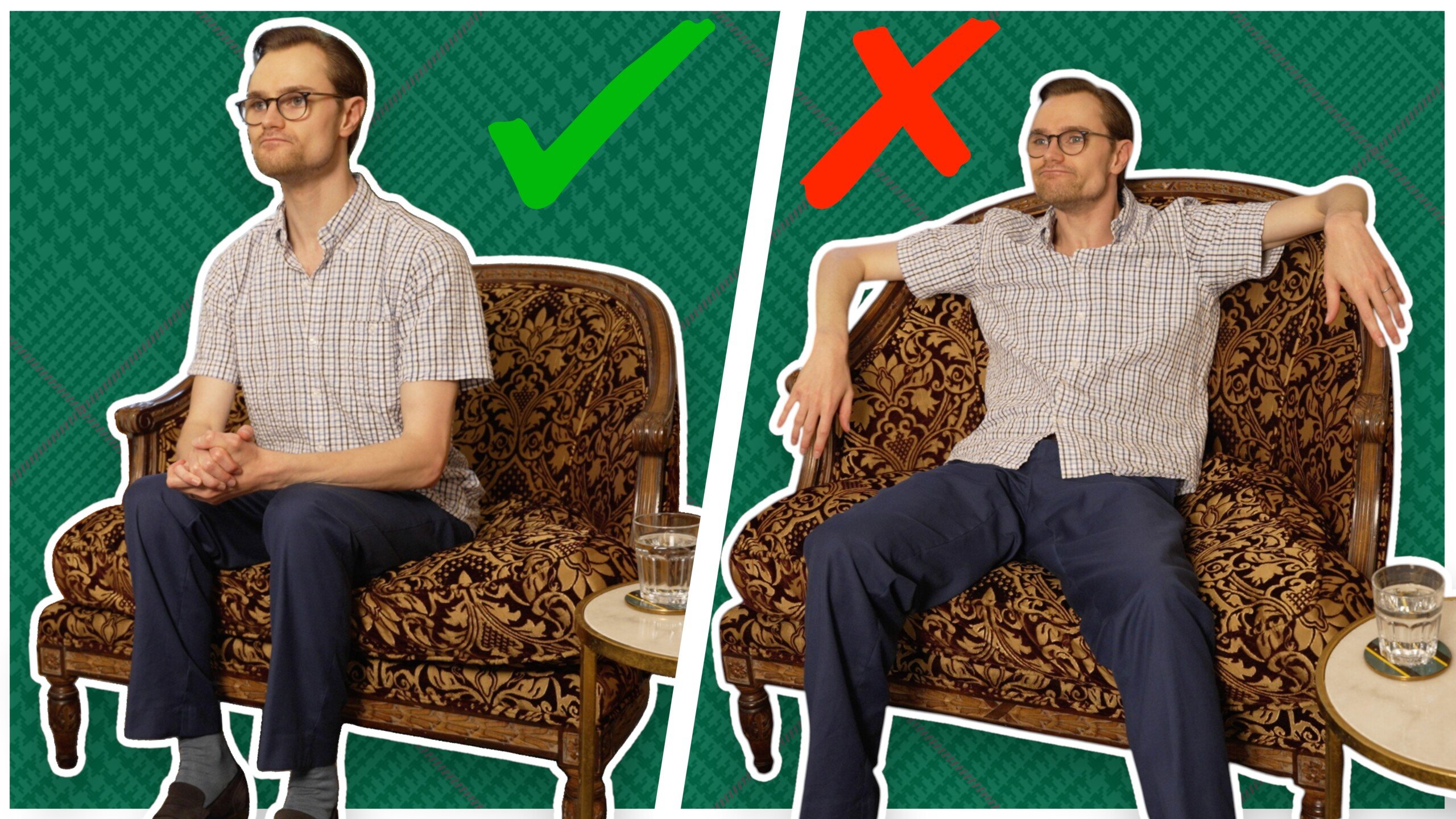
In one of our London series, Raphael sat down for an interview with Ash from the Chap’s Guide, and a number of people shared that they felt Raphael’s sitting position was disrespectful! Were they correct? To answer that question, let’s explore what it means to sit like a gentleman!

A note on accessibility
This advice is intended for conventionally able-bodied individuals. We recognize that physical disabilities, such as cerebral palsy, may influence one’s posture and movement. We encourage all readers to adapt these suggestions in a way that is comfortable and practical for them.
7 Habits of a Well-Seated Gentleman
These postures and behaviors form the foundation of proper sitting etiquette, ensuring you appear composed and considerate in any setting.
1. Do Sit with Your Legs Uncrossed at a 90-Degree Angle
The cornerstone of proper sitting is the most straightforward: feet flat on the floor, legs uncrossed, and bent at a roughly 90-degree angle. While keeping the knees together is the most modest approach, it is perfectly acceptable for gentlemen to maintain a slight, comfortable distance between the legs, particularly when wearing trousers.
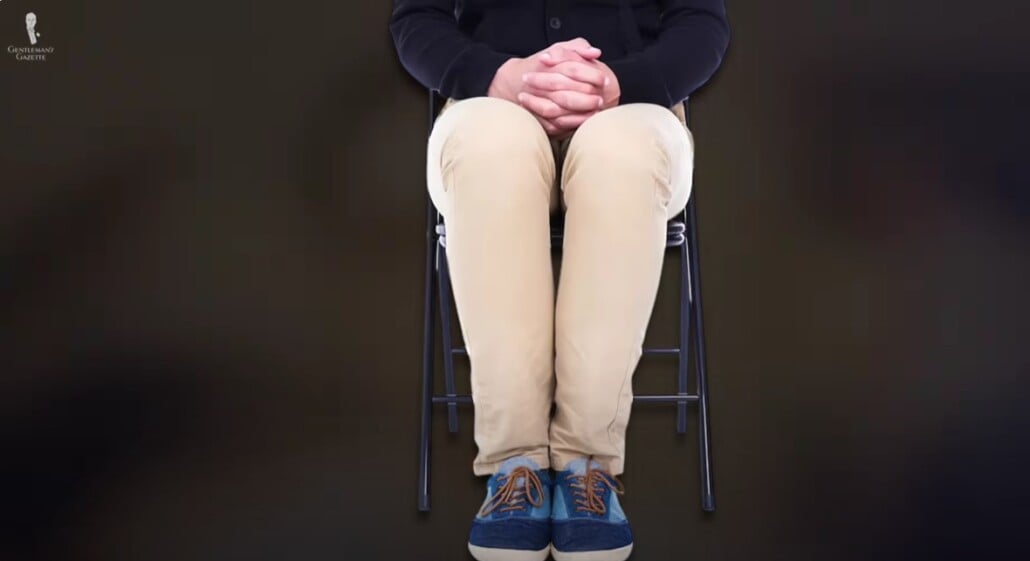
The key is to be mindful of your footprint; this posture should be contained and respectful, not an excuse for sprawling.
2. Cross at the Ankles for Subtle Composure
For situations requiring a more compact posture, such as on crowded public transport or in a tight waiting area, crossing one’s legs at the ankle is an excellent alternative.
ankles crossed
This stance neatly contains your legs, preventing any accidental encroachment on your neighbor’s space.
While some interpret it as a sign of nervousness, it appears perfectly natural and confident when paired with a relaxed upper body and a straight back. Avoid fidgeting or tapping your feet to maintain a serene impression.
3. Cross One Leg with Finesse
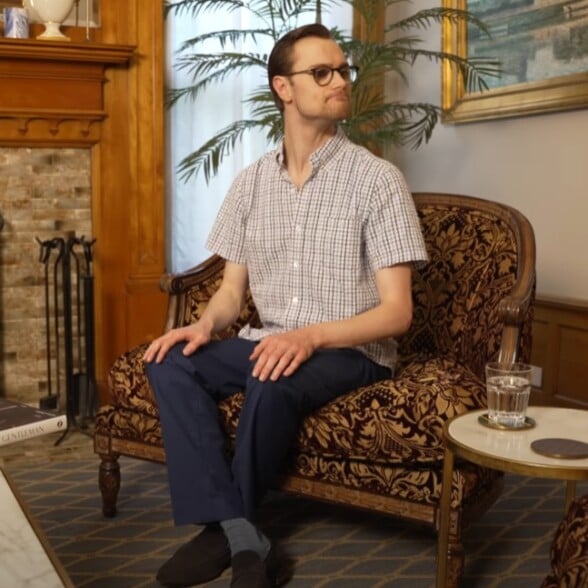
Crossing one leg over the other knee is a classic, relaxed posture befitting a gentleman in a lounge chair or on a park bench.
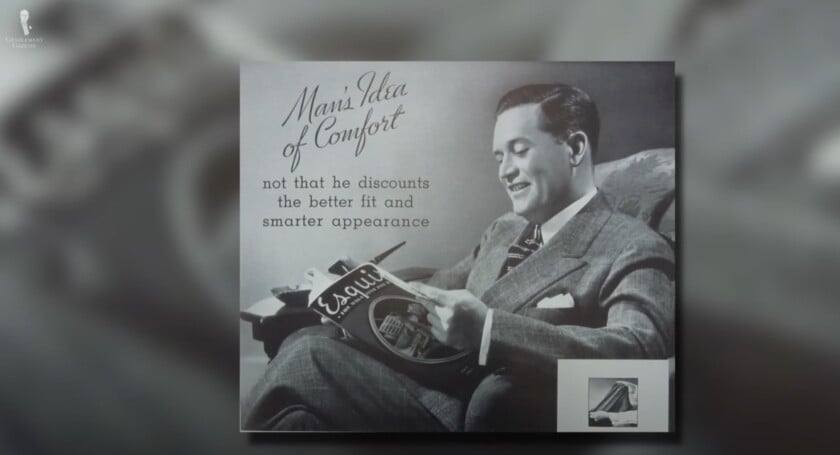
However, its execution requires finesse.
- Positioning: Rest your crossed leg on the knee or thigh of your supporting leg, not the ankle.
- Shoe Soles: Ensure the sole of your shoe on the crossed leg faces the floor. Exposing the sole of your shoe to another person is considered a significant sign of disrespect in some cultures.
- Direction: When seated next to someone, cross your leg away from them to avoid creating a barrier. If between two people, keep the knee pointed as forward as possible.
Are you following the gentleman’s style commandments?
4. Maintain an Upright Posture
Slouching is the antithesis of elegance. It not only conveys a lack of confidence and energy but also contributes to long-term health issues, including back and neck tension.
By sitting up straight with your shoulders back, you will instantly appear more alert, confident, and distinguished. As a bonus, your tailored garments will drape far better.
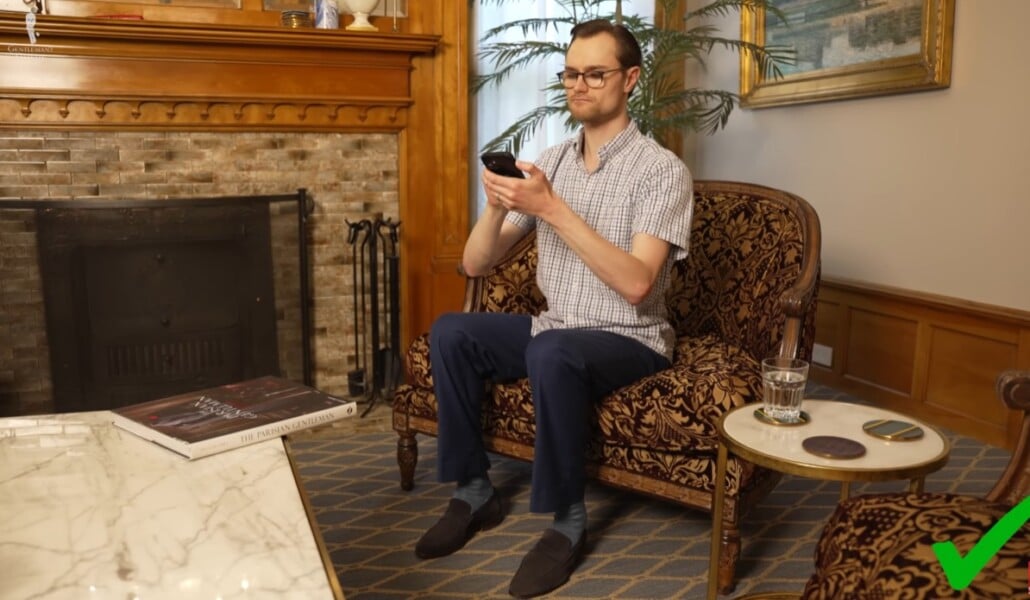
Avoid Tech Neck: A simple trick when using a mobile device is to hold it at eye level, which naturally encourages better posture.
5. Be Spatially Aware and Considerate
A gentleman is always conscious of his surroundings and the people in them.
- Personal Items: In a sparsely populated area, it is acceptable to place a bag on an adjacent seat. However, as the space fills, it is incumbent upon you to move your belongings—to your lap, under your seat, or an overhead compartment—without being asked.
- Offering Your Seat: While conventions have evolved, the chivalrous act of offering your seat to someone in greater need—be they elderly, pregnant, or disabled—remains a hallmark of good character. This consideration should be based on need, not simply on outdated gender roles.
Which manners no longer apply today?
6. Respect Cultural and Situational Norms
Etiquette is context-dependent. In the close quarters of urban mass transit, sitting shoulder-to-shoulder with a stranger is standard. In a professional waiting room or a theater, however, it is customary to leave a space between yourself and others, if available.
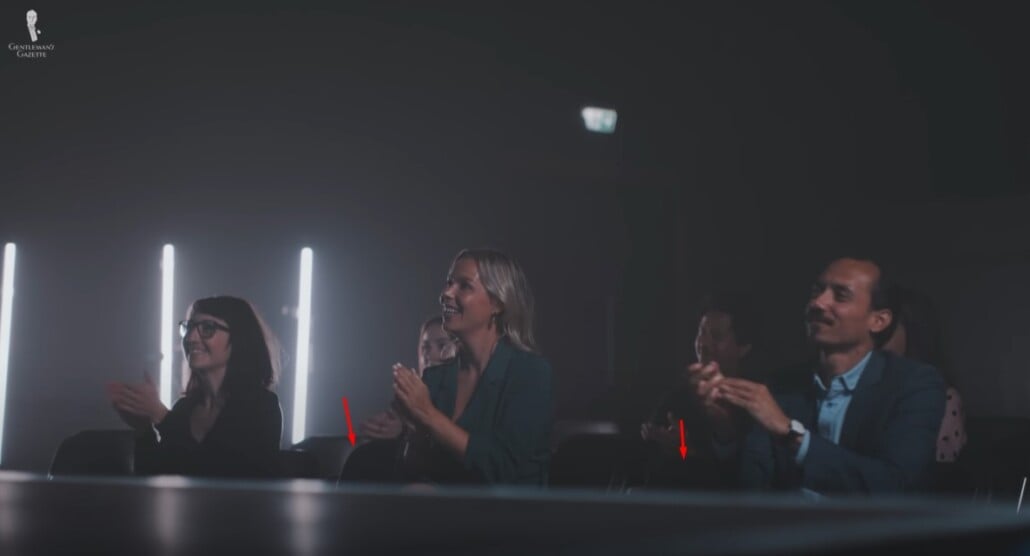
When navigating a crowded row of seats, be aware of local customs; North Americans typically pass with their backs to seated individuals, while Europeans often pass facing them. The ultimate goal is to move calmly and efficiently, causing minimal disruption.
7. Accommodate Your Attire
Classic menswear, with its structured tailoring, requires a moment of adjustment upon sitting.
- Trousers and Vents: Smooth the fabric of your trousers and clear your jacket’s vents as you sit to prevent unsightly wrinkling and ensure a comfortable fit.
- Jacket Buttons: It is almost always correct to unbutton a single-breasted jacket when sitting down for comfort and to prevent strain on the button. Double-breasted jackets, however, are traditionally kept buttoned.
Do you know the buttoning rules every man should follow?
5 Seating Behaviors to Avoid
Just as important as knowing what to do is knowing what not to do. Avoid these uncouth habits to maintain your gentlemanly reputation.
1. Don’t Slump or Drop into a Seat
Never simply fall into a chair. The impact can be jarring to those nearby, and the motion itself appears graceless and lazy. Worse, it can damage the furniture over time.
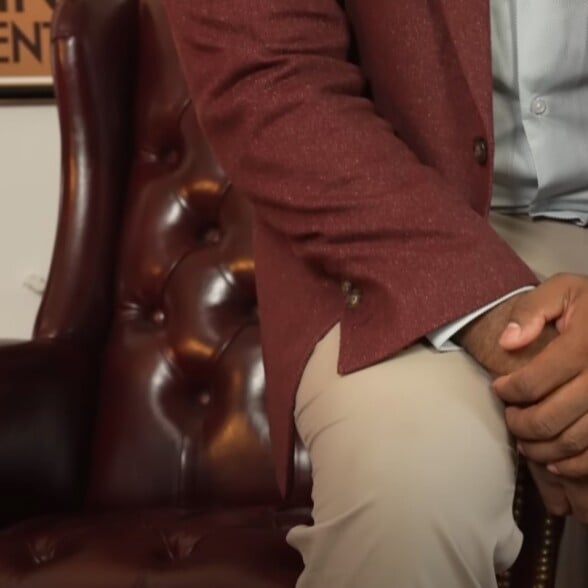
Avoid Doing This!
Resist the urge to perch on the arm or back of a chair. The proper method is to approach the seat, position it if necessary, and lower yourself into it with controlled, deliberate movement.
2. Don’t Intrude on Personal Space
When choosing a seat in a location with ample availability, selecting a spot immediately next to or directly opposite a sole stranger can be perceived as intimidating or intimidating.
While some cultures are more gregarious, the safer and more universally polite approach is to afford others a respectable distance. You can always engage in conversation from a seat or two away if the occasion calls for it.
“Don’t be a creep when taking a seat!”
3. Don’t “Manspread”
There is a distinct difference between sitting comfortably and commandeering public space. Spreading your legs so wide that you encroach upon an adjacent seat or make unsolicited contact with a neighbor is ill-mannered and inconsiderate.
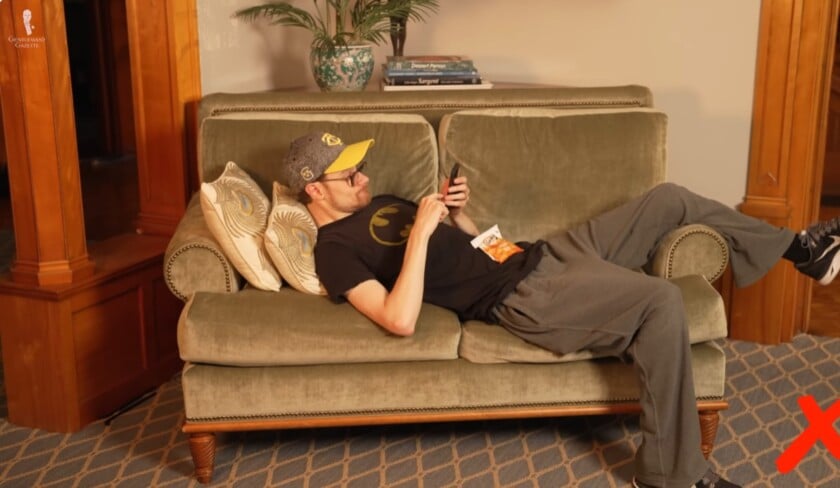

A good rule is to keep your knees within the vertical planes of your shoulders. If you observe the person next to you leaning away, it is a clear sign you are overstepping your bounds.
4. Don’t Be Careless with Your Elbows
Your upper body can be just as intrusive as your legs. Avoid resting with your arms akimbo, which can “box out” those next to you. This is particularly crucial at a dining table, where table manners dictate that your elbows should remain off the table while eating, especially in formal settings.
What mistakes are you making at dinner?
5. Don’t Put Your Feet on Furniture
Placing your feet on a desk, table, or another chair is perhaps the ultimate sign of disrespect in a public or professional setting. It communicates an unearned sense of entitlement and soils surfaces that others must use.
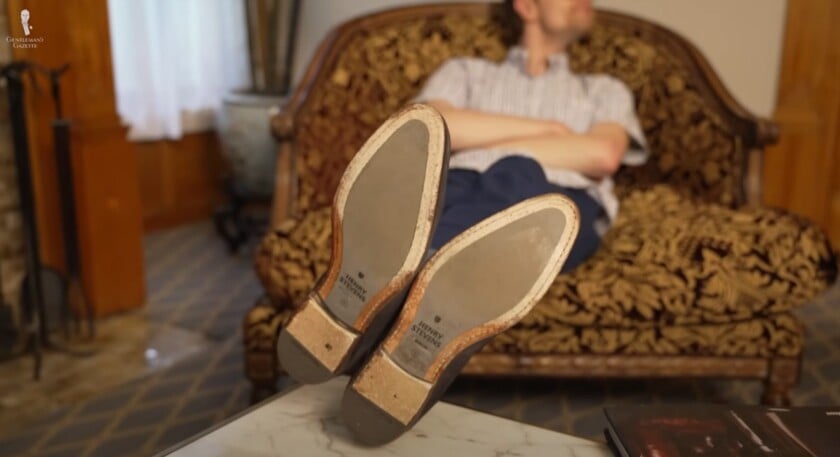
Keep your feet firmly on the floor. If an ottoman or a footstool is provided, you may use it for its intended purpose, but always remember the rule regarding the soles of your shoes.
Learn 15 Things Only Gents Do…
Conclusion
We hope these sitting suggestions can serve as a reference for you, and that they’ll help you to ensure that you’re being a gentleman in every aspect of life, even when taking a load off.
Are there any aspects of sitting etiquette you think we missed? Let us know in the comments!
Frequently Asked Questions
Why does the way I sit matter?
The way you sit communicates respect, confidence, and self-awareness. Sitting politely and gentlemanly shows consideration for others, projects a positive image, and can make social and professional interactions smoother.
What are the benefits of sitting in a gentlemanly way?
You’ll appear more confident, respectful, and approachable. Good sitting habits also support better posture and overall comfort, making a positive impression in any setting.
What is the ideal posture for a gentleman?
Sit upright with your back straight, shoulders relaxed, and both feet flat on the floor. Avoid slouching or sprawling. Your knees should be at a natural angle, not too wide apart.
Should I cross my legs?
Crossing your legs at the ankles or keeping your knees together is considered polite. If you cross your legs at the knee, do so gently and avoid bouncing or shaking your foot. Avoid wide, casual leg-crossing in formal settings.
Where should I place my hands?
Rest your hands lightly on your thighs or knees. Avoid fidgeting, drumming your fingers, or placing your hands in your pockets. If you’re holding something, keep it neatly in your lap.
How do I sit when wearing a suit?
When wearing a suit, keep your jacket buttoned while standing and unbuttoned when sitting. Sit down gently to avoid wrinkling your clothes, and maintain good posture to keep your suit looking sharp.
What should I avoid when sitting in public or formal settings?
– Sprawling or taking up excessive space
– Slouching or leaning too far back
– Crossing your legs too widely
– Placing your feet on furniture
– Fidgeting or making distracting movements
How do I sit politely in a group or at a table?
Be mindful of your space, keep your chair close to the table, and avoid blocking others’ movement. Sit attentively, make eye contact, and keep your body language open and approachable.
How can I improve my sitting habits?
Practice good posture daily, be mindful of your body language, and observe how others sit in formal settings. Over time, sitting politely will become second nature.
Learn to drink tea like a gentleman
Living the Gentleman’s Way
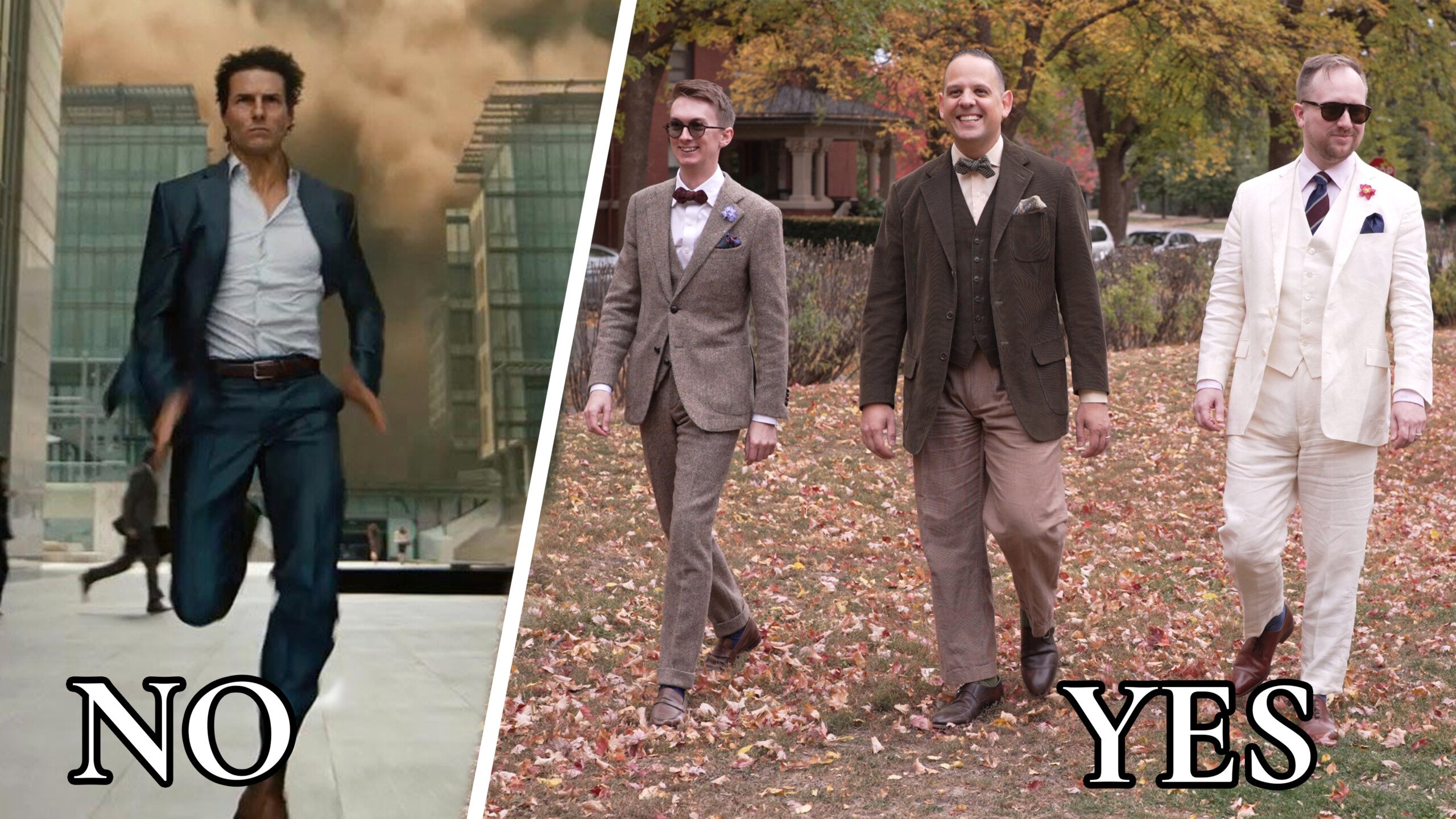
How to Walk Like a Gentleman
Learn the posture, pace, and presence that make your walk convey confidence and refinement.

How to Curse Like a Gentleman
Discover how wit, restraint, and timing can turn even swearing into an art of elegance.
How to Drink Like a Gentleman
Master the etiquette and enjoyment of drinking with style, moderation, and sophistication.
Hello,
I don’t know if it’s different in America, or even in other countries in Europe, but in France, the rule while dining is : “no elbows on the table” except when it’s time for the post meal coffee. Then you are allowed elbows on the table.
Also the hands must stay above the table at all time, which I know is a departure from British etiquette.