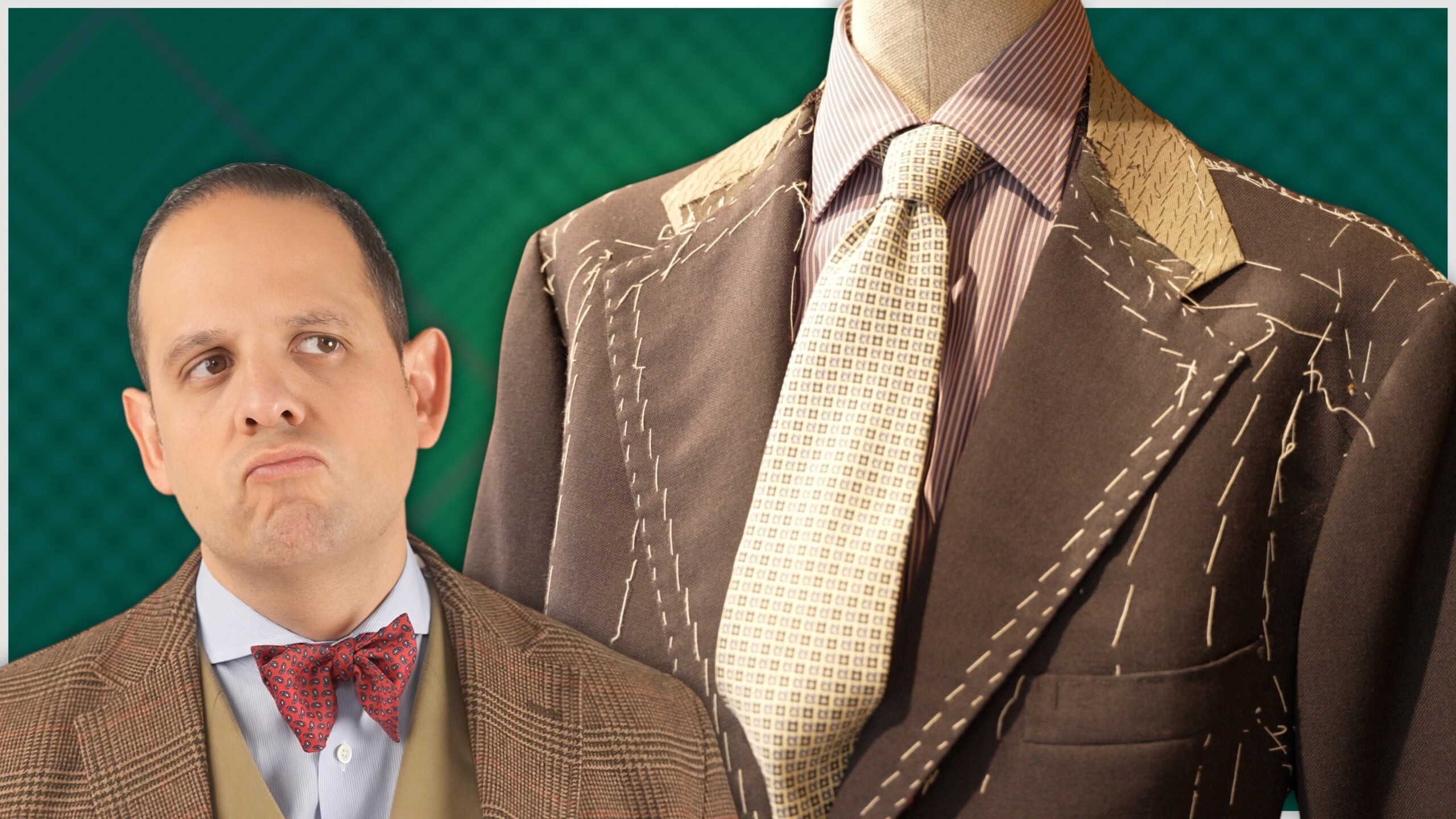
Neapolitan tailoring is often praised for its softness, lightness, and easy elegance. But what actually makes a jacket or trouser feel distinctly Neapolitan?
In this second installment from Raphael’s trip to Naples, he speaks with tailors from some of the city’s most respected sartorie about the hallmarks of Neapolitan style.
Watch the full discussion to see these details up close and hear how Neapolitan tailors explain their own craft.

Why Watch the Full Discussion?
Neapolitan tailoring is difficult to understand from terminology alone. Many of its most important qualities are visual and tactile: the softness of the shoulder, the lightness of the canvas, the roll of the lapel, the openness of the front quarters, and the way the jacket responds when the wearer moves.
Seeing the garments handled and explained makes these details easier to recognize.
In the full video, you will see how experienced tailors describe the features that define Neapolitan jackets and trousers, including the balance between structure and softness, the purpose of high armholes, the role of light internal construction, and the subtle differences between house styles.
It is a useful watch for anyone who has heard terms like spalla camicia or barchetta but wants to understand how they actually appear in a finished garment.
What Is Neapolitan Style?
Part 1: What Neapolitan Tailors Wear in Summer

Ask the Experts
What is Neapolitan tailoring?
Neapolitan tailoring is a tailoring tradition associated with Naples, Italy. It is often known for lightweight construction, soft shoulders, high armholes, open front quarters, and a comfortable fit that allows natural movement. The overall effect is elegant but relaxed rather than stiff or heavily structured.
What makes a Neapolitan jacket different?
A Neapolitan jacket is typically lighter and softer than more structured tailoring traditions. It often features minimal padding, a soft canvas, a natural shoulder, high armholes, open quarters, and details such as a barchetta breast pocket or patch pockets on sport coats.
Why is the Neapolitan jacket considered comfortable?
Comfort is central to the Neapolitan approach. The jacket is usually made with light internal construction and shaped to move with the body. High armholes, a close neck fit, and a soft shoulder can help the jacket remain in place while still allowing the wearer to move freely.
What is a spalla camicia shoulder?
Spalla camicia, or “shirt shoulder,” refers to a soft shoulder construction inspired by the way a shirt sleeve is attached. It can create small ripples or puckering at the sleeve head and contributes to the relaxed, lightweight appearance associated with Neapolitan tailoring.
What is a barchetta pocket?
A barchetta pocket is a curved breast pocket often associated with Italian tailoring. The name means “little boat,” referring to its gentle curved shape. It is one of the details commonly seen on Neapolitan jackets.
Are Neapolitan jackets always unstructured?
Not necessarily. Many Neapolitan jackets are lightly constructed, but the exact amount of structure can vary by tailoring house, garment type, and customer preference. The goal is usually softness and ease, not the complete absence of shaping.
What is a three-roll-two jacket?
A three-roll-two jacket has three buttons, but the lapel rolls over the top button so the jacket is worn like a two-button jacket. This creates a soft, elegant lapel roll and is commonly associated with classic tailoring.
Are patch pockets typical of Neapolitan style?
Patch pockets are common on Neapolitan sport coats and can also appear on some suits, depending on the level of formality. They reinforce the relaxed character of the garment and pair well with softer tailoring.
What are Neapolitan trousers like?
Neapolitan trousers can vary more than the jacket, but many classic versions favor a higher rise, pleats, side adjusters or suspender buttons, and a gently tapered leg. The exact cut depends on the tailor, the wearer, and the desired level of formality.
Why do Neapolitan tailors use lighter construction?
Lighter construction helps the garment feel easier to wear, especially in the warm climate of Naples. It also supports the relaxed elegance associated with Neapolitan style, allowing the jacket to follow the body more naturally rather than imposing a rigid shape.
What to Watch Next

10 Style Icons Who Defined the Modern Gentleman’s Wardrobe
What Are The Differences Among British, Italian And American Suit Styles?
Loro Piana Cashmere: Worth It?
For a Napoli suit, or sport coat, tailor made, what are price ranges for medium priced fabrics?
How does Napoli compare with Sabine row?
It really does depend on each particular tailor. It’s also hard to quantify what a medium-priced fabric is, because the point of bespoke (other than fit) is usually to look for something specific – e.g. I’m looking for a summer suit that breathes well, or I’m looking for a robust tweed jacket. Of course, if you have an upper price limit, it doesn’t hurt to share that with the tailor, so they can best assist you in getting something without breaking the bank. If price is the primary concern, I would suggest looking up a few Neapolitan tailors on Instagram to see if you like what they do (Instagram because tailors will often show other customers – not models – in their work), and reaching out to them to enquire about price ranges. Do be prepared for a few ball park figures, and for most people to inform you that it’s dependant on the fabric & details chosen.