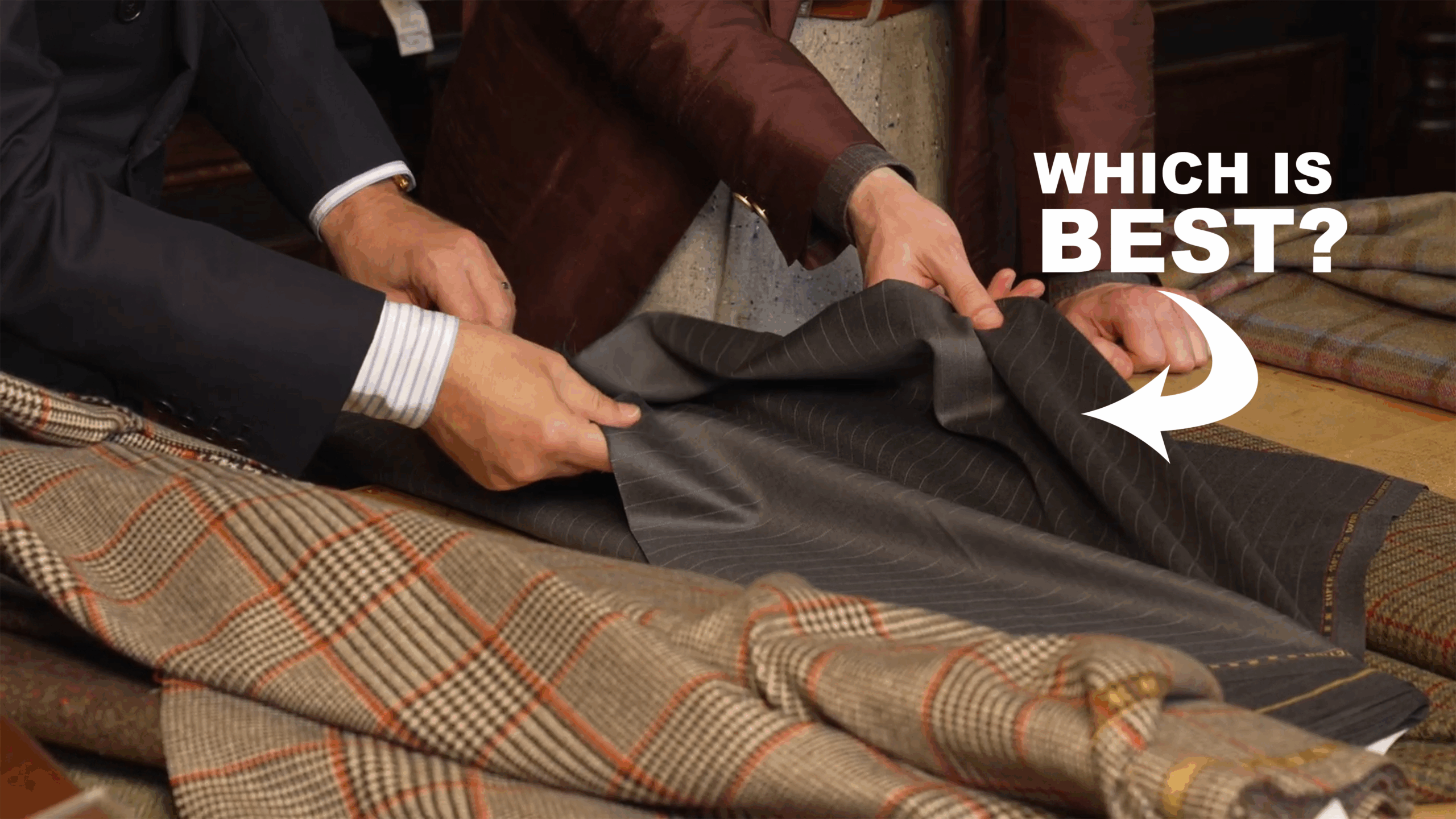
British tailor Simon Skottowe asks one core question when guiding clients at Vienna’s Wilhelm Jungmann & Neffe: “What are you, and what do you want to say with it?” Join us for his masterclass on how to think like a tailor and select the right fabric for your body, lifestyle, and specific goals.

A Tailor’s Analysis of Key Fabrics
A Masterclass at Wilhelm Jungmann & Neffe
Jack interviews British tailor Simon Skottowe at the historic Vienna fabric house, Wilhelm Jungmann & Neffe. Simon, who visits the shop frequently from his base in Budapest, guides Jack through a selection of key fabrics, including classic tweeds, proper Irish linen, and fine Italian suitings. He explains his personal philosophy of how to select the perfect cloth for a client.
Explore the Historic Wilhelm Jungmann & Neffe
How to Think About Fabric Like a Tailor
This conversation is a must-watch for anyone interested in bespoke or custom clothing, as it goes beyond simple patterns. You will learn how a tailor analyzes a fabric’s “stability,” why a soft tweed is for a jacket but not a suit, and the tailor’s surprising take about linen. This guide will give you the expert’s mindset to make smarter, more informed choices for your own wardrobe.
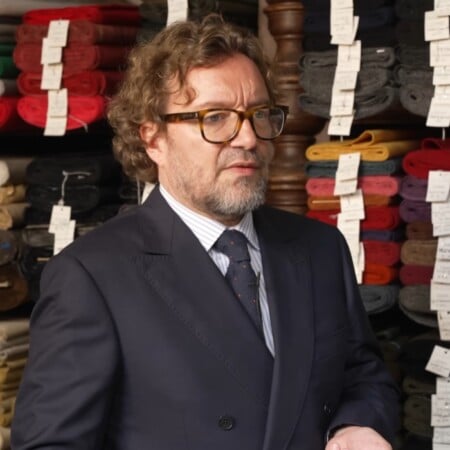
“I actually started sewing when I was four… and sort of I just never stopped.”
Simon Skottowe, Tailor, Simon Skottowe Bespoke Tailors
Highlights from this Video
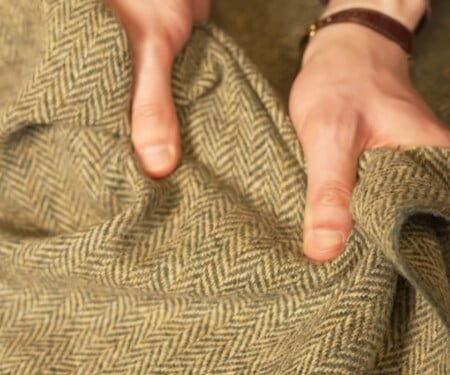
“So this is not something that's going to keep over years of hard work its shape that it's made.”
Why do some tweed jackets seem to stretch or get baggy at the elbows? Simon explains it here.
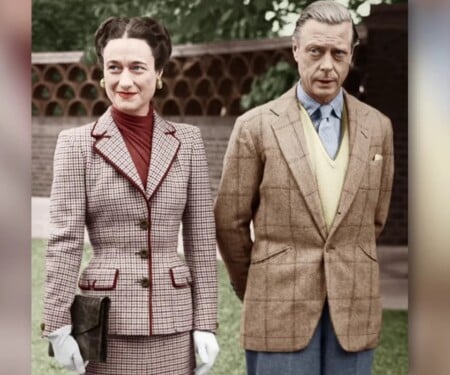
“Now, that looks to me like something that the Duke of Windsor would have worn.”
A bold, colorful tweed inspires a connection to one of history’s greatest style icons. Hear Simon explain what kind of “hoops” (courage) you need to wear such a statement piece.
“…but it's not a lightweight fabric. It has a specific weight of around 400 g.”
Simon busts the biggest myth about linen, explaining why this 400-gram fabric is his top choice for summer despite its weight, and what makes “proper Irish linen” so superior.
“You know it's just screaming old money, isn't it? Which is what really everybody wants to try to be doing.”
Why was it once considered “bad form” to be seen in a sparkling new suit? Discover the philosophy behind patina and why a well-worn garment can signal a higher status.
“Are you a… junior lawyer that needs to slide into the background? Are you a barrister that wants to stand out here?”
This is the single most important question a tailor can ask. Simon reveals his core philosophy: your clothes are a message, and the fabric you choose is the first word.
See More from Simon Skottowe Bespoke Tailors
What We Were Wearing
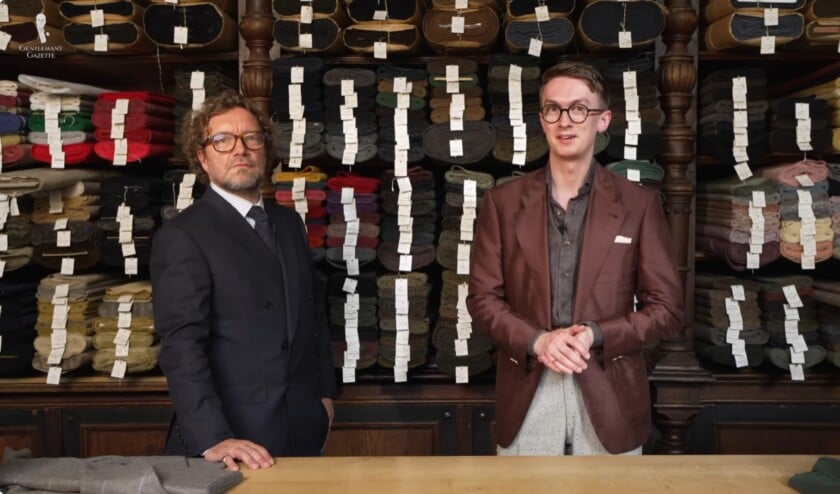
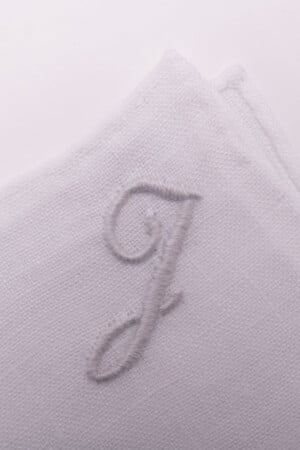
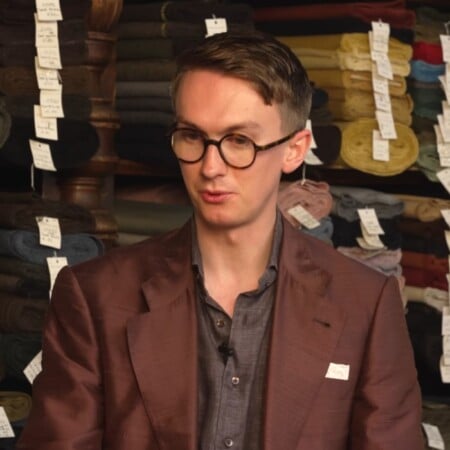
Jack wore a distinctive and stylish ensemble that played with color and texture. He paired a lustrous, single-breasted jacket in a rich rust-brown with a complementary dark, muted grey-brown shirt. This warm, earthy combination on top was set against a pair of light grey, flecked or salt-and-pepper trousers, creating a modern and confident contrast.
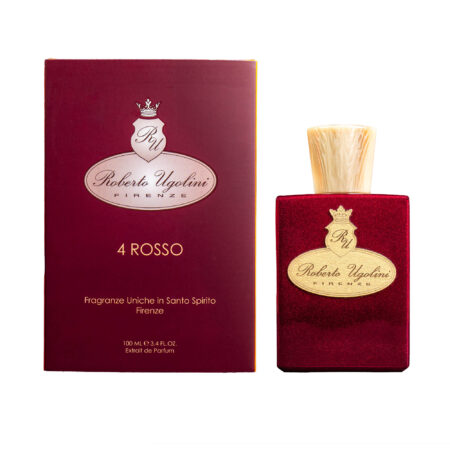
He completed the look with classic tortoiseshell glasses, a crisp white pocket square, and a spritz of Roberto Ugolini’s 4 Rosso cologne, a sophisticated scent with notes of citrus and amber.
“See I’m a big fan of like a fleck tweed like a Donegal from the point of view that all of those colors in there makes it extremely easy… You’ve got a cheat sheet as to what to what to wear with it.”
Jack Collins, Senior Content Manager, Gentleman's Gazette
Ask the Expert
What’s the most important question to ask when choosing a fabric?
According to Simon Scott, the most important question is: “What are you, and what do you want to say with it?” He explains that your clothing is a message – whether you’re a “junior lawyer that needs to slide into the background” or a “barrister that wants to stand out” – and the fabric is the first step in crafting that message.
What is the real difference between “suiting” and “jacketing” fabric?
It’s a matter of “fabric stability.” A jacketing fabric, like a soft, open-weave tweed, is often very elastic and will stretch out of shape. If you made trousers from it, the knees would “bag out” within 20 minutes. A proper suiting fabric is more stable and has a “natural elasticity” that bounces back, allowing it to hold a shape and a crease.
Is linen a lightweight fabric for summer?
No, this is a common misconception. Simon Scott explains that proper Irish linen is “not a lightweight fabric” and has a specific weight of around 400 grams. Its value in summer comes from its ability to wick moisture (up to 25% of its weight) and its superior drape and ability to be shaped by a tailor.
Why do some people say it’s “bad form” to wear a brand new suit?
This idea comes from an “old money” philosophy that values patina and longevity over things that are “sparkling new.” A new suit can be stiff, and there’s a famous story of a man giving his new suit to his gardener to “break in.” A garment that has patina and is well-worn (but well-cared-for) “screams old money.”
“If you want to do real British style, you have to have British fabrics. You can’t do the pseudo modern versions. It’s just not the same.”
Simon Skottowe, Tailor, Simon Skottowe Bespoke Tailors
What to Watch Next
Inside Unicum Wien: The Art of Bespoke Upcycling
Step inside the Viennese atelier of Bernd Schreiner, a master craftsman who transforms vintage luggage and other treasures into one-of-a-kind works of “functional art.”
Goodyear Welt, Step by Step At Ludwig Reiter
Go inside the Ludwig Reiter factory in Vienna to see how a pair of Goodyear-welted shoes is made, from the finest leather to the final polish.
The Tailoring Philosophy of Michael Possanner
Step inside the Viennese salon of a master tailor who believes a bespoke suit should feel as comfortable as a pajama, and learn his secrets to soft tailoring.
Great outfit with the brown jacket and grey shirt, Jack!
Most kind, thank you, Dave!