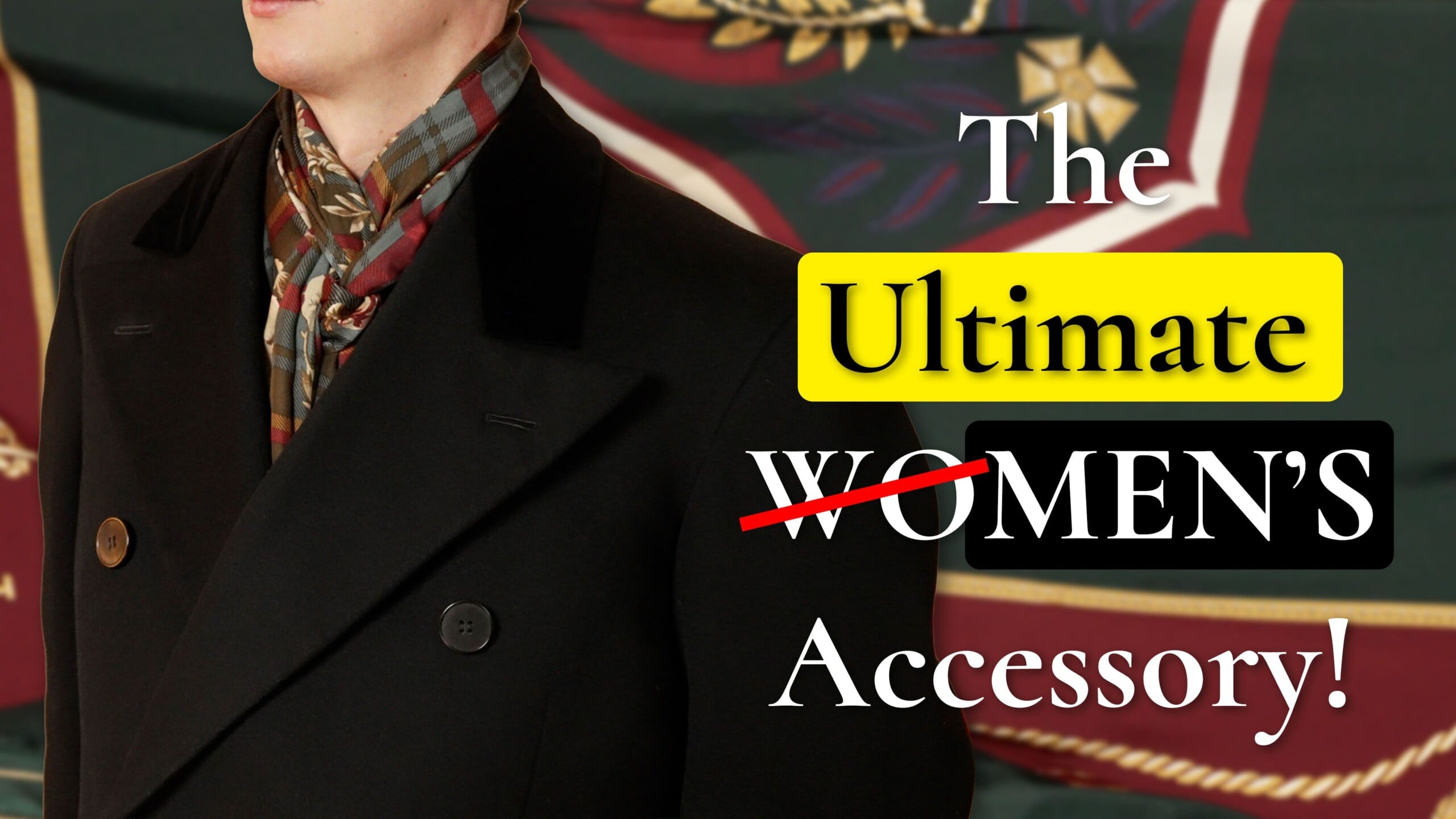
Silk scarves are one of the most underrated accessories in menswear. When chosen well, they can add warmth, color, and character without the weight of a winter scarf or the formality of a necktie.
The question is not whether men can wear silk scarves. It is knowing which ones to choose and how to wear them in a way that feels balanced, classic, and natural.

Why Silk Scarves Deserve a Place in Menswear
A silk scarf offers something different from both a necktie and a heavier winter scarf. It can soften an outfit, add visual interest, and provide light warmth without too much bulk.
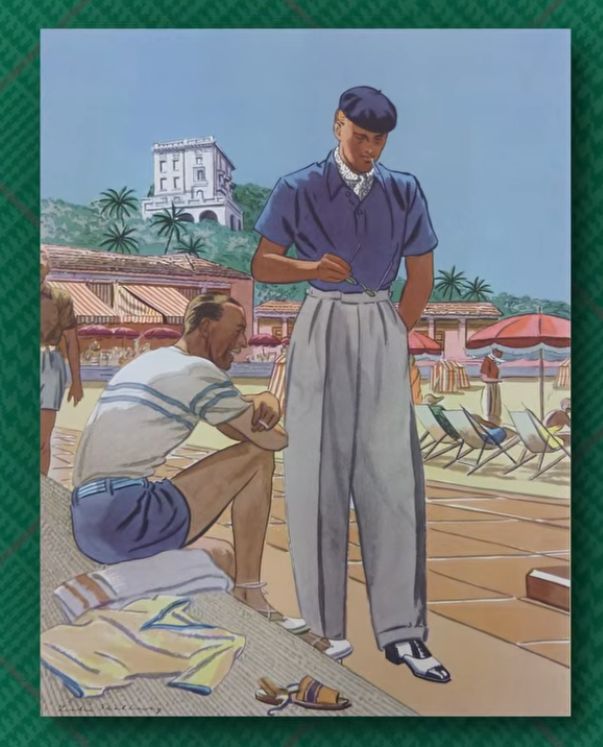
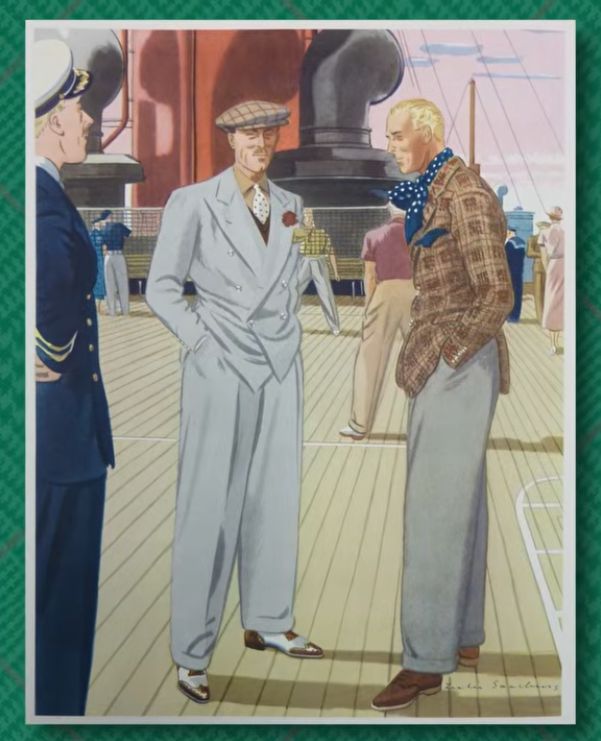
That makes it especially useful for men who want:
- a less formal alternative to a tie
- an extra layer in transitional weather
- more texture and character at the neck
- a classic accessory that feels understated rather than flashy
The Ultimate Men’s Scarf Guide
How to Choose the Right Scarf
The key to pulling off a silk scarf is selecting a piece that complements your existing wardrobe rather than overpowers it.
Color & Pattern
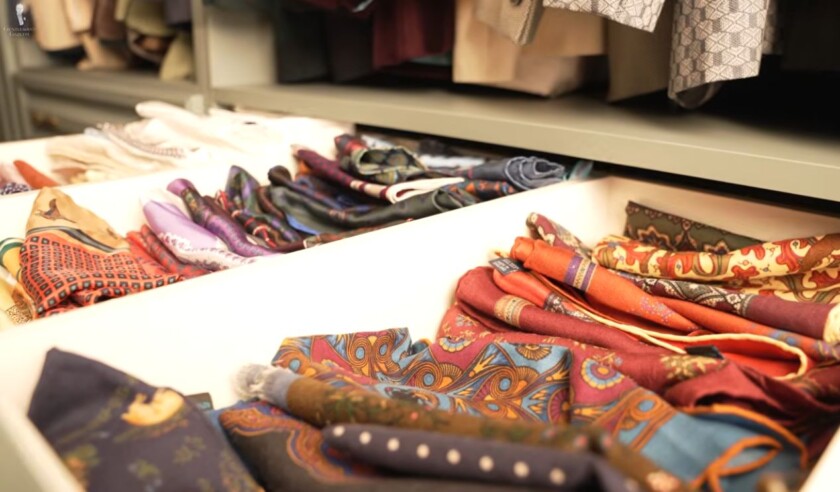
Avoid overly saturated or neon colors. Instead, opt for muted tones and classic patterns. Large floral prints in subtle colors or Western-inspired motifs (like paisley or geometric designs) read as masculine once folded.
Size Matters
For beginners, larger squares are easier to manipulate.
- 34 to 47 inches square: The “sweet spot” for versatility and ease of tying.
- 18 inches square: Essentially pocket square size; workable for smaller neckerchief-style folds, but more limited overall.
The Best Knots and Styling Approaches
Much of a silk scarf’s appeal comes from how many ways it can be worn. But not every knot works equally well on every scarf size.
Best Knots for Large Scarves
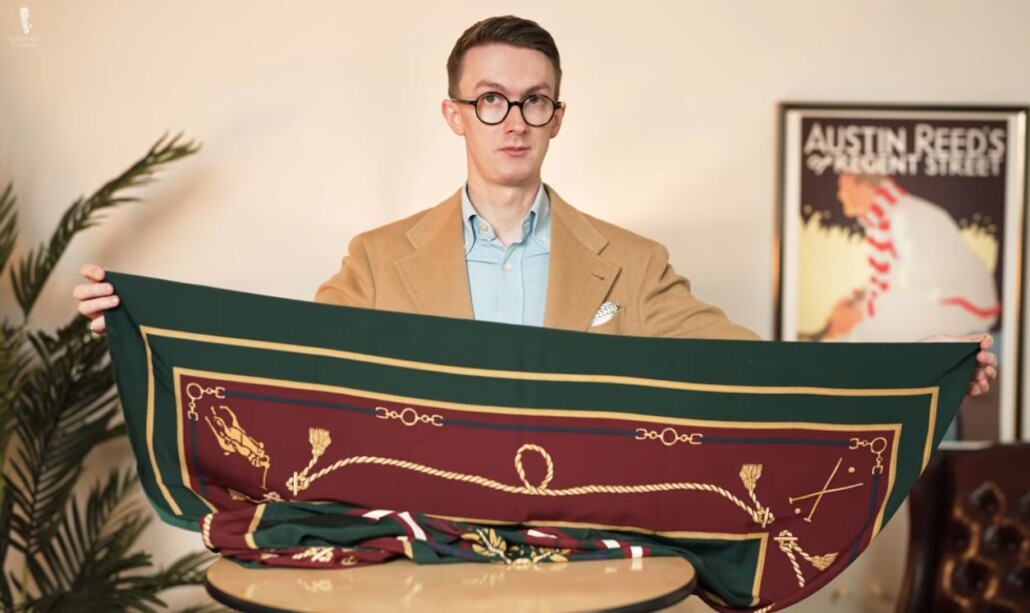
For larger scarves, the most useful options include:
- a simple drape & tuck
- a simple knot
- a blazer knot
These styles offer the most flexibility and usually work best when the scarf has enough length to sit cleanly around the neck.
Best Knots for Small Scarves
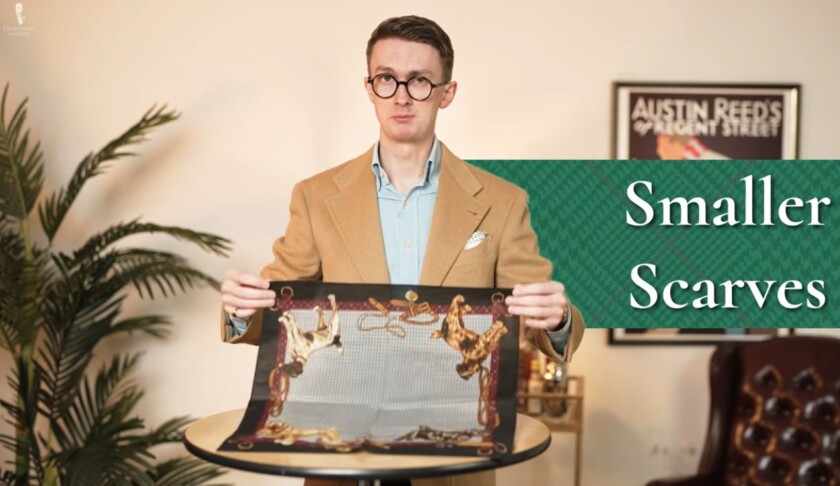
For smaller scarves, the options are more limited, but they can still be very effective. Good options include:
- a casual loose knot
- a boy scout roll
- an oriental knot
- an under-the-collar alternative to an ascot or cravat
With less fabric to work with, smaller scarves usually suit neater and more restrained styling.
Best Knots for Standard Silk Scarves
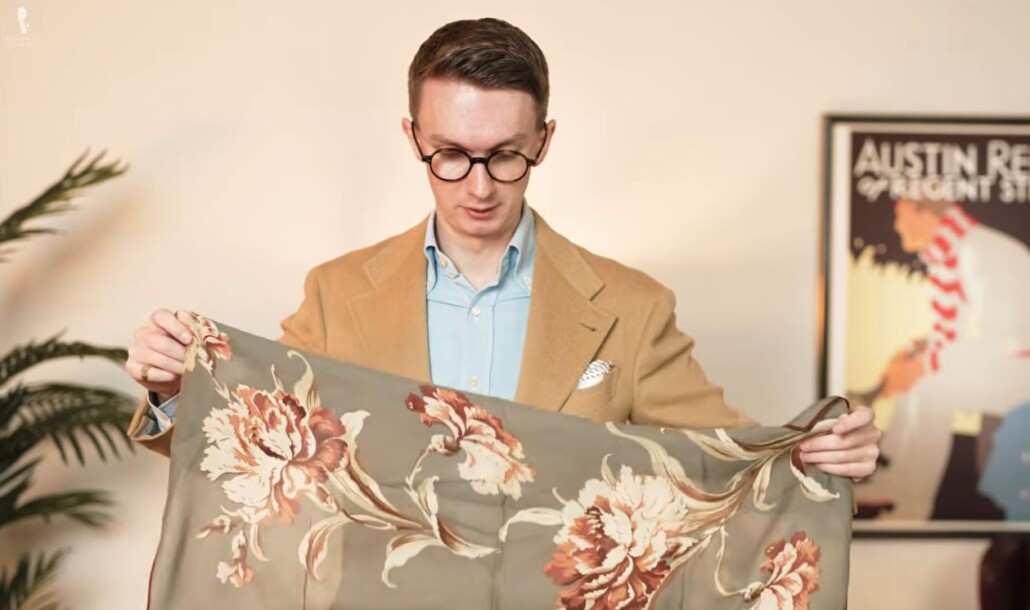
Work to fold your silk scarves to be shaped more like standard oblong scarves rather than a square. They become especially easy to wear because they’ll then work with many of the same straightforward styling methods used for traditional scarves.
Good options include:
- a simple drape
- a French knot
- other easy scarf knots that sit flat and close to the neck
The main lesson is simple: larger scarves offer the most variety, smaller scarves usually look best with cleaner styling, and standard silk scarves are often the easiest bridge between classic scarf wear and lighter neckwear.
6 Elegant Ways to Tie a Scarf
When to Wear a Silk Scarf
Silk scarves are especially useful in situations where a tie feels too formal and a heavier scarf feels unnecessary.
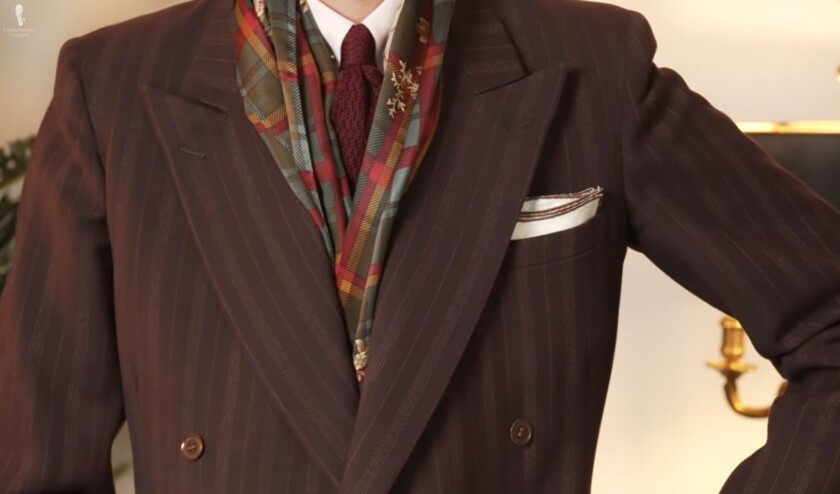
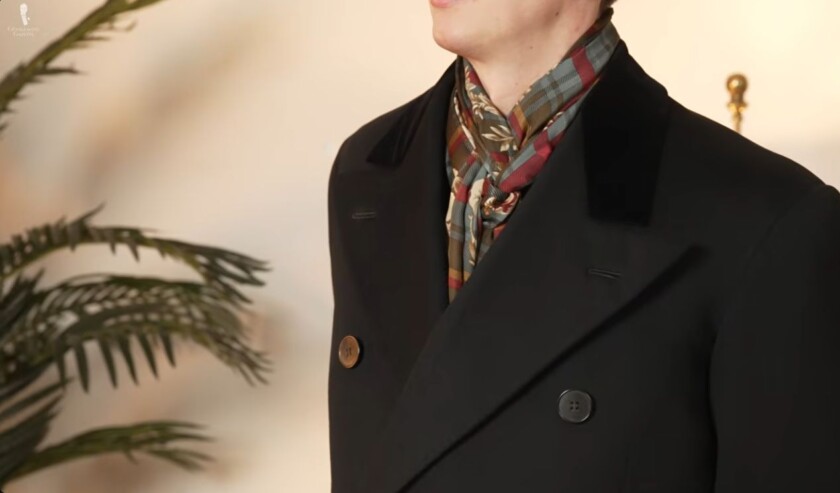
They work particularly well with:
- sport coats and tailored jackets
- lightweight outerwear
- open-collar shirts
- smart casual outfits
- transitional outfits in spring and fall
They can also help add variety to a wardrobe if you already wear ties, pocket squares, and traditional scarves on a regular basis.
Style Tip: A silk scarf should complement the outfit, not overwhelm it. Start subtle, then branch out once you know what feels comfortable.
Final Thoughts
Silk scarves are not the most common menswear accessory, but that is part of their appeal. They can add warmth, personality, and refinement in a way that feels softer than a tie and lighter than a traditional scarf.
For men who want to expand their accessory options without straying from classic style, they are well worth considering.
Frequently Asked Questions
Can men wear silk scarves without looking overdressed?
Yes. The key is choosing understated colors and patterns, then wearing the scarf in a simple, balanced way.
What is the best silk scarf size for beginners?
A larger scarf is usually the easiest choice because it gives you more flexibility and tends to be easier to style.
Are silk scarves formal?
Not necessarily. They can be styled casually or more elegantly depending on the outfit, the fabric, and the way they are worn.
Which silk scarf knots are easiest for beginners?
A simple drape, French knot, or loose casual knot is usually the easiest place to start. Larger scarves generally offer the most flexibility.
When do silk scarves work best?
They are especially useful in transitional weather and with outfits that benefit from light neckwear without the bulk of a heavier scarf.
What to Watch Next

Men’s Scarf Collection Guide

The Hallmarks of a Stylish Scarf
10 Tips for Better Fall Outfits for Men
An approximately 35-inch square silk is also known as a “wild rag” in Western wear, and is commonly available in that market. That may be another affordable source to look at, and inspiration for a few more ways of wearing them.
Excellent addition, thank you, Neil!