
While winter gloves are essential, a well-curated scarf collection is equally important for navigating the cold. From underrated materials to the specific dimensions you should look for, here is everything you need to know to assemble a versatile and functional scarf rotation.

1. The Golden Rule of Sizing: Stop Buying “Short” Scarves
The most overrated scarf in menswear is the one that is simply too short. Unfortunately, most scarves on the market seem to cater to the women’s market or are designed to save on fabric costs. If a scarf is too short, you cannot tie a proper knot that stays secure and looks proportional.
- The Ideal Length: Always aim for 180 cm (approx. 71 inches).
- The Ideal Width: Look for a width of at least 30 cm (approx. 12 inches).
If you want a really warm scarf, going longer is fine, but never go shorter.
7 Stylish Scarf Knots Every Man Should Know
2. Material Matters: Alpaca vs. Cashmere vs. Silk
Not all warmth is created equal. Here is how to choose the right fabric for the temperature:
The Underrated Powerhouse: Alpaca
Alpaca is often overlooked, but it is actually more insulating than wool or cashmere because the hair fiber itself is hollow and contains air. High-quality Royal Baby alpaca is quite soft, less expensive than cashmere, and incredibly warm.
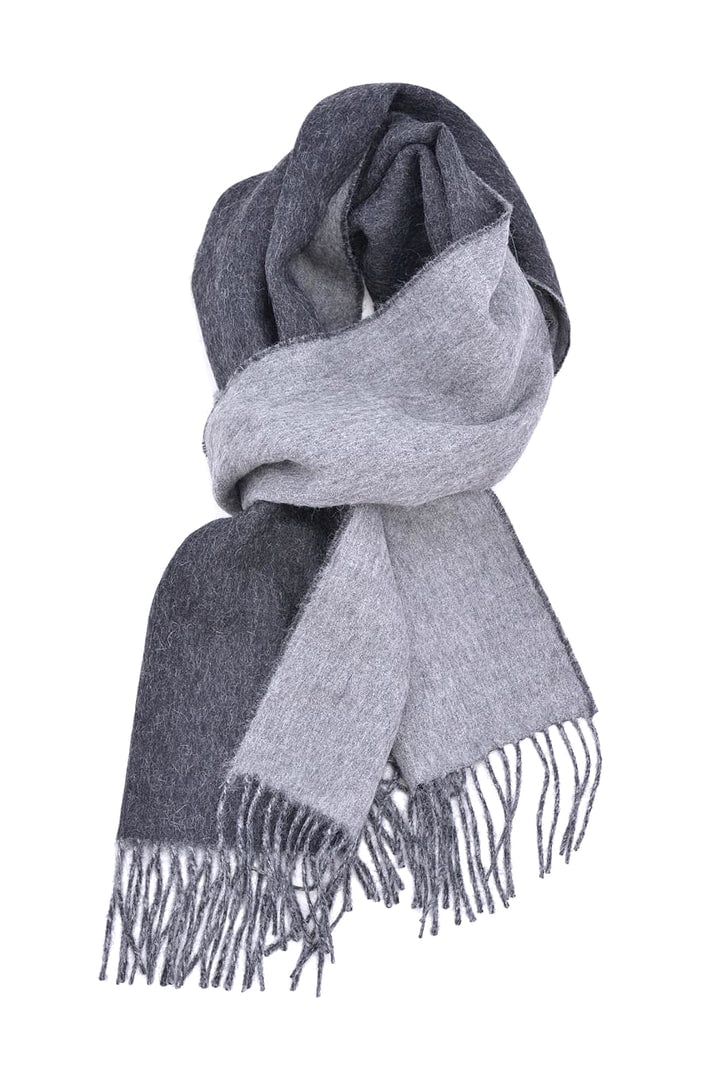
Charcoal & Gray Double Sided Alpaca Scarf
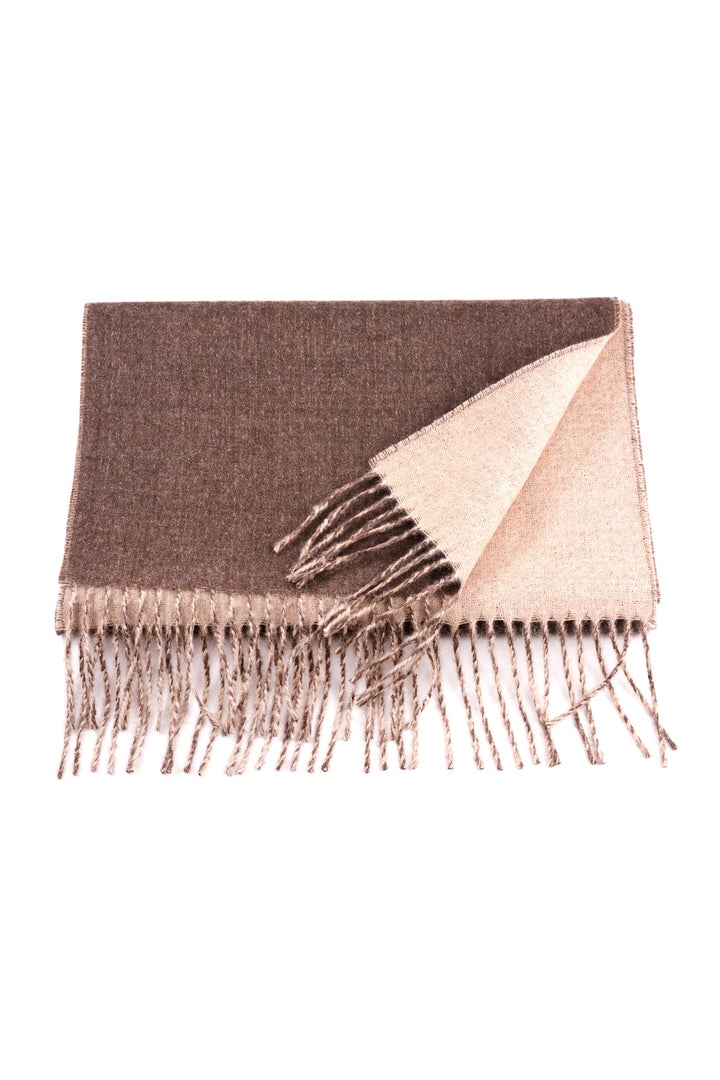
Brown & Oatmeal Double Sided Alpaca Scarf
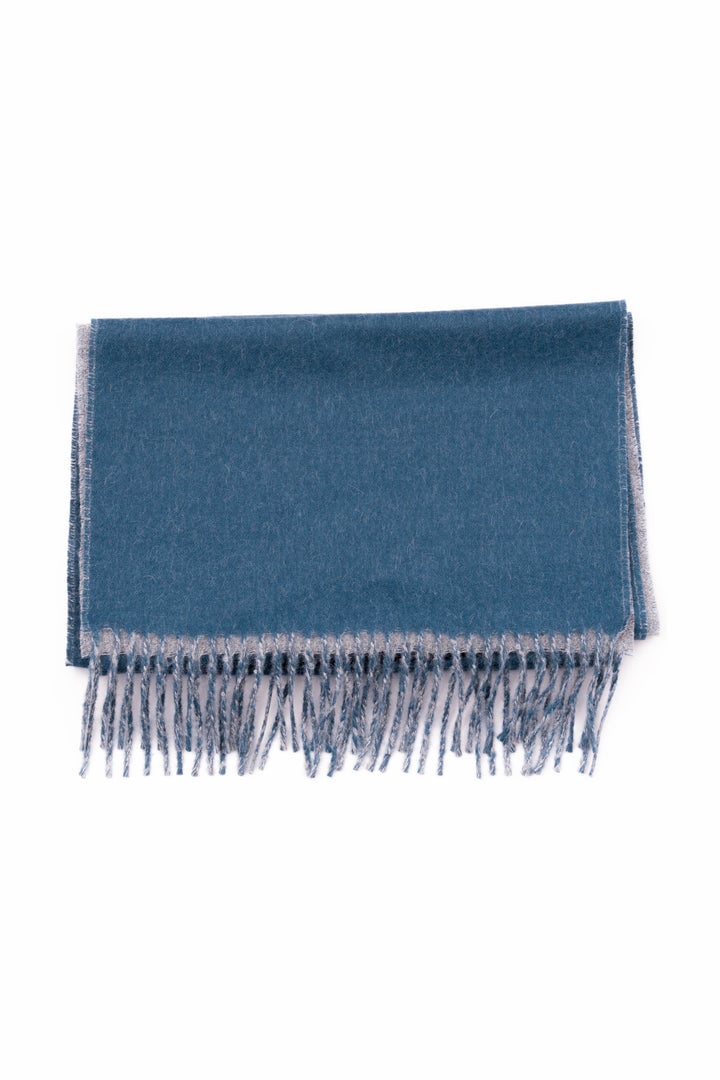
Blue & Gray Double Sided Alpaca Scarf
The King of Comfort: Heavy Cashmere
For ultimate warmth and practicality, heavy cashmere is the gold standard. It is preferred over wool because it is never scratchy against the neck. However, beware of cheap cashmere that usually has short-staple fibers that will pill very quickly.
Red Cashmere Scarf

Mustard Yellow Herringbone Cashmere Scarf
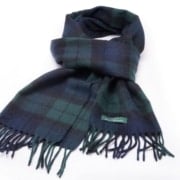
Black Watch Tartan Cashmere Scarf
The Transition Piece: Silk & Blends
Silk isn’t just for neckties. In the fall or transitioning seasons, a silk scarf is excellent when you don’t need ultimate warmth.
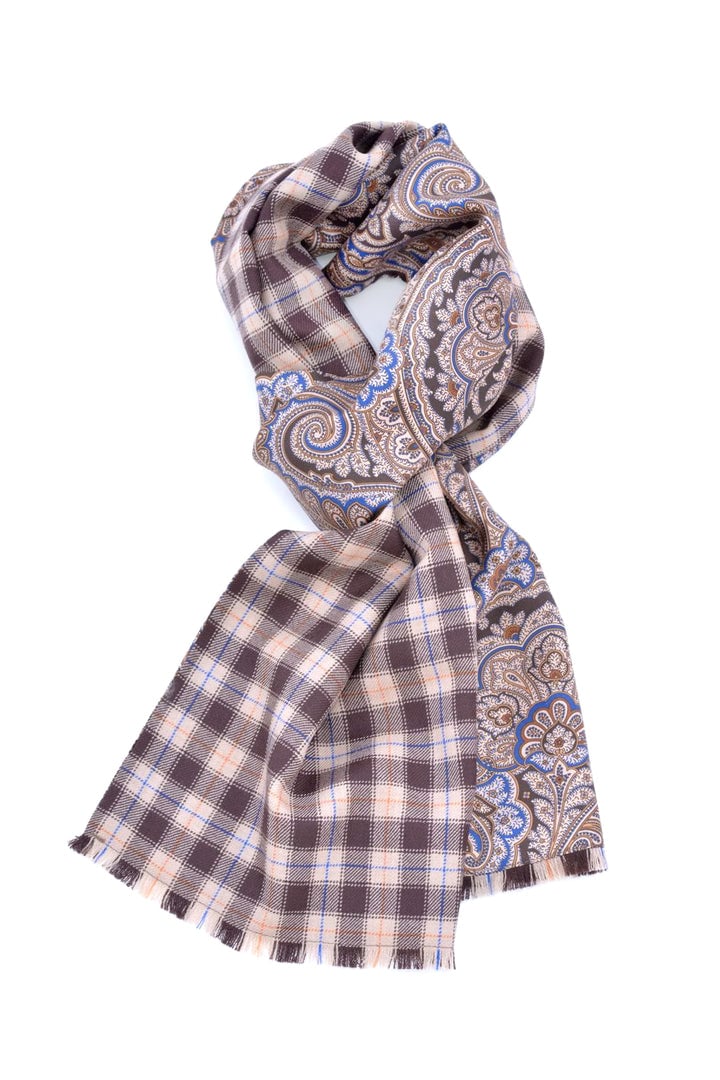
Brown Paisley & Plaid Double Sided Scarf
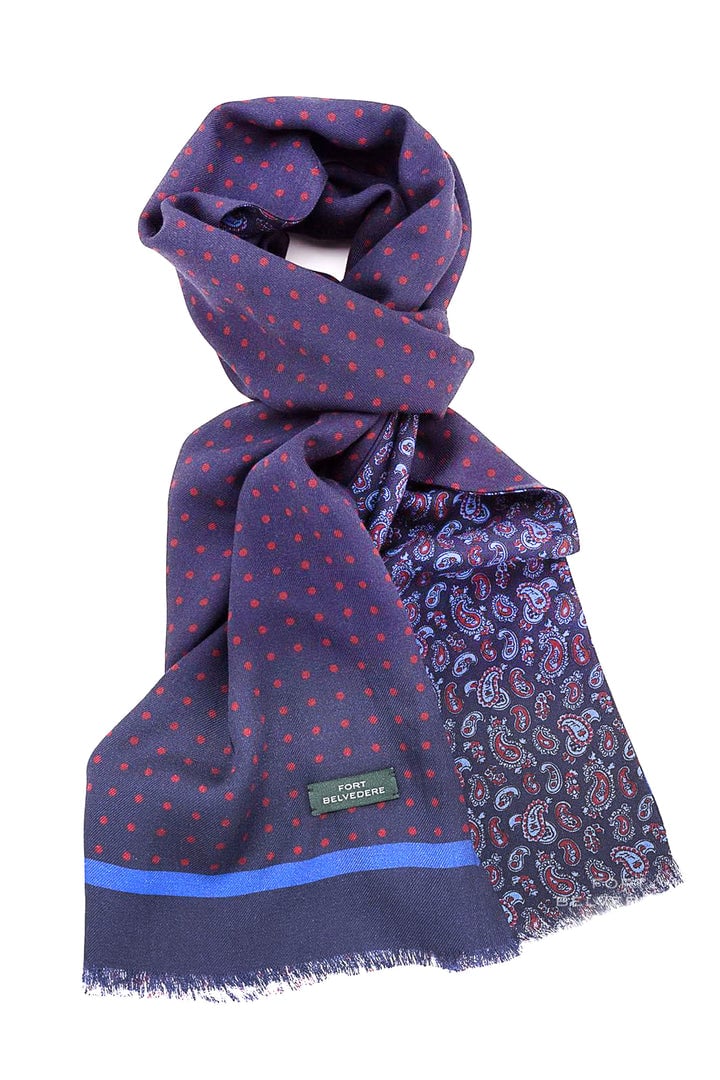
Navy Blue Polka Dots & Paisley Reversible Scarf
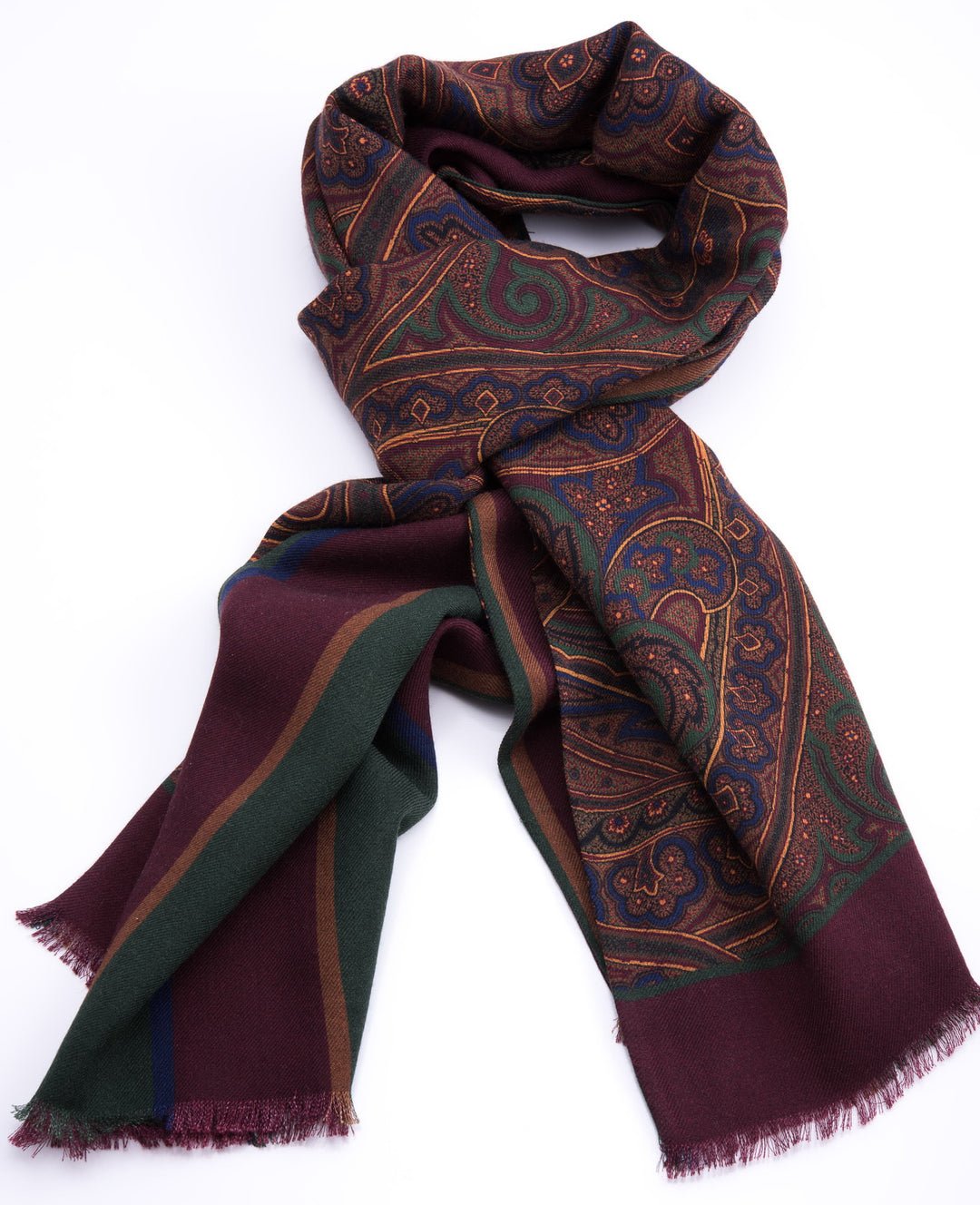
Green Paisley & Bold Stripes Reversible Scarf
3. The “Underrated” Pick: The Double-Sided Scarf
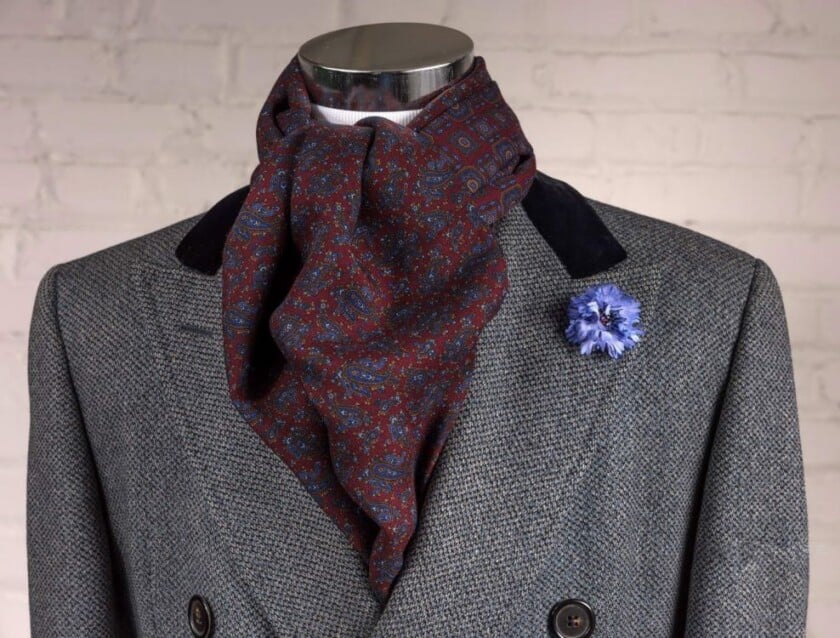
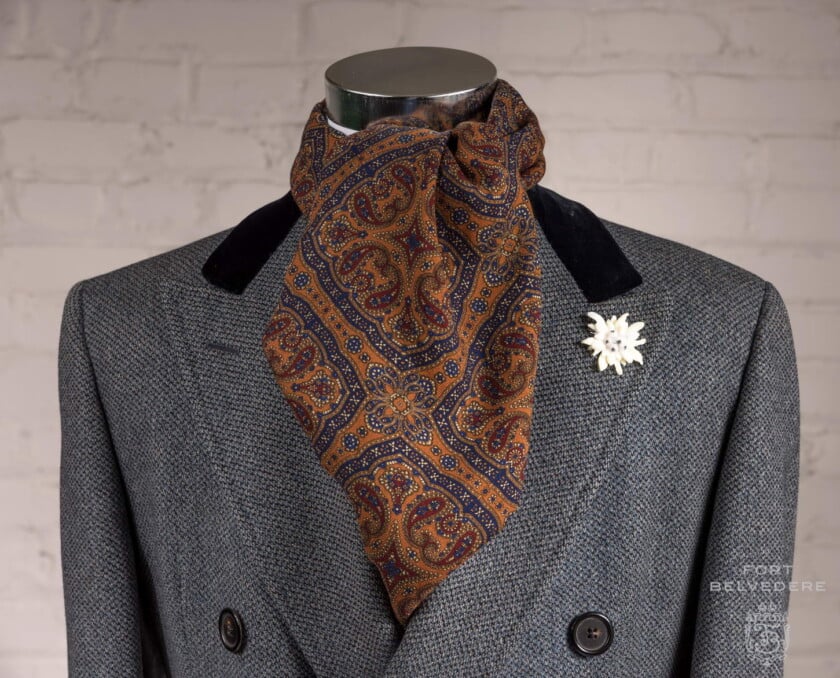
If you only buy one type of scarf for versatility, make it a double-sided scarf that isn’t super heavy. Thick scarves can be too hot for transition seasons, but a silk-wool or silk-linen blend offers the perfect middle ground.
- Why it works: A blended material ensures that both sides have the same sheen, unlike scarves that are silk on one side and wool on the other.
- The Look: Look for designs with stripes on one side and a pattern (like paisley) on the other to maximize your styling options.
The Hallmarks of a Quality Men’s Scarf
4. How to Coordinate Scarves with Outerwear
The goal of a scarf is to add a layer of complexity to your outfit. To do this, you must rely on contrast.
Match Your Gloves
You can easily coordinate your accessories. For example, if you wear brown and orange gloves, a scarf containing orange tones creates a harmonious, well-put-together look. To learn more about how to do this, we have another guide for you to check out:

Solid vs. Pattern
If your overcoat is a solid color, avoid a boring solid scarf. Choose a pattern (like a herringbone or check) to make the outfit elegant. Conversely, if your coat has a bold pattern, anchor it with a more solid scarf.

Conclusion
Building a functional scarf collection is about intentional versatility. While it is easy to default to a standard red scarf or a heavy wool piece (which can often be scratchy), the real value lies in pieces that bridge the gap between function and style.
Whether you are reaching for the hollow-fiber warmth of Alpaca or the transitional elegance of a matte silk-linen blend, ensure your scarf is at least 180cm long and contrasts effectively with your coat.
Learn to style men’s silk scarves
Frequently Asked Questions
What is the ideal length for a man’s scarf?
You should always look for a scarf that is at least 180 cm (approx. 71 inches) long and 30 cm (approx. 12 inches) wide. Most scarves on the market are too short for proper men’s knots.
Which material is the warmest?
Alpaca is scientifically more insulating than wool or cashmere because the hair fibers are hollow, trapping more air. However, heavy cashmere is often preferred for its extreme softness.
Can I wear a silk scarf in winter?
Yes, but typically as a decorative evening item or during transition months. Silk is thinner and less insulating, making it perfect for black tie events (like a black and white silk scarf) or milder autumn days.
How do I choose the right color?
Look at your outerwear. If you have mostly brown coats, a scarf with yellow, blue, or brown tones works beautifully. If you have solid coats, prioritize patterns to avoid looking “boring”.
What to Watch Next
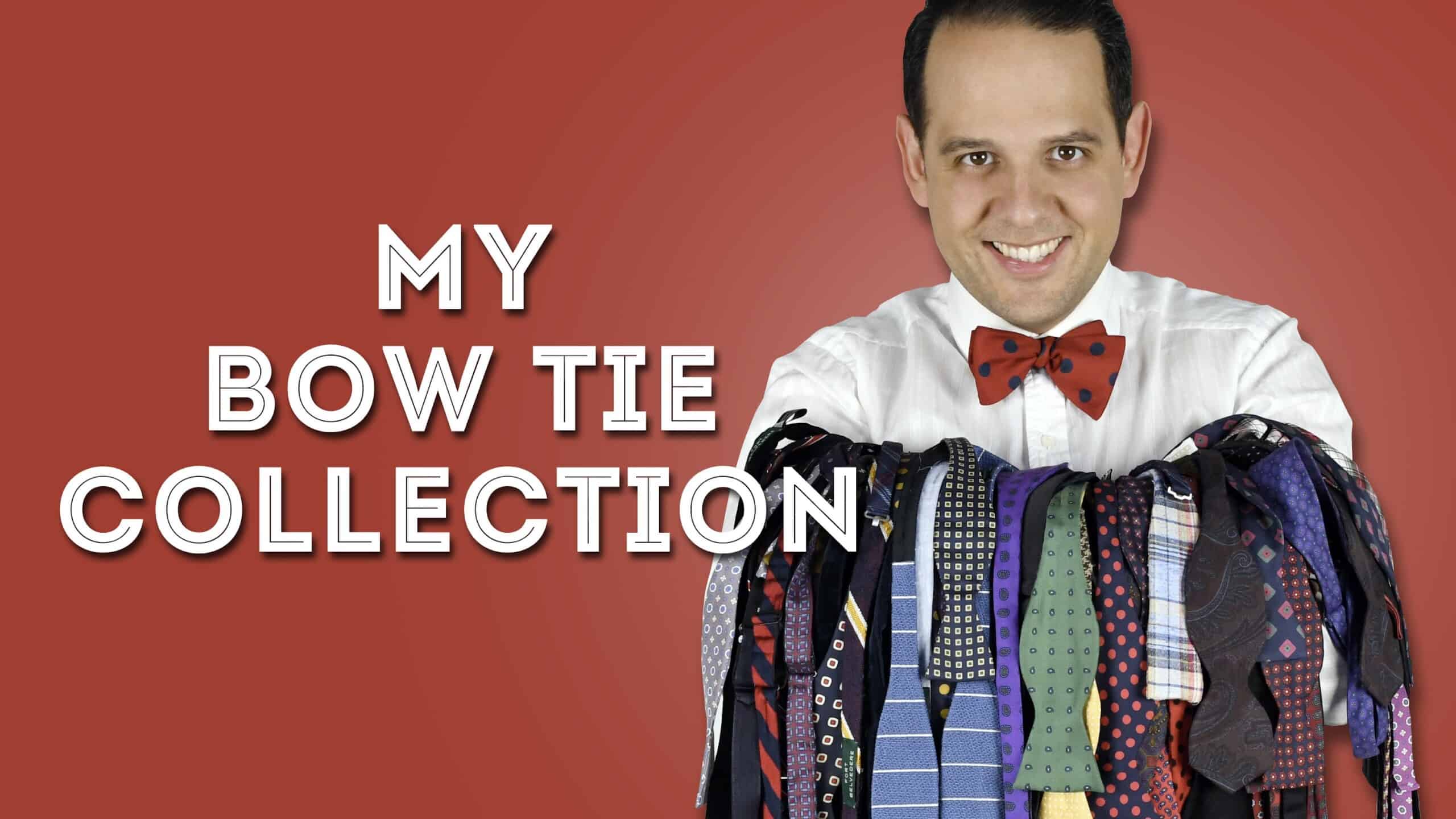
My Bow Tie Collection
Just like scarves, bow ties offer an incredible opportunity to play with texture and pattern. From vintage English Madder silk to velvet prototypes, discover how to build a neckwear rotation that goes far beyond basic black.
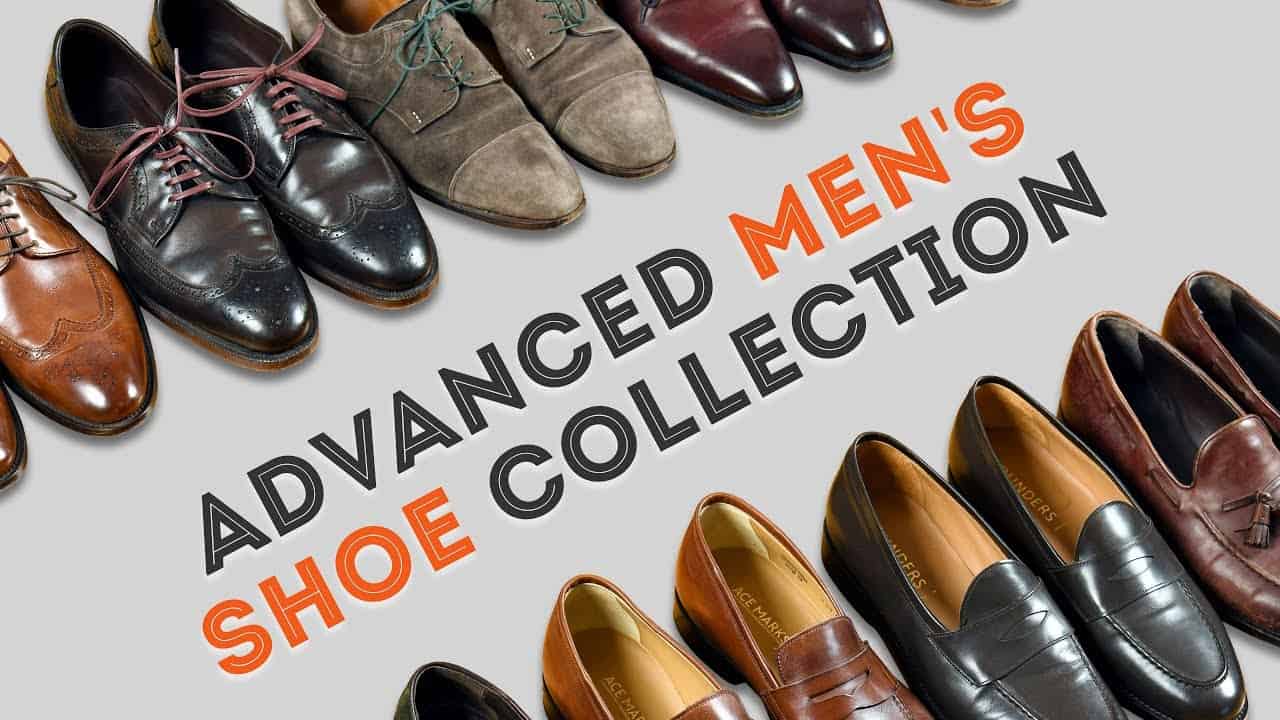
My Men’s Dress Shoe Collection
Your shoes are the true anchor of your outfit. Whether you prefer Monk Straps, Oxfords, or Derbies, this tour through a massive shoe collection shows you how to pair the right footwear with your winter layers.
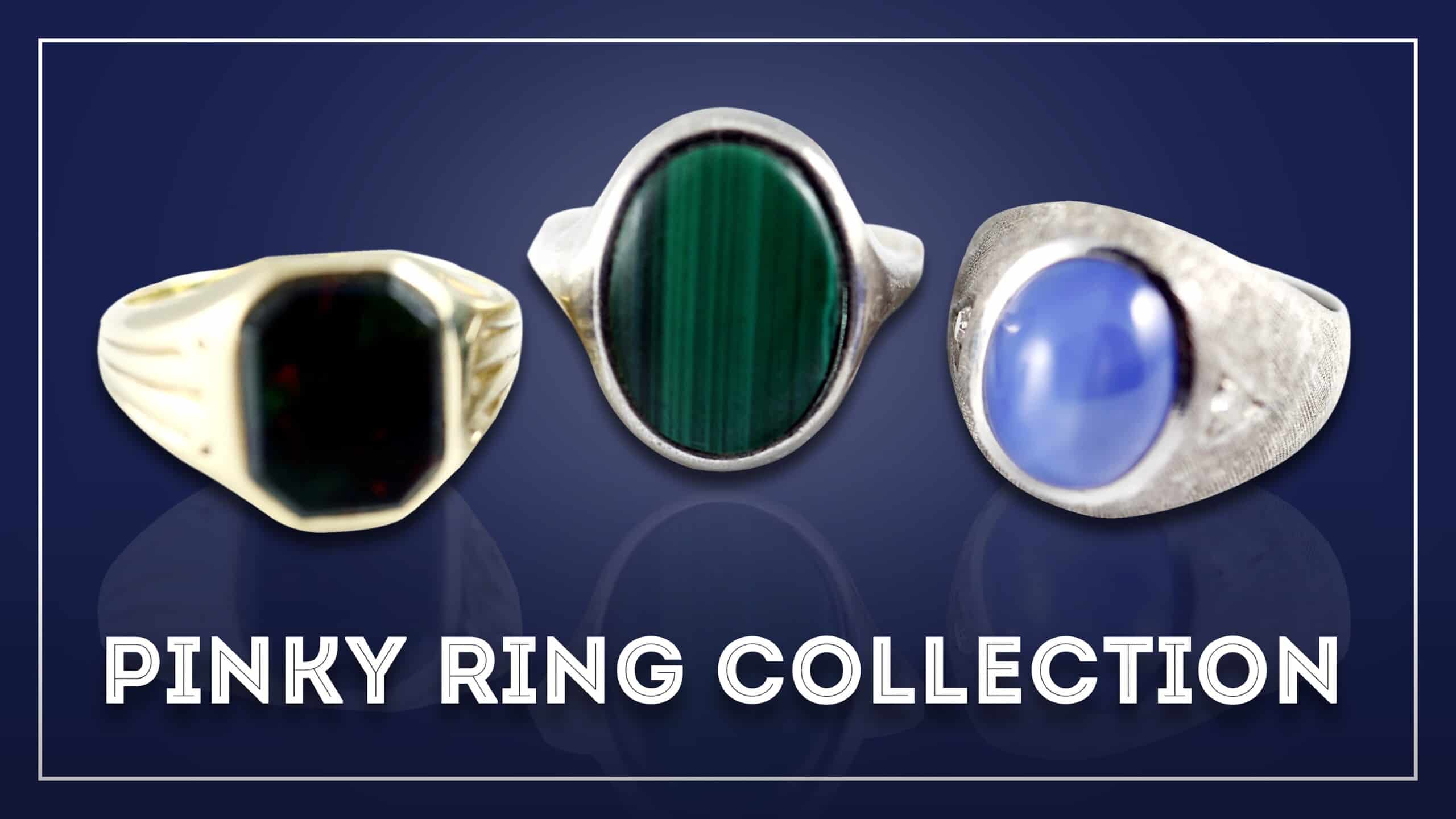
My Pinky Ring Collection
Explore the often-overlooked world of men’s jewelry. See how materials like Lapis Lazuli, Malachite, and Star Sapphire can add a unique, personal signature to your look that stands out from the crowd.
Here in Milan, winter can be cold but generally not too freezing, and a cashmere scarf is the optimum solution for business attire. In any case, it is a mandatory item!
Thank you for your interesting observations.
Kind regards from Italy.